Key takeaways
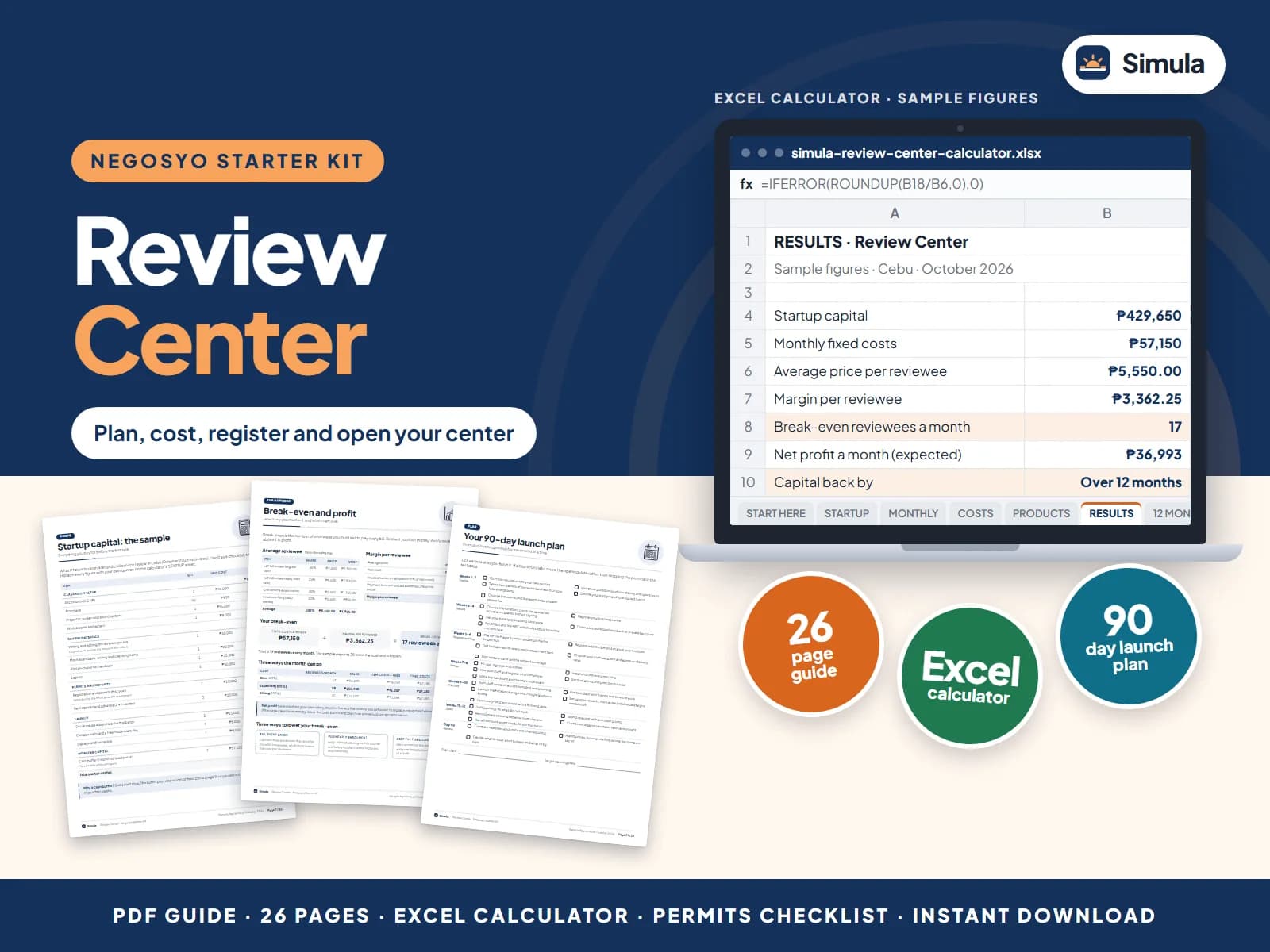
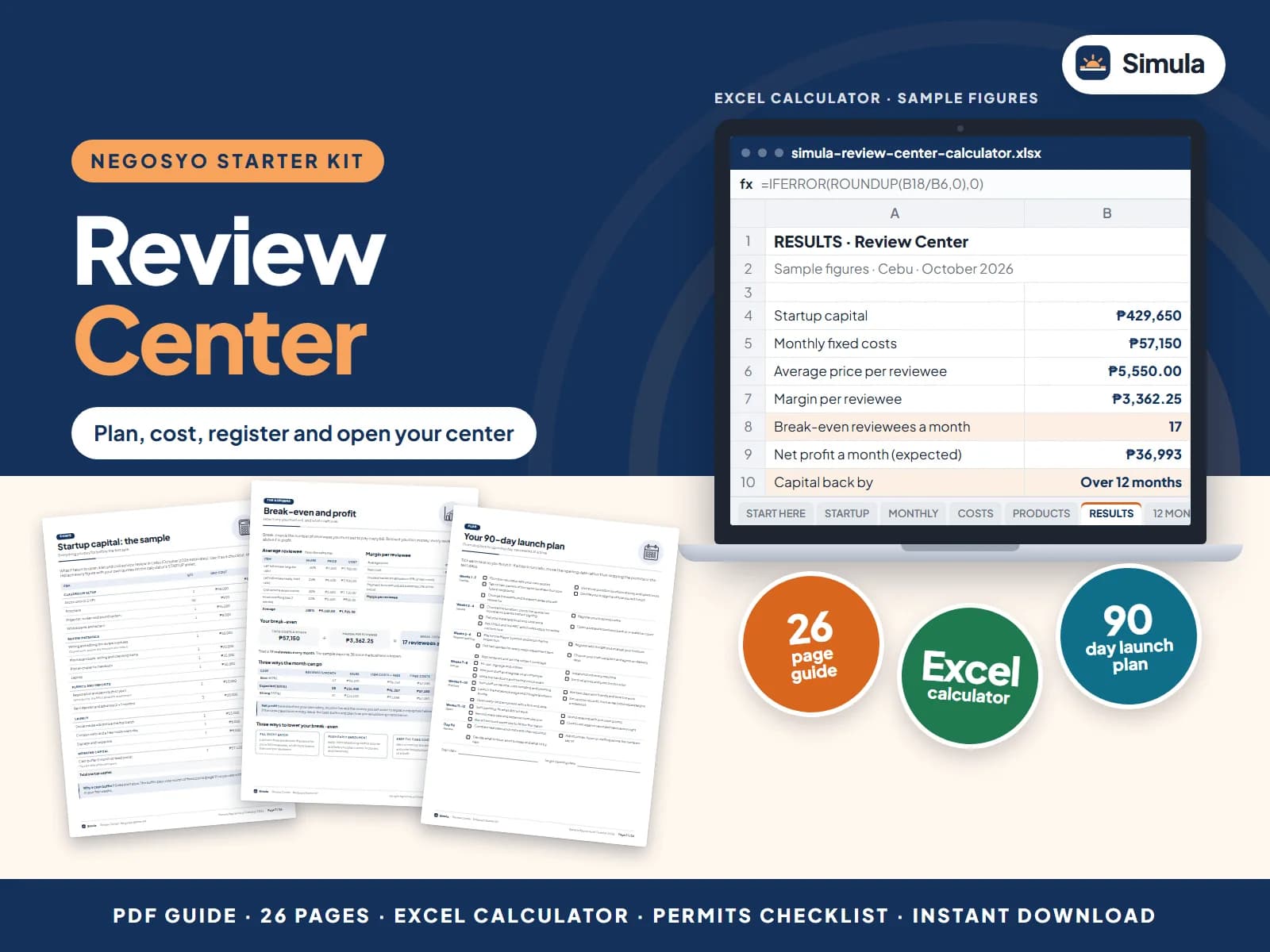
- Sample startup capital: ₱429,650 (October 2026, Cebu).
- Break-even: 17 reviewees a month.
- Register with DTI, the barangay, the city (Mayor's permit) and BIR; also current rules for review centers, sanitary permit and written permission to use a school's name.
A review center prepares graduates for licensure exams, such as the board exam for teachers, and for the civil service exam, through lectures, handouts and mock exams. Most start with one or two exams, a rented classroom near universities and part-time lecturers. The money is made on full batches, early enrolment and results good enough to bring in the next batch.
This guide walks through what it takes to start a review center in the Philippines: the capital, the monthly costs, the permits and the first 90 days. The peso figures are sample estimates for a let and civil service review in Cebu as of October 2026; get your own quotes before you decide.
How much capital you need
The sample comes to about ₱429,650 including one month of fixed costs kept as a cash buffer. It splits into classroom setup (₱166,500), review materials (₱105,000), permits and deposits (₱70,000), launch (₱31,000) and working capital (₱57,150). Other ways to start: online review with live sessions at ₱100,000–₱200,000 and multi-exam review center at ₱1 million–₱2 million.
Monthly costs and break-even
Fixed costs in the sample are ₱57,150 a month; the biggest are rent (₱20,000), admin and enrolment staff (₱15,600) and electricity (₱8,000). Each reviewee sold earns about ₱3,362 after its own costs, so the break-even is 17 reviewees a month, and the startup capital takes about 12 months to come back at full sales.
Permits and registration
Register the business name with DTI (or SEC or CDA), then get the barangay business clearance, the Mayor's permit through the city or municipal BPLO, and BIR registration; register with SSS, PhilHealth and Pag-IBIG once you hire. A review center also needs: current rules for review centers, sanitary permit and written permission to use a school's name. Requirements and fees differ by city, so ask each office for its checklist first. DTI Negosyo Centers help for free.
Where to set up
- Near universities with education programs
- Near boarding houses where reviewees from the provinces stay
- Along jeepney routes from the bus terminals
- A building with a large, quiet, air-conditioned room
Mistakes to avoid
- Low enrolment for a batch. Plan from the exam calendar, open early-bird enrolment early and partner with schools.
- A lecturer cancels at the last minute. Keep a backup lecturer for each subject, and recorded lessons for emergencies.
- Leaked or copied exam materials. Use only original materials, lock exam papers away and never use leaked questions.
- Reviewees stop paying instalments. A clear payment schedule on the enrolment form, with balances due before the final coaching.
Plan it with the starter kit
The Review Center · Negosyo Starter Kit has every worksheet behind this guide in a 26-page PDF, plus an Excel calculator: type in your own quotes and it works out your capital, break-even, profit and payback month. It costs ₱349 and downloads right after payment.