Key takeaways
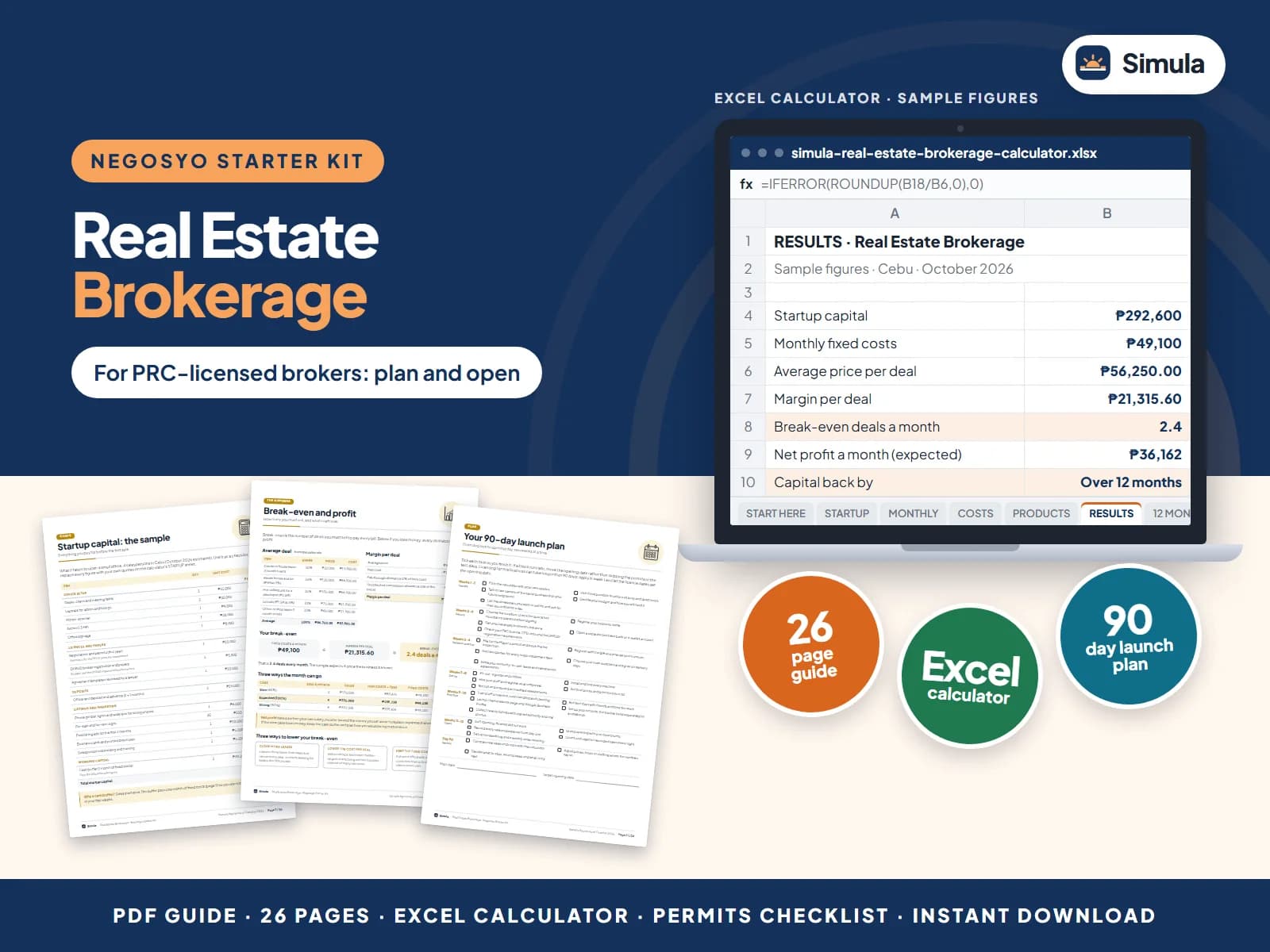
- Sample startup capital: ₱292,600 (October 2026, Cebu).
- Break-even: 2.4 deals a month.
- Register with DTI, the barangay, the city (Mayor's permit) and BIR; also PRC real estate broker licence, accreditation of every salesperson and DHSUD registration as a broker.
For PRC-licensed real estate brokers. A brokerage earns commissions for selling and leasing houses, lots, condos and commercial spaces for owners and developers, with accredited salespersons working under the broker. Most start as a small office with a few salespersons; the money is made on steady listings, leases that close every month and commissions collected in full.
This guide walks through what it takes to start a real estate brokerage in the Philippines: the capital, the monthly costs, the permits and the first 90 days. The peso figures are sample estimates for a small office, 4 salespersons in Cebu as of October 2026; get your own quotes before you decide.
How much capital you need
The sample comes to about ₱292,600 including one month of fixed costs kept as a cash buffer. It splits into office setup (₱140,000), licences and papers (₱25,000), deposits (₱45,000), listings and marketing (₱33,500) and working capital (₱49,100). Other ways to start: solo broker from a home office at ₱60,000–₱120,000 and brokerage with a leasing team at ₱600,000–₱1 million.
Monthly costs and break-even
Fixed costs in the sample are ₱49,100 a month; the biggest are admin assistant (₱15,600), office rent (₱15,000) and paid listing ads and boosts (₱6,000). Each deal sold earns about ₱21,316 after its own costs, so the break-even is 2.4 deals a month, and the startup capital takes about 8 months to come back at full sales.
Permits and registration
Register the business name with DTI (or SEC or CDA), then get the barangay business clearance, the Mayor's permit through the city or municipal BPLO, and BIR registration; register with SSS, PhilHealth and Pag-IBIG once you hire. A real estate brokerage also needs: PRC real estate broker licence, accreditation of every salesperson and DHSUD registration as a broker. Requirements and fees differ by city, so ask each office for its checklist first. DTI Negosyo Centers help for free.
Where to set up
- Near IT parks and business districts where condos are leased
- Along main roads into growing suburbs with new subdivisions
- A shared office or business center with a meeting room
- Near a mall, where buyers can drop by on weekends
Mistakes to avoid
- Commissions paid late or not at all. Signed authority with the rate and timing, invoices on the due date, and a cash buffer for slow releases.
- A salesperson's mistake on your licence. Train every salesperson, check every offer and contract, and stop anyone who cuts corners.
- Selling a property with title problems. Check the title, tax declaration and the owner's identity before marketing any listing.
- Buyers' money mixed with office money. Have buyers pay the owner or developer directly, with receipts, instead of holding their money.
Plan it with the starter kit
The Real Estate Brokerage · Negosyo Starter Kit has every worksheet behind this guide in a 26-page PDF, plus an Excel calculator: type in your own quotes and it works out your capital, break-even, profit and payback month. It costs ₱499 and downloads right after payment.