Key takeaways
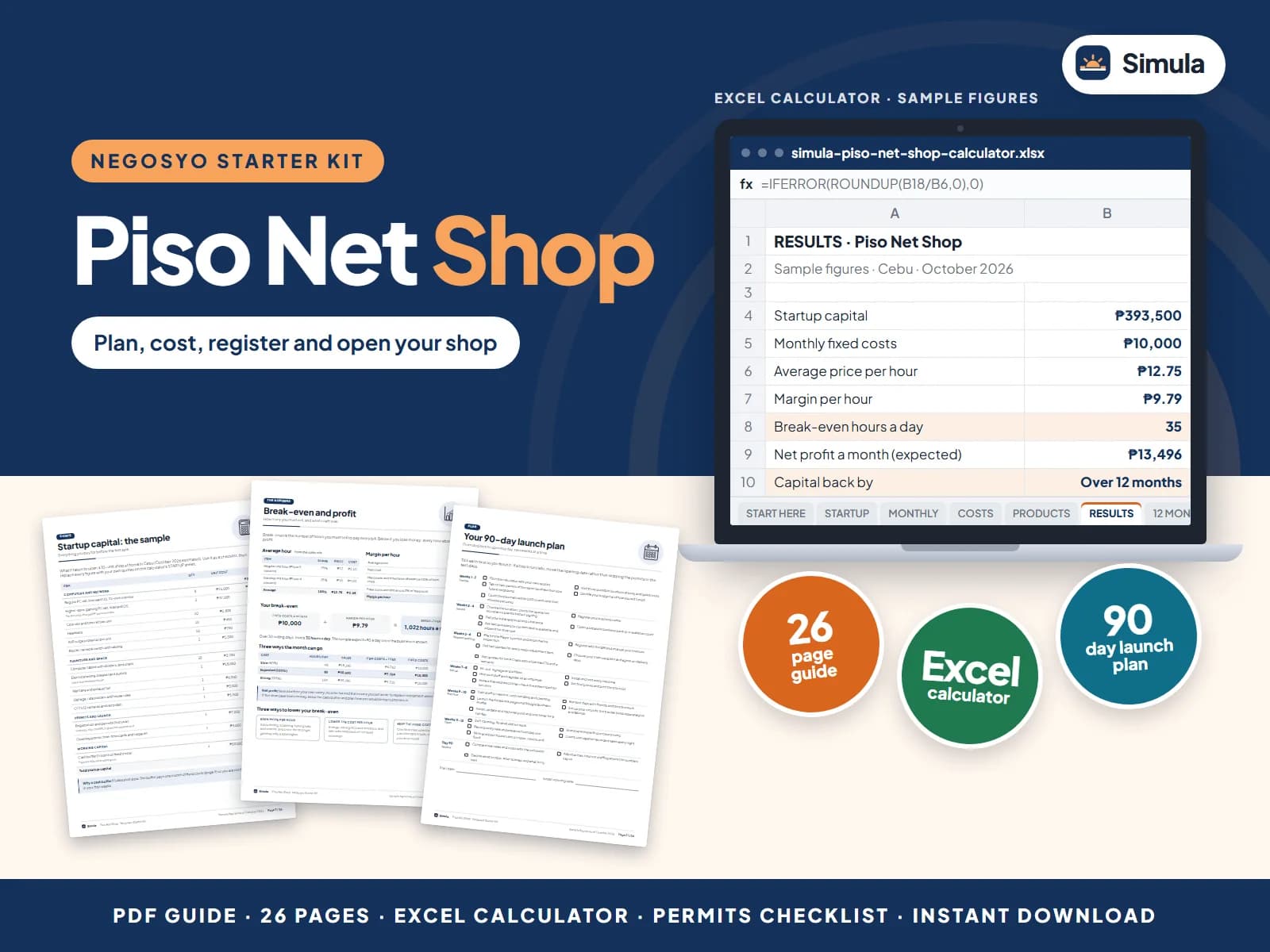
- Sample startup capital: ₱393,500 (October 2026, Cebu).
- Break-even: 35 hours a day.
- Register with DTI, the barangay, the city (Mayor's permit) and BIR; also local rules for computer shops and electrical permit for new wiring.
A piso net shop rents computer time by the coin: customers drop ₱1 for a few minutes of games, school work or browsing. Most start with 8 to 15 units in the front of a house or a small room near a school. The money is made on hours actually sold, so the location, fast internet and machines that keep running matter more than the newest parts.
This guide walks through what it takes to start a piso net shop in the Philippines: the capital, the monthly costs, the permits and the first 90 days. The peso figures are sample estimates for a 10-unit shop at home in Cebu as of October 2026; get your own quotes before you decide.
How much capital you need
The sample comes to about ₱393,500 including one month of fixed costs kept as a cash buffer. It splits into computers and network (₱309,000), furniture and space (₱64,500), permits and launch (₱10,000) and working capital (₱10,000). Other ways to start: rented shop near a school at ₱500,000–₱750,000 and gaming café with rental pcs at ₱1.2 million and up.
Monthly costs and break-even
Fixed costs in the sample are ₱10,000 a month; the biggest are internet (₱2,500), repairs and spare parts set aside (₱2,500) and PC upgrade fund (₱2,000). Each hour sold earns about ₱10 after its own costs, so the break-even is 35 hours a day, and the startup capital takes about 29 months to come back at full sales.
Permits and registration
Register the business name with DTI (or SEC or CDA), then get the barangay business clearance, the Mayor's permit through the city or municipal BPLO, and BIR registration; register with SSS, PhilHealth and Pag-IBIG once you hire. A piso net shop also needs: local rules for computer shops and electrical permit for new wiring. Requirements and fees differ by city, so ask each office for its checklist first. DTI Negosyo Centers help for free.
Where to set up
- Within walking distance of an elementary or high school
- Dense residential barangays where few homes have a computer
- Near boarding houses and dorms
- Along a lit street with neighbors and stores open at night
Mistakes to avoid
- Units break down and earn nothing. Keep spare parts and a clean system backup, log downtime, and fix units the same day.
- Slow or unstable internet. A business plan with a written speed, a backup mobile router, and a provider with a local technician.
- Trouble with minors, noise or neighbors. Follow the local ordinance on hours, post house rules, and keep the floor watched.
- Fake coins and coin-box theft. Coin acceptors that reject slugs, locked boxes, CCTV and two collections a day.
Plan it with the starter kit
The Piso Net Shop · Negosyo Starter Kit has every worksheet behind this guide in a 26-page PDF, plus an Excel calculator: type in your own quotes and it works out your capital, break-even, profit and payback month. It costs ₱349 and downloads right after payment.
