Key takeaways
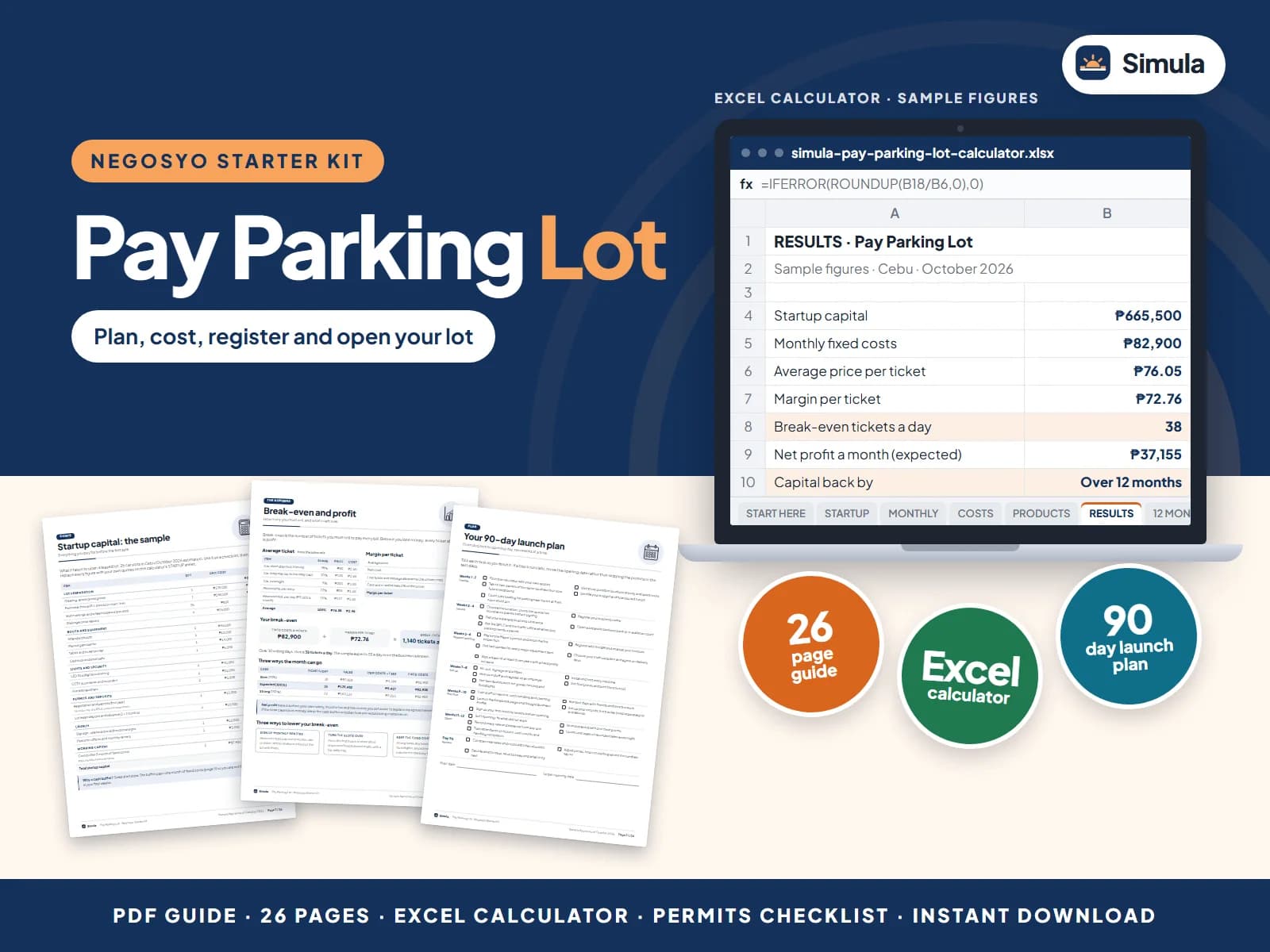
- Sample startup capital: ₱665,500 (October 2026, Cebu).
- Break-even: 38 tickets a day.
- Register with DTI, the barangay, the city (Mayor's permit) and BIR; also pay parking permit (ask first), fencing and booth permits and lot owner's written consent.
A pay parking lot charges cars and motorcycles by the hour, the day or the month on a fenced and lit open lot. Most start by leasing a vacant lot of about 600 m² near a hospital, mall, school or business district, and fitting it with gravel, a booth, floodlights and CCTV. The money is made on the location, monthly reserved renters for steady income, and honest cash handling every shift.
This guide walks through what it takes to start a pay parking lot in the Philippines: the capital, the monthly costs, the permits and the first 90 days. The peso figures are sample estimates for a leased lot, 25 car slots in Cebu as of October 2026; get your own quotes before you decide.
How much capital you need
The sample comes to about ₱665,500 including one month of fixed costs kept as a cash buffer. It splits into lot preparation (₱315,000), booth and equipment (₱67,000), lights and security (₱65,600), permits and deposits (₱120,000), launch (₱15,000) and working capital (₱82,900). Other ways to start: concrete lot with overnight parking at ₱1 million–₱2 million and covered parking on your own lot at ₱3 million and up.
Monthly costs and break-even
Fixed costs in the sample are ₱82,900 a month; the biggest are lot lease (₱35,000), attendants (₱31,200) and SSS, PhilHealth and Pag-IBIG (₱4,350). Each ticket sold earns about ₱73 after its own costs, so the break-even is 38 tickets a day, and the startup capital takes about 18 months to come back at full sales.
Permits and registration
Register the business name with DTI (or SEC or CDA), then get the barangay business clearance, the Mayor's permit through the city or municipal BPLO, and BIR registration; register with SSS, PhilHealth and Pag-IBIG once you hire. A pay parking lot also needs: pay parking permit (ask first), fencing and booth permits and lot owner's written consent. Requirements and fees differ by city, so ask each office for its checklist first. DTI Negosyo Centers help for free.
Where to set up
- Within walking distance of a hospital
- Near office buildings and BPO centers
- Beside malls, markets and churches
- Close to schools and universities
Mistakes to avoid
- Attendants keep part of the cash. Numbered tickets, a count every shift, CCTV on the booth, and spot checks at random times.
- A parked car is damaged or stolen. Lights, CCTV, hourly rounds, liability insurance, and written terms on who pays for what.
- The lot owner ends the lease early. A written lease of three years or more with notice terms, and fit-out costs you can recover well before it ends.
- Flooding in heavy rain. Fix the drainage before opening, and warn drivers when the street floods.
Plan it with the starter kit
The Pay Parking Lot · Negosyo Starter Kit has every worksheet behind this guide in a 26-page PDF, plus an Excel calculator: type in your own quotes and it works out your capital, break-even, profit and payback month. It costs ₱349 and downloads right after payment.
