Key takeaways
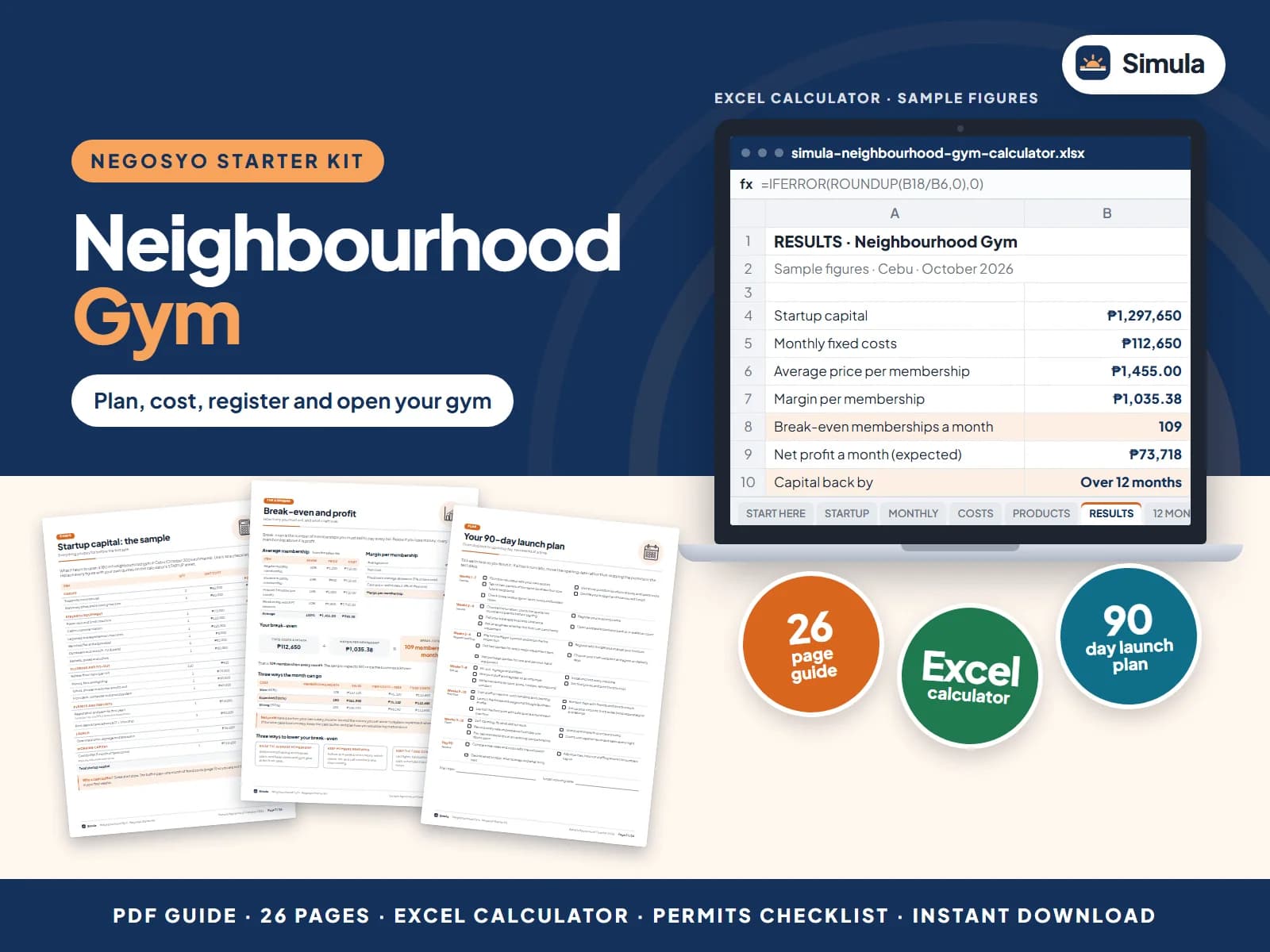
- Sample startup capital: ₱1,297,650 (October 2026, Cebu).
- Break-even: 109 memberships a month.
- Register with DTI, the barangay, the city (Mayor's permit) and BIR; also sanitary permit, health certificates for staff and floor-load check for heavy equipment.
A neighbourhood gym offers weights, cardio machines and simple coaching to people who live or work nearby, paid by monthly membership. Most start in a rented second-floor or warehouse space with a mix of new and second-hand equipment. The money is made on members who renew every month, personal training sold on top, and keeping rent and electricity under control.
This guide walks through what it takes to start a neighbourhood gym in the Philippines: the capital, the monthly costs, the permits and the first 90 days. The peso figures are sample estimates for a 180 m² neighbourhood gym in Cebu as of October 2026; get your own quotes before you decide.
How much capital you need
The sample comes to about ₱1,297,650 including one month of fixed costs kept as a cash buffer. It splits into cardio (₱230,000), strength equipment (₱490,000), flooring and fit-out (₱335,000), permits and deposits (₱105,000), launch (₱25,000) and working capital (₱112,650). Other ways to start: small fitness studio at ₱400,000–₱700,000 and larger gym with aircon and classes at ₱3 million–₱5 million.
Monthly costs and break-even
Fixed costs in the sample are ₱112,650 a month; the biggest are front desk staff (₱31,200), rent (₱30,000) and floor trainer (₱18,200). Each membership sold earns about ₱1,035 after its own costs, so the break-even is 109 memberships a month, and the startup capital takes about 18 months to come back at full sales.
Permits and registration
Register the business name with DTI (or SEC or CDA), then get the barangay business clearance, the Mayor's permit through the city or municipal BPLO, and BIR registration; register with SSS, PhilHealth and Pag-IBIG once you hire. A neighbourhood gym also needs: sanitary permit, health certificates for staff and floor-load check for heavy equipment. Requirements and fees differ by city, so ask each office for its checklist first. DTI Negosyo Centers help for free.
Where to set up
- In a dense residential area or near a big subdivision
- Near BPO offices, for workers on every shift
- Near colleges with many young adults
- On a main road with parking for motorbikes
Mistakes to avoid
- Members stop renewing. Follow up before expiry, call members who stop coming, and keep the gym clean and friendly.
- Injuries on the gym floor. A safe layout, regular equipment checks, a trainer on the floor, and a signed waiver at sign-up.
- Broken equipment left unused. Weekly checks, spare cables and pins, and a repair shop on call.
- Electricity bills climb. LED lights, fans before aircon, and treadmills switched off when not in use.
Plan it with the starter kit
The Neighbourhood Gym · Negosyo Starter Kit has every worksheet behind this guide in a 26-page PDF, plus an Excel calculator: type in your own quotes and it works out your capital, break-even, profit and payback month. It costs ₱349 and downloads right after payment.
