Key takeaways
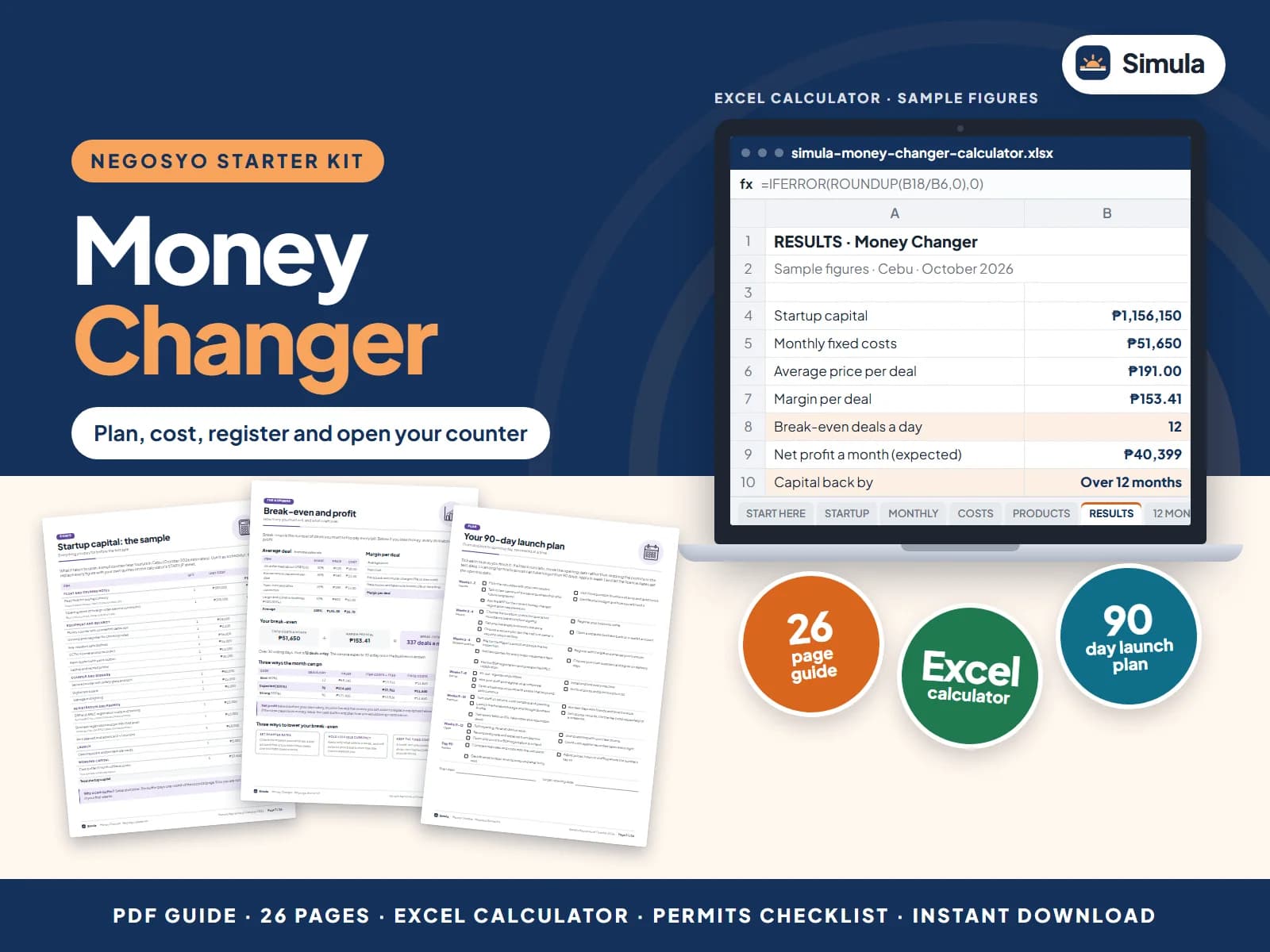
- Sample startup capital: ₱1,156,150 (October 2026, Cebu).
- Break-even: 12 deals a day.
- Register with DTI, the barangay, the city (Mayor's permit) and BIR; also BSP registration as a money changer, AMLC registration as a covered person and mall or building approval for a cash counter.
A money changer buys and sells foreign currency over the counter and earns the spread between its buying and selling rates. This kit is for operators who will register with the BSP before opening; most start with one small counter near tourists, OFW families or a business district. Each deal earns a small spread, so the money is in volume, sharp rates and never holding fake notes or too much of one currency.
This guide walks through what it takes to start a money changer in the Philippines: the capital, the monthly costs, the permits and the first 90 days. The peso figures are sample estimates for a small counter near tourists in Cebu as of October 2026; get your own quotes before you decide.
How much capital you need
The sample comes to about ₱1,156,150 including one month of fixed costs kept as a cash buffer. It splits into float and opening notes (₱800,000), equipment and security (₱112,500), counter and signage (₱103,000), registration and permits (₱84,000), launch (₱5,000) and working capital (₱51,650). Other ways to start: fx window inside an existing business at ₱600,000–₱1 million and money changer with several branches at ₱5 million and up.
Monthly costs and break-even
Fixed costs in the sample are ₱51,650 a month; the biggest are rent (₱18,000), teller wages (₱15,600) and security: alarm monitoring and cash pick-up (₱4,000). Each deal sold earns about ₱153 after its own costs, so the break-even is 12 deals a day, and the startup capital takes about 29 months to come back at full sales.
Permits and registration
Register the business name with DTI (or SEC or CDA), then get the barangay business clearance, the Mayor's permit through the city or municipal BPLO, and BIR registration; register with SSS, PhilHealth and Pag-IBIG once you hire. A money changer also needs: BSP registration as a money changer, AMLC registration as a covered person and mall or building approval for a cash counter. Requirements and fees differ by city, so ask each office for its checklist first. DTI Negosyo Centers help for free.
Where to set up
- Malls and hotel strips with foreign tourists
- Near the airport and seaports
- Business districts with foreign offices and BPOs
- Towns with many OFW and seafarer families
Mistakes to avoid
- Fake or altered notes. A counter with detection, UV checks, trained tellers, and refuse any note you are not sure of.
- Rates move against currency you hold. Hold only what sells in a week, check rates often, and sell extra to the bank early.
- Robbery or theft. Safety glass, a bolted safe, an alarm, CCTV, insurance, cash moved out during the day, and no counting in view.
- Money laundering and fraud. Know your customer, record IDs as required, report suspicious deals, and train every staff member.
Plan it with the starter kit
The Money Changer · Negosyo Starter Kit has every worksheet behind this guide in a 26-page PDF, plus an Excel calculator: type in your own quotes and it works out your capital, break-even, profit and payback month. It costs ₱499 and downloads right after payment.
