Key takeaways
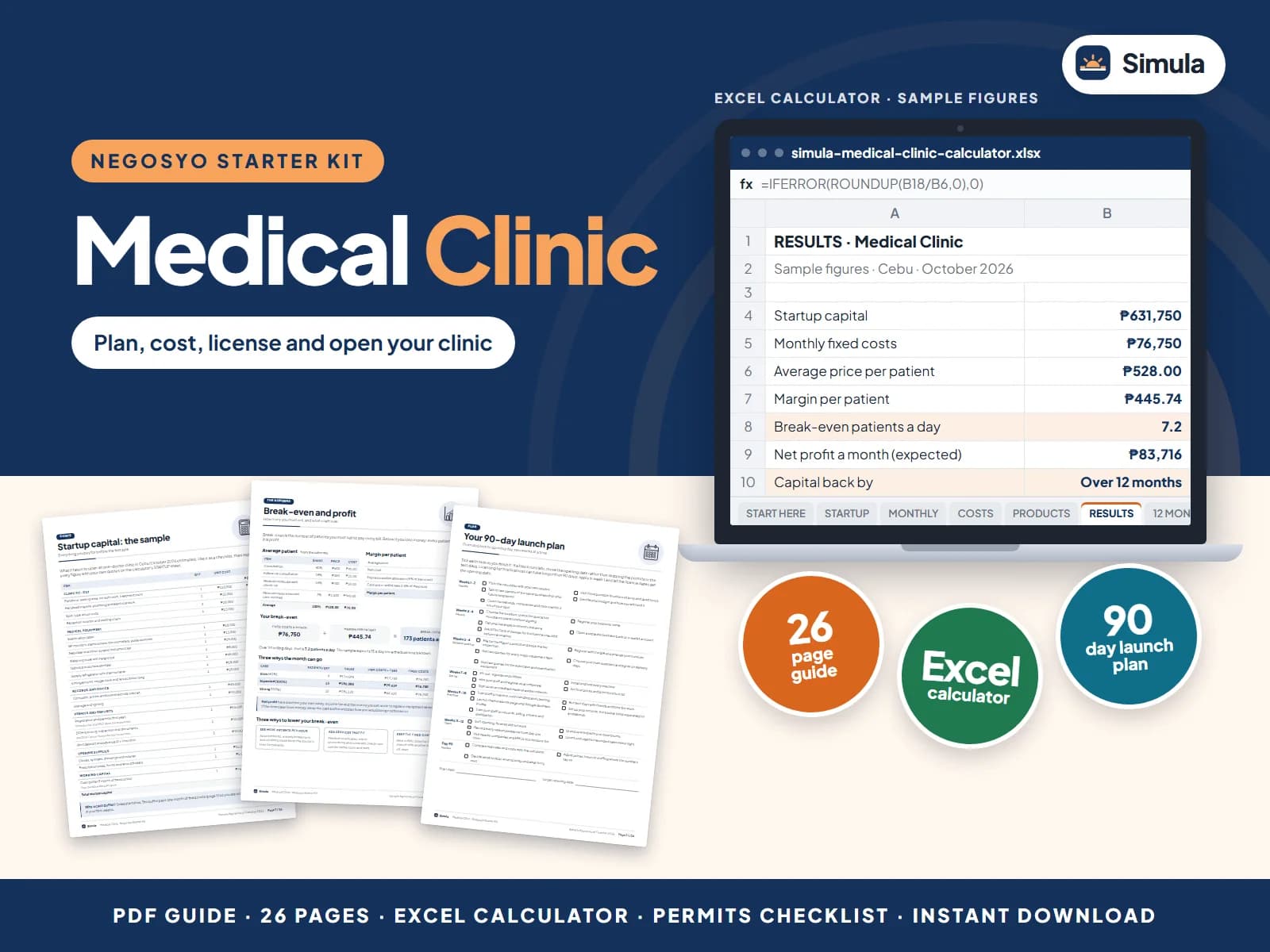
- Sample startup capital: ₱631,750 (October 2026, Cebu).
- Break-even: 7.2 patients a day.
- Register with DTI, the barangay, the city (Mayor's permit) and BIR; also DOH licence to operate (primary care facility), professional tax receipt (PTR), hazardous waste generator registration and s-2 licence for dangerous drugs (if needed).
For licensed physicians: a medical clinic offers consultations, follow-ups, medical certificates and minor procedures to walk-in and appointment patients. Most start as a one-doctor clinic in a rented space near homes, a market or offices, with a nurse and a secretary. The money is made on steady patient numbers, fair fees, and keeping rent, staff and supplies in line.
This guide walks through what it takes to start a medical clinic in the Philippines: the capital, the monthly costs, the permits and the first 90 days. The peso figures are sample estimates for an one-doctor clinic in Cebu as of October 2026; get your own quotes before you decide.
How much capital you need
The sample comes to about ₱631,750 including one month of fixed costs kept as a cash buffer. It splits into clinic fit-out (₱236,000), medical equipment (₱149,000), records and office (₱55,000), permits and deposits (₱85,000), opening supplies (₱30,000) and working capital (₱76,750). Other ways to start: clinic days in a shared clinic at ₱150,000–₱300,000 and group clinic with lab and pharmacy at ₱5 million and up.
Monthly costs and break-even
Fixed costs in the sample are ₱76,750 a month; the biggest are clinic rent (₱20,000), clinic nurse (₱18,200) and secretary (₱15,600). Each patient sold earns about ₱446 after its own costs, so the break-even is 7.2 patients a day, and the startup capital takes about 8 months to come back at full sales.
Permits and registration
Register the business name with DTI (or SEC or CDA), then get the barangay business clearance, the Mayor's permit through the city or municipal BPLO, and BIR registration; register with SSS, PhilHealth and Pag-IBIG once you hire. A medical clinic also needs: DOH licence to operate (primary care facility), professional tax receipt (PTR), hazardous waste generator registration and s-2 licence for dangerous drugs (if needed). Requirements and fees differ by city, so ask each office for its checklist first. DTI Negosyo Centers help for free.
Where to set up
- Ground floor near homes, a market or a terminal
- Near offices and BPOs for workers' check-ups
- A medical building near laboratories and drugstores
- A street with parking or easy tricycle and jeepney access
Mistakes to avoid
- The clinic fills up slowly. Keep the cash buffer, start with fewer clinic days if needed, and build ties with companies and HMOs.
- Licensing delays before opening. Get the DOH and BPLO checklists before you renovate, and build the rooms to their rules.
- Slow HMO payments. Submit claims on time, track each unpaid bill, and keep enough cash for the wait.
- Expired supplies. Order small amounts, use the oldest stock first and check expiry dates every week.
Plan it with the starter kit
The Medical Clinic · Negosyo Starter Kit has every worksheet behind this guide in a 26-page PDF, plus an Excel calculator: type in your own quotes and it works out your capital, break-even, profit and payback month. It costs ₱499 and downloads right after payment.
