Key takeaways
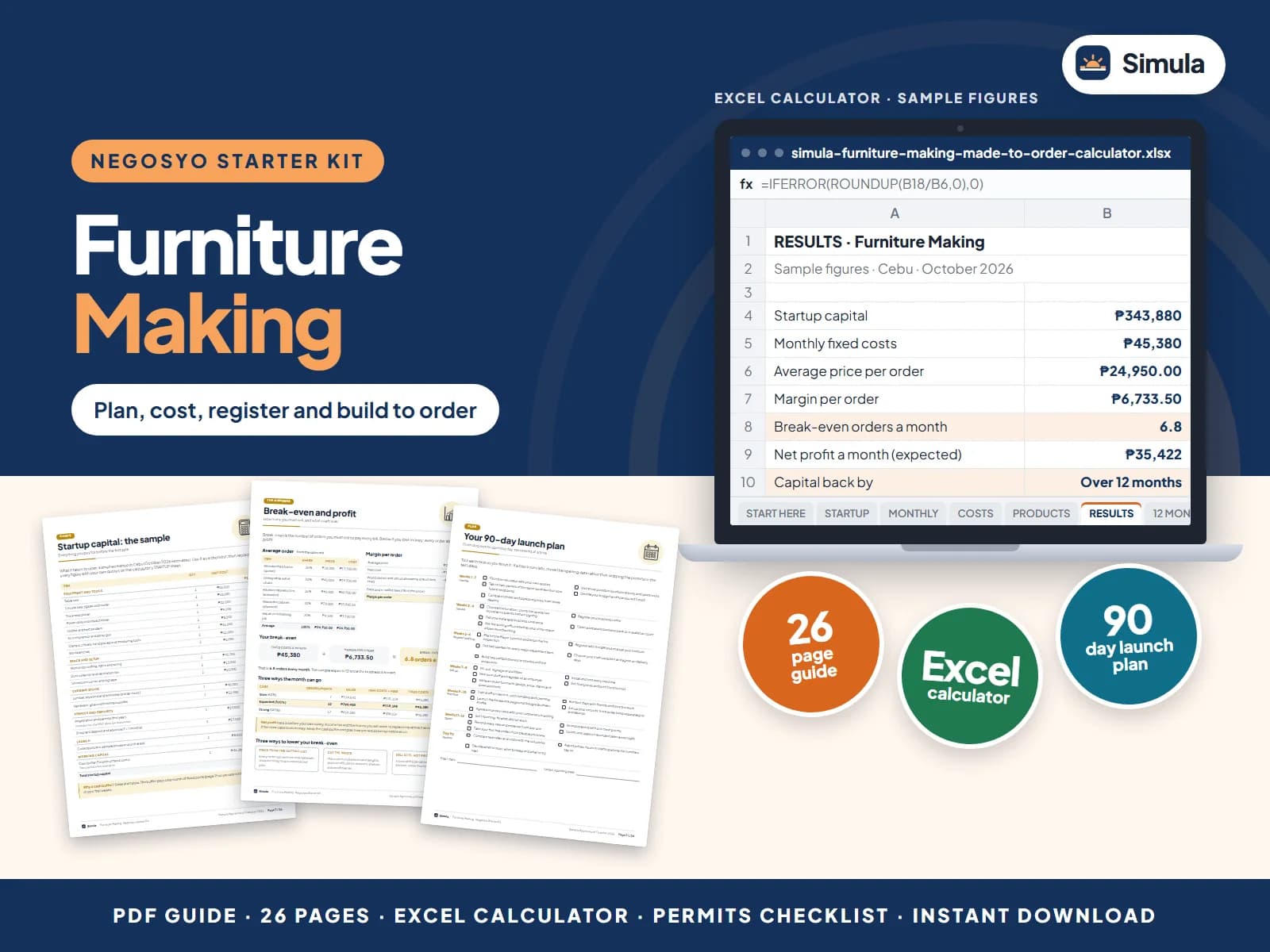
- Sample startup capital: ₱343,880 (October 2026, Cebu).
- Break-even: 6.8 orders a month.
- Register with DTI, the barangay, the city (Mayor's permit) and BIR; also zoning clearance for a woodworking shop, lumber from DENR-registered dealers and safety officer and protective gear.
A made-to-order furniture shop builds beds, tables, wardrobes and kitchen cabinets to each customer's size and design, and does repairs. Most start in a small rented workshop with a lead carpenter, workers paid per piece and a few power tools. The money is in pricing every order from its real materials and piece pay, collecting a downpayment, and delivering on the promised date.
This guide walks through what it takes to start a made-to-order furniture shop in the Philippines: the capital, the monthly costs, the permits and the first 90 days. The peso figures are sample estimates for a small workshop in Cebu as of October 2026; get your own quotes before you decide.
How much capital you need
The sample comes to about ₱343,880 including one month of fixed costs kept as a cash buffer. It splits into equipment and tools (₱122,500), space and setup (₱70,000), opening stock (₱52,000), permits and deposits (₱46,000), launch (₱8,000) and working capital (₱45,380). Other ways to start: home-based carpenter at ₱80,000–₱150,000 and furniture shop with a showroom at ₱1.5 million–₱3 million.
Monthly costs and break-even
Fixed costs in the sample are ₱45,380 a month; the biggest are lead carpenter (₱18,200), workshop rent (₱12,000) and electricity (₱4,500). Each order sold earns about ₱6,734 after its own costs, so the break-even is 6.8 orders a month, and the startup capital takes about 10 months to come back at full sales.
Permits and registration
Register the business name with DTI (or SEC or CDA), then get the barangay business clearance, the Mayor's permit through the city or municipal BPLO, and BIR registration; register with SSS, PhilHealth and Pag-IBIG once you hire. A made-to-order furniture shop also needs: zoning clearance for a woodworking shop, lumber from DENR-registered dealers and safety officer and protective gear. Requirements and fees differ by city, so ask each office for its checklist first. DTI Negosyo Centers help for free.
Where to set up
- Near new subdivisions and condo developments
- Along a main road where a showroom corner can be seen
- Close to lumber and plywood suppliers
- An area zoned for a workshop
Mistakes to avoid
- Late deliveries. Promise dates from the production board, not from hope, and tell customers early when a date moves.
- Wood warps or cracks after delivery. Buy dry lumber, check moisture before cutting, and let the wood rest before finishing.
- Underpriced orders. Price every order from a cutting list, and update material prices every month.
- Injuries from saws. Guards on every machine, push sticks, goggles, and no loose clothing near blades.
Plan it with the starter kit
The Furniture Making · Negosyo Starter Kit has every worksheet behind this guide in a 26-page PDF, plus an Excel calculator: type in your own quotes and it works out your capital, break-even, profit and payback month. It costs ₱349 and downloads right after payment.