Key takeaways
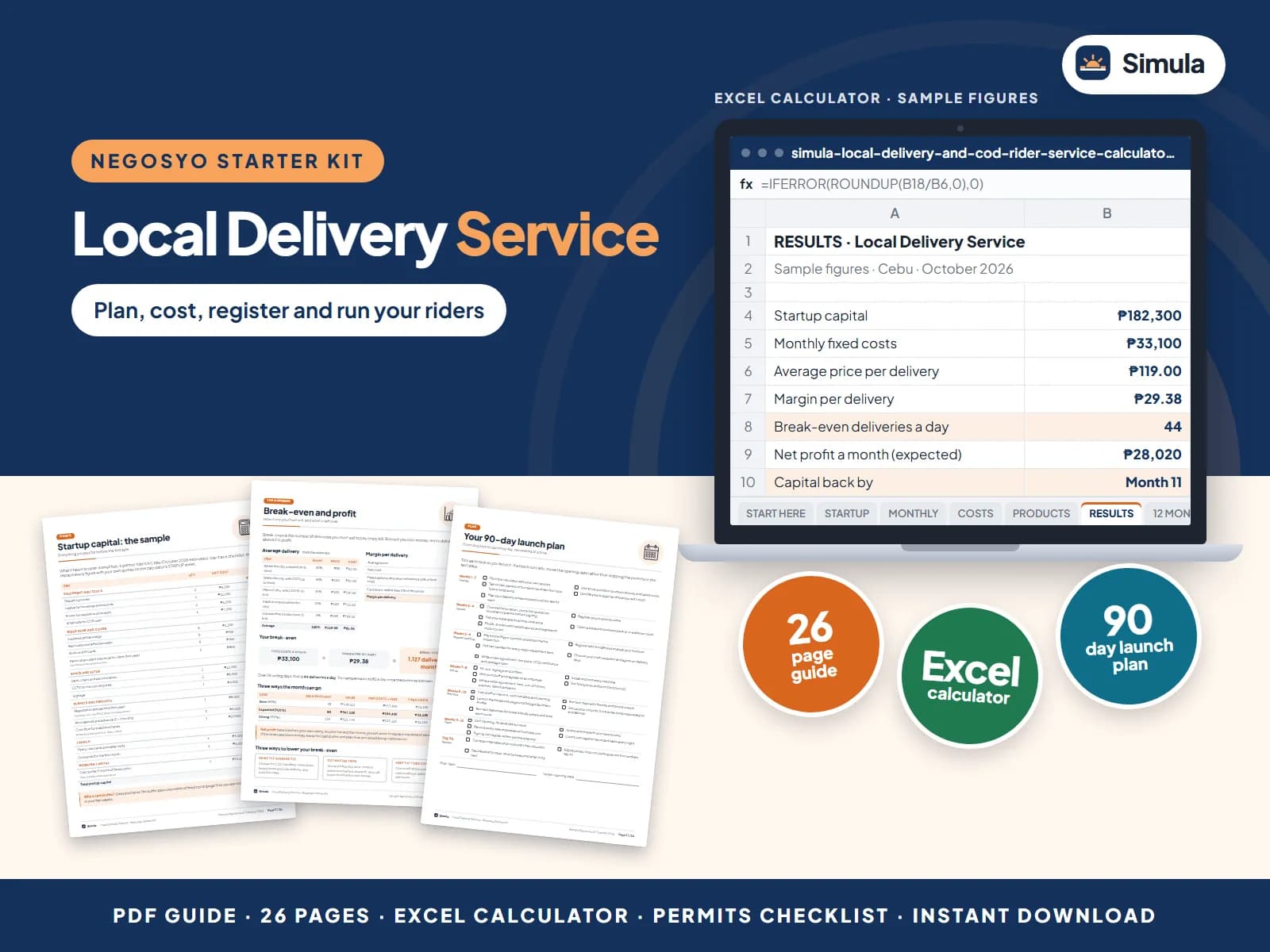
- Sample startup capital: ₱182,300 (October 2026, Cebu).
- Break-even: 44 deliveries a day.
- Register with DTI, the barangay, the city (Mayor's permit) and BIR; also riders' licences and motorcycle papers, advice on rider arrangements and personal data of customers.
A local delivery service picks up parcels, food and documents and delivers them the same day within the city, often collecting cash on delivery (COD) for online sellers. Most start with a dispatcher, a phone and a few partner riders who use their own motorcycles and earn a share of each fee. The money is made on volume, fast remittances and a clean record of every peso of COD.
This guide walks through what it takes to start a local delivery service in the Philippines: the capital, the monthly costs, the permits and the first 90 days. The peso figures are sample estimates for a small hub, 6 partner riders in Cebu as of October 2026; get your own quotes before you decide.
How much capital you need
The sample comes to about ₱182,300 including one month of fixed costs kept as a cash buffer. It splits into equipment and tools (₱56,000), rider gear and cover (₱25,200), space and setup (₱24,000), permits and deposits (₱36,000), launch (₱8,000) and working capital (₱33,100). Other ways to start: hub with 15–20 riders at ₱350,000–₱600,000 and own vans for bulk deliveries at ₱1.5 million and up.
Monthly costs and break-even
Fixed costs in the sample are ₱33,100 a month; the biggest are dispatcher (₱15,600), rent (₱6,000) and internet and phone load (₱2,500). Each delivery sold earns about ₱29 after its own costs, so the break-even is 44 deliveries a day, and the startup capital comes back by month 11 if sales start slow and build up.
Permits and registration
Register the business name with DTI (or SEC or CDA), then get the barangay business clearance, the Mayor's permit through the city or municipal BPLO, and BIR registration; register with SSS, PhilHealth and Pag-IBIG once you hire. A local delivery service also needs: riders' licences and motorcycle papers, advice on rider arrangements and personal data of customers. Requirements and fees differ by city, so ask each office for its checklist first. DTI Negosyo Centers help for free.
Where to set up
- Central to the barangays where most of your sellers are
- Near markets and commercial strips with many small shops
- Close to residential areas that order online a lot
- On a street where riders can park and wait safely
Mistakes to avoid
- A rider keeps or loses COD cash. Remit every day, cap the cash a rider carries, check IDs and references, and count against the delivered list.
- Late payouts to sellers. Pay sellers on a fixed schedule from the business account; late payouts lose sellers faster than late parcels.
- Road accidents. Valid licences only, rain gear, no rushing, and accident insurance for every rider.
- Too many failed deliveries. Confirm buyers before dispatch, and charge sellers the return fee agreed in writing.
Plan it with the starter kit
The Local Delivery Service · Negosyo Starter Kit has every worksheet behind this guide in a 26-page PDF, plus an Excel calculator: type in your own quotes and it works out your capital, break-even, profit and payback month. It costs ₱349 and downloads right after payment.
