Key takeaways
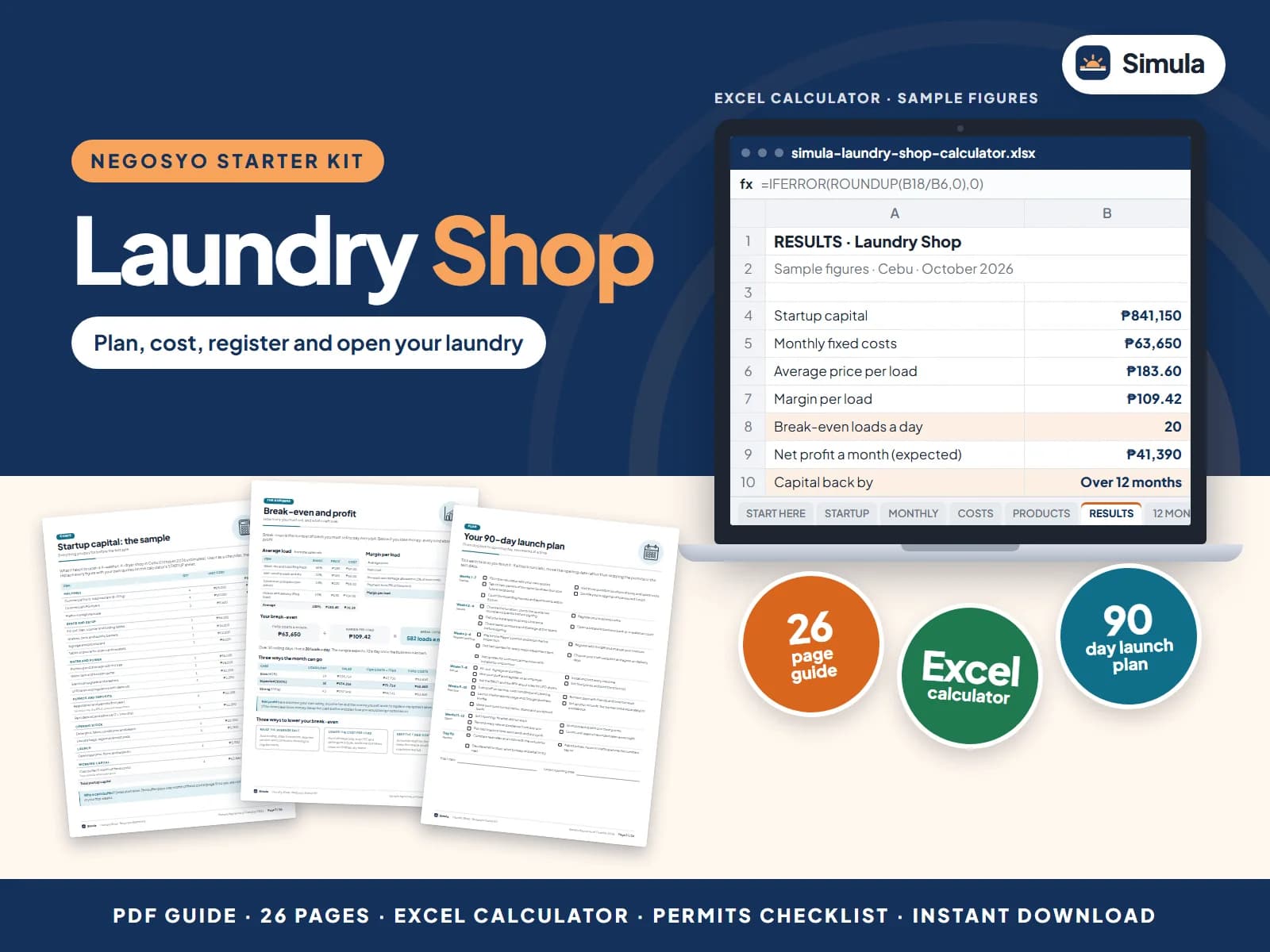
- Sample startup capital: ₱841,150 (October 2026, Cebu).
- Break-even: 20 loads a day.
- Register with DTI, the barangay, the city (Mayor's permit) and BIR; also sanitary permit, health certificates for staff, wastewater and drainage clearance (ask first) and deep-well water permit (if you drill).
A laundry shop washes, dries and folds clothes that customers drop off, and lets others use the machines themselves. Most start with four to six commercial washers and dryers in a small street-front space near boarding houses, dorms and apartments. The money is made on keeping the machines busy, a steady water supply, and controlling LPG, power and detergent per load.
This guide walks through what it takes to start a laundry shop in the Philippines: the capital, the monthly costs, the permits and the first 90 days. The peso figures are sample estimates for a 4-washer, 4-dryer shop in Cebu as of October 2026; get your own quotes before you decide.
How much capital you need
The sample comes to about ₱841,150 including one month of fixed costs kept as a cash buffer. It splits into machines (₱503,500), space and setup (₱90,000), water and power (₱107,000), permits and deposits (₱57,000), opening stock (₱15,000), launch (₱5,000) and working capital (₱63,650). Other ways to start: small wash-dry-fold counter at ₱300,000–₱450,000 and laundry with pickup and delivery at ₱1.3 million–₱2 million.
Monthly costs and break-even
Fixed costs in the sample are ₱63,650 a month; the biggest are attendant wages (₱31,200), rent (₱15,000) and SSS, PhilHealth and Pag-IBIG (₱4,350). Each load sold earns about ₱109 after its own costs, so the break-even is 20 loads a day, and the startup capital takes about 20 months to come back at full sales.
Permits and registration
Register the business name with DTI (or SEC or CDA), then get the barangay business clearance, the Mayor's permit through the city or municipal BPLO, and BIR registration; register with SSS, PhilHealth and Pag-IBIG once you hire. A laundry shop also needs: sanitary permit, health certificates for staff, wastewater and drainage clearance (ask first) and deep-well water permit (if you drill). Requirements and fees differ by city, so ask each office for its checklist first. DTI Negosyo Centers help for free.
Where to set up
- Walking distance from boarding houses, dorms and apartments
- Near schools, hospitals and BPO offices
- On a street with parking or a loading spot
- Near the gate of a busy residential area or subdivision
Mistakes to avoid
- Lost or damaged clothes. Tag every load, list special items at drop-off, and post your claim policy at the counter.
- Water interruptions. A storage tank and booster pump, and a water delivery contact for long outages.
- A machine breaks down on a busy day. Regular cleaning and service, spare parts on hand, and a technician on call.
- Unclaimed laundry piling up. Payment at drop-off, reminders, and a posted rule on how long unclaimed loads are kept.
Plan it with the starter kit
The Laundry Shop · Negosyo Starter Kit has every worksheet behind this guide in a 26-page PDF, plus an Excel calculator: type in your own quotes and it works out your capital, break-even, profit and payback month. It costs ₱349 and downloads right after payment.
