Key takeaways
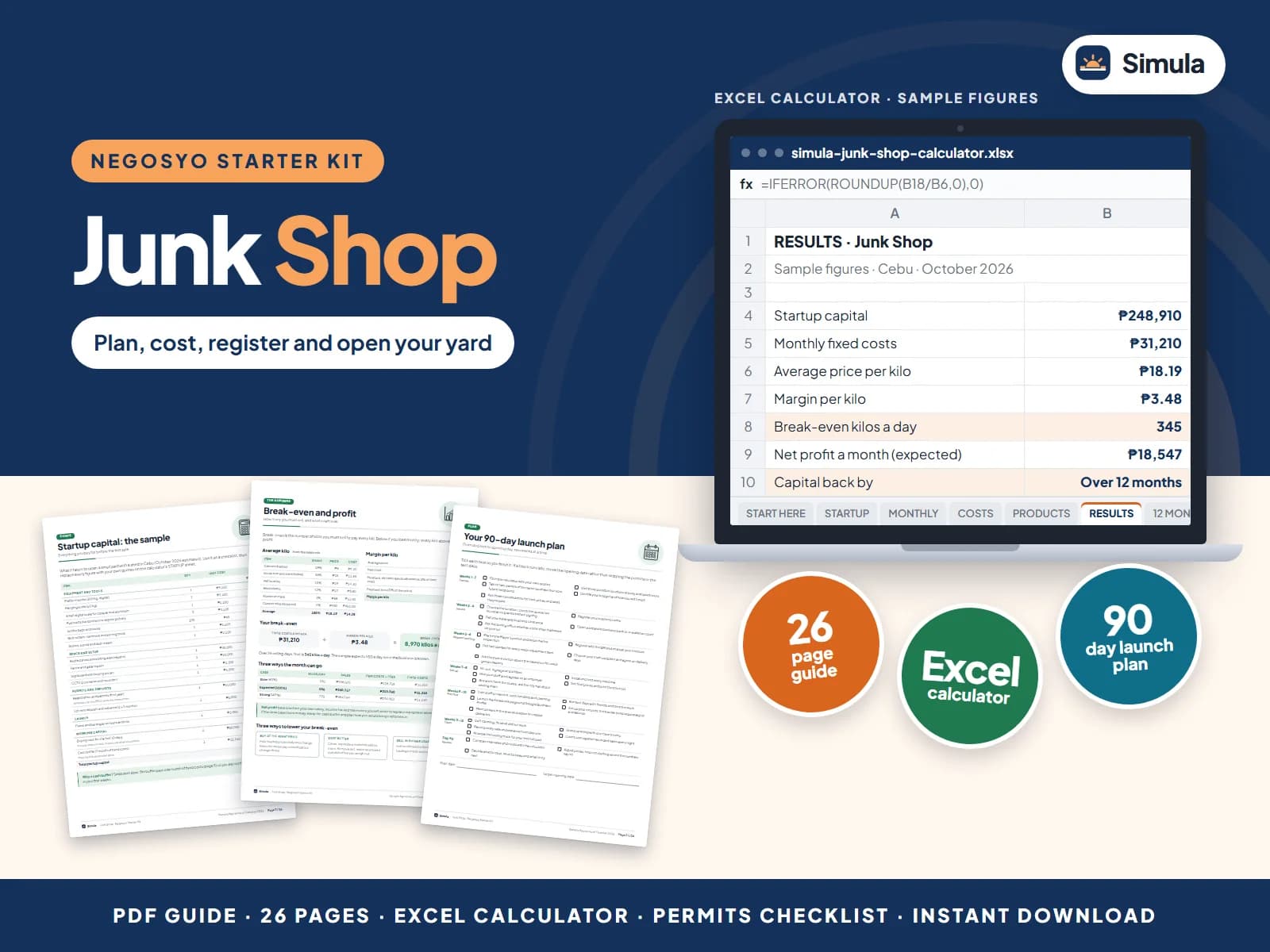
- Sample startup capital: ₱248,910 (October 2026, Cebu).
- Break-even: 345 kilos a day.
- Register with DTI, the barangay, the city (Mayor's permit) and BIR; also clearance for dealing in used goods, junk shop accreditation, if your city requires it, scale verification and seal and rules for batteries, e-waste and used oil.
A junk shop buys scrap by the kilo from pickers, households and stores, sorts it, and sells it in bulk to consolidators and recyclers. Most start on a small rented lot with a roofed shed, a platform scale and cash for buying. The money is in the gap between buying and selling prices, so honest weighing, good sorting and selling quickly decide the profit.
This guide walks through what it takes to start a junk shop in the Philippines: the capital, the monthly costs, the permits and the first 90 days. The peso figures are sample estimates for a small yard with a shed in Cebu as of October 2026; get your own quotes before you decide.
How much capital you need
The sample comes to about ₱248,910 including one month of fixed costs kept as a cash buffer. It splits into equipment and tools (₱33,200), space and setup (₱68,500), permits and deposits (₱34,000), launch (₱2,000) and working capital (₱111,210). Other ways to start: junk shop with a baler and truck at ₱900,000–₱1.5 million and consolidator at ₱3 million and up.
Monthly costs and break-even
Fixed costs in the sample are ₱31,210 a month; the biggest are sorter and helper (₱15,600), lot rent (₱8,000) and SSS, PhilHealth and Pag-IBIG (₱2,180). Each kilo sold earns about ₱3 after its own costs, so the break-even is 345 kilos a day, and the startup capital takes about 13 months to come back at full sales.
Permits and registration
Register the business name with DTI (or SEC or CDA), then get the barangay business clearance, the Mayor's permit through the city or municipal BPLO, and BIR registration; register with SSS, PhilHealth and Pag-IBIG once you hire. A junk shop also needs: clearance for dealing in used goods, junk shop accreditation, if your city requires it, scale verification and seal and rules for batteries, e-waste and used oil. Requirements and fees differ by city, so ask each office for its checklist first. DTI Negosyo Centers help for free.
Where to set up
- Near barangays where many pickers live
- On a road a truck can enter to load bales
- Near markets, malls and stores that throw away cartons
- Near small workshops and construction areas
Mistakes to avoid
- Buying stolen goods. Record every seller's name and ID, refuse cables, manhole covers and road signs, and call the police when in doubt.
- Scrap prices drop suddenly. Sell often instead of hoarding, and change your buying prices the same day consolidators change theirs.
- Fire in stored paper and plastic. No smoking, extinguishers within reach, wiring checked, and stock sold before it piles up.
- Complaints from neighbors. Keep the yard tidy, never burn anything, store everything inside the fence and load only in daytime.
Plan it with the starter kit
The Junk Shop · Negosyo Starter Kit has every worksheet behind this guide in a 26-page PDF, plus an Excel calculator: type in your own quotes and it works out your capital, break-even, profit and payback month. It costs ₱349 and downloads right after payment.
