Key takeaways
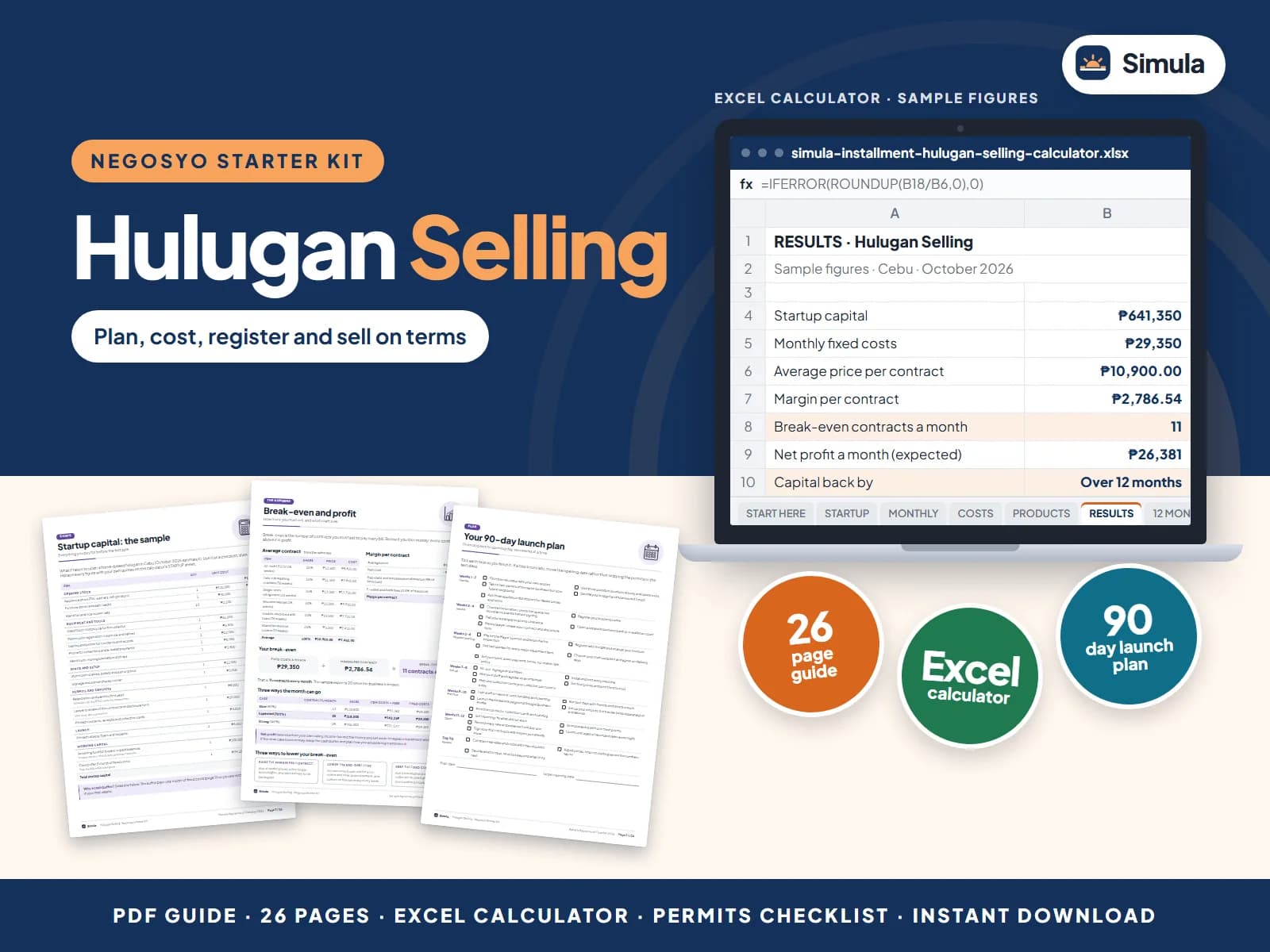
- Sample startup capital: ₱641,350 (October 2026, Cebu).
- Break-even: 11 contracts a month.
- Register with DTI, the barangay, the city (Mayor's permit) and BIR; also truth in Lending disclosure for every contract, product certification marks and SEC licence, only if you lend cash.
A hulugan business sells appliances and furniture that buyers pay off in weekly instalments. Most start from home with a small stockroom, a printed catalog and one collector on a motorcycle. The money is in the mark-up for the instalment terms, and it is only kept by screening buyers well, collecting on schedule and having enough capital to carry months of unpaid balances.
This guide walks through what it takes to start a hulugan (installment) business in the Philippines: the capital, the monthly costs, the permits and the first 90 days. The peso figures are sample estimates for a home-based hulugan in Cebu as of October 2026; get your own quotes before you decide.
How much capital you need
The sample comes to about ₱641,350 including one month of fixed costs kept as a cash buffer. It splits into opening stock (₱172,000), equipment and tools (₱95,000), space and setup (₱17,000), permits and deposits (₱22,000), launch (₱6,000) and working capital (₱329,350). Other ways to start: small appliance and furniture store at ₱1.2 million–₱2 million and multi-town seller with agents at ₱3 million and up.
Monthly costs and break-even
Fixed costs in the sample are ₱29,350 a month; the biggest are collector wage (₱15,600), motorcycle fuel and upkeep (₱4,500) and SSS, PhilHealth and Pag-IBIG (₱2,180). Each contract sold earns about ₱2,787 after its own costs, so the break-even is 11 contracts a month, and the startup capital takes about 24 months to come back at full sales.
Permits and registration
Register the business name with DTI (or SEC or CDA), then get the barangay business clearance, the Mayor's permit through the city or municipal BPLO, and BIR registration; register with SSS, PhilHealth and Pag-IBIG once you hire. A hulugan (installment) business also needs: truth in Lending disclosure for every contract, product certification marks and SEC licence, only if you lend cash. Requirements and fees differ by city, so ask each office for its checklist first. DTI Negosyo Centers help for free.
Where to set up
- Town centers and public markets where buyers already shop
- Near factories, ports and economic zones with regular paydays
- Barangays without an appliance store nearby
- Areas where you or your collector know the families
Mistakes to avoid
- Buyers stop paying. Check income and address, ask for a co-maker and a down payment, and follow up within two days of a missed week.
- Cash tied up in unpaid balances. Keep the revolving fund separate, and limit new contracts each month to what collections can replace.
- A collector keeps collections. Numbered receipts, buyers' collection cards checked against your records each month, and daily deposits.
- Repossession disputes. Clear written terms, the disclosure signed before release, and a lawyer's advice before taking back any item.
Plan it with the starter kit
The Hulugan Selling · Negosyo Starter Kit has every worksheet behind this guide in a 26-page PDF, plus an Excel calculator: type in your own quotes and it works out your capital, break-even, profit and payback month. It costs ₱349 and downloads right after payment.
