Key takeaways
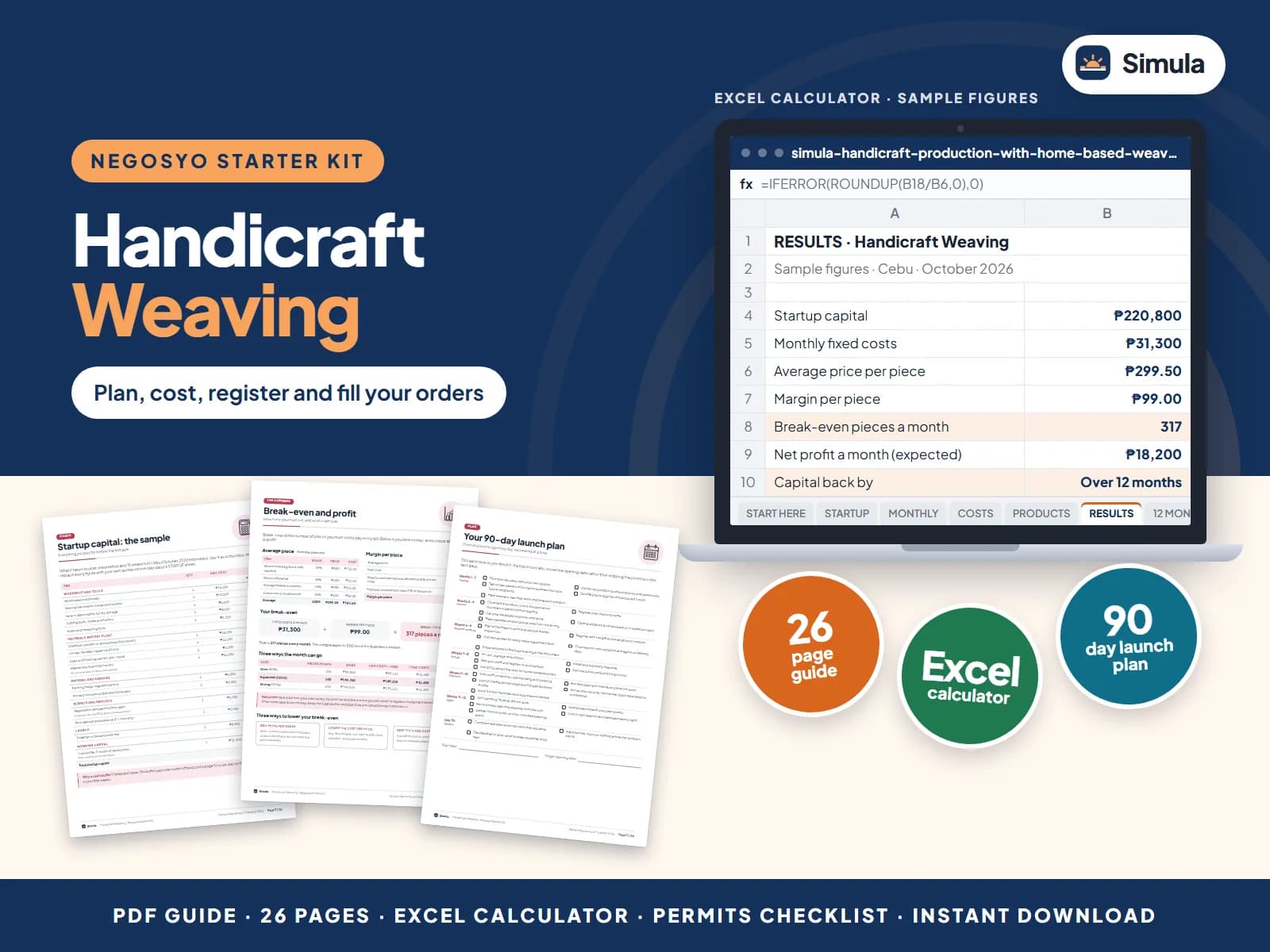
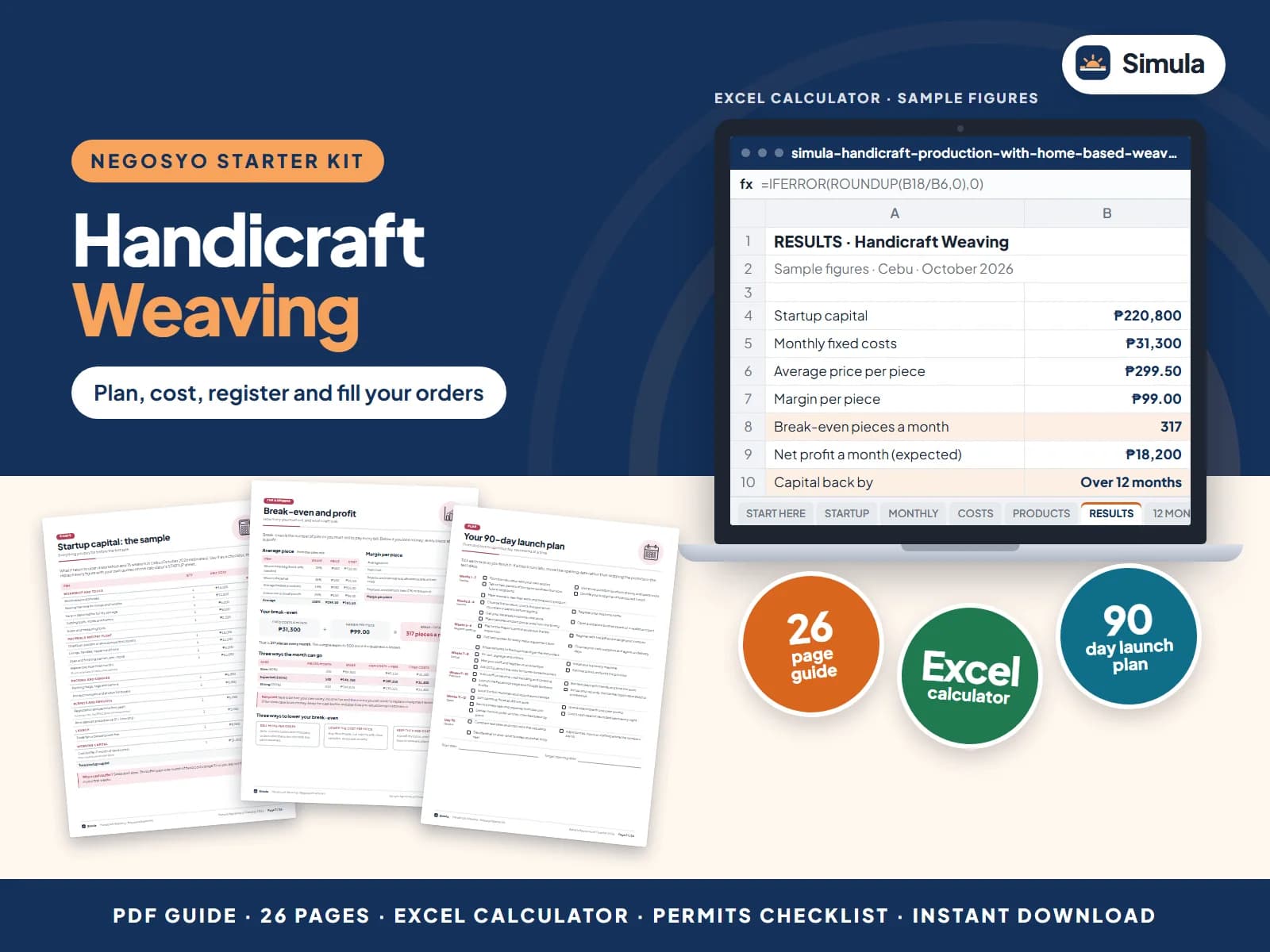
- Sample startup capital: ₱220,800 (October 2026, Cebu).
- Break-even: 317 pieces a month.
- Register with DTI, the barangay, the city (Mayor's permit) and BIR; also rules for home-based workers, permits for fiber gathered from the wild and product labels for shops.
A handicraft weaving business gives materials and designs to home-based weavers, pays them per accepted piece, then finishes, packs and sells the products to shops, resellers and buyers online. Most start with 10 to 15 weavers in nearby barangays and a small room for checking and storage. The money is in steady orders, strict quality checks and a price that covers materials, fair piece rates and packing.
This guide walks through what it takes to start a handicraft weaving business in the Philippines: the capital, the monthly costs, the permits and the first 90 days. The peso figures are sample estimates for a workshop and 15 weavers in Cebu as of October 2026; get your own quotes before you decide.
How much capital you need
The sample comes to about ₱220,800 including one month of fixed costs kept as a cash buffer. It splits into workshop and tools (₱43,500), materials and pay float (₱101,000), packing and samples (₱16,000), permits and deposits (₱21,000), launch (₱8,000) and working capital (₱31,300). Other ways to start: home-based with 5 weavers at ₱40,000–₱80,000 and export-ready production center at ₱1 million and up.
Monthly costs and break-even
Fixed costs in the sample are ₱31,300 a month; the biggest are finisher wages (₱15,600), rent (₱5,000) and transport: materials out, pieces in (₱2,500). Each piece sold earns about ₱99 after its own costs, so the break-even is 317 pieces a month, and the startup capital takes about 12 months to come back at full sales.
Permits and registration
Register the business name with DTI (or SEC or CDA), then get the barangay business clearance, the Mayor's permit through the city or municipal BPLO, and BIR registration; register with SSS, PhilHealth and Pag-IBIG once you hire. A handicraft weaving business also needs: rules for home-based workers, permits for fiber gathered from the wild and product labels for shops. Requirements and fees differ by city, so ask each office for its checklist first. DTI Negosyo Centers help for free.
Where to set up
- Near barangays with weaving skills and materials
- A town with a good road to the city for deliveries
- Near a courier or freight pick-up point
- A dry room for storing fiber and finished goods
Mistakes to avoid
- Quality differs from weaver to weaver. A sample and measurements for every product, a check on every piece, and help for weavers who struggle.
- Mold or pests in fiber and stock. Buy dried, treated fiber, store it off the floor in a dry room, and check it monthly.
- Buyers pay late. Deposits on big orders, written terms, and a pay float so weavers are still paid on time.
- Materials go missing. Record every release, and check materials used against pieces delivered.
Plan it with the starter kit
The Handicraft Weaving · Negosyo Starter Kit has every worksheet behind this guide in a 26-page PDF, plus an Excel calculator: type in your own quotes and it works out your capital, break-even, profit and payback month. It costs ₱349 and downloads right after payment.