Key takeaways
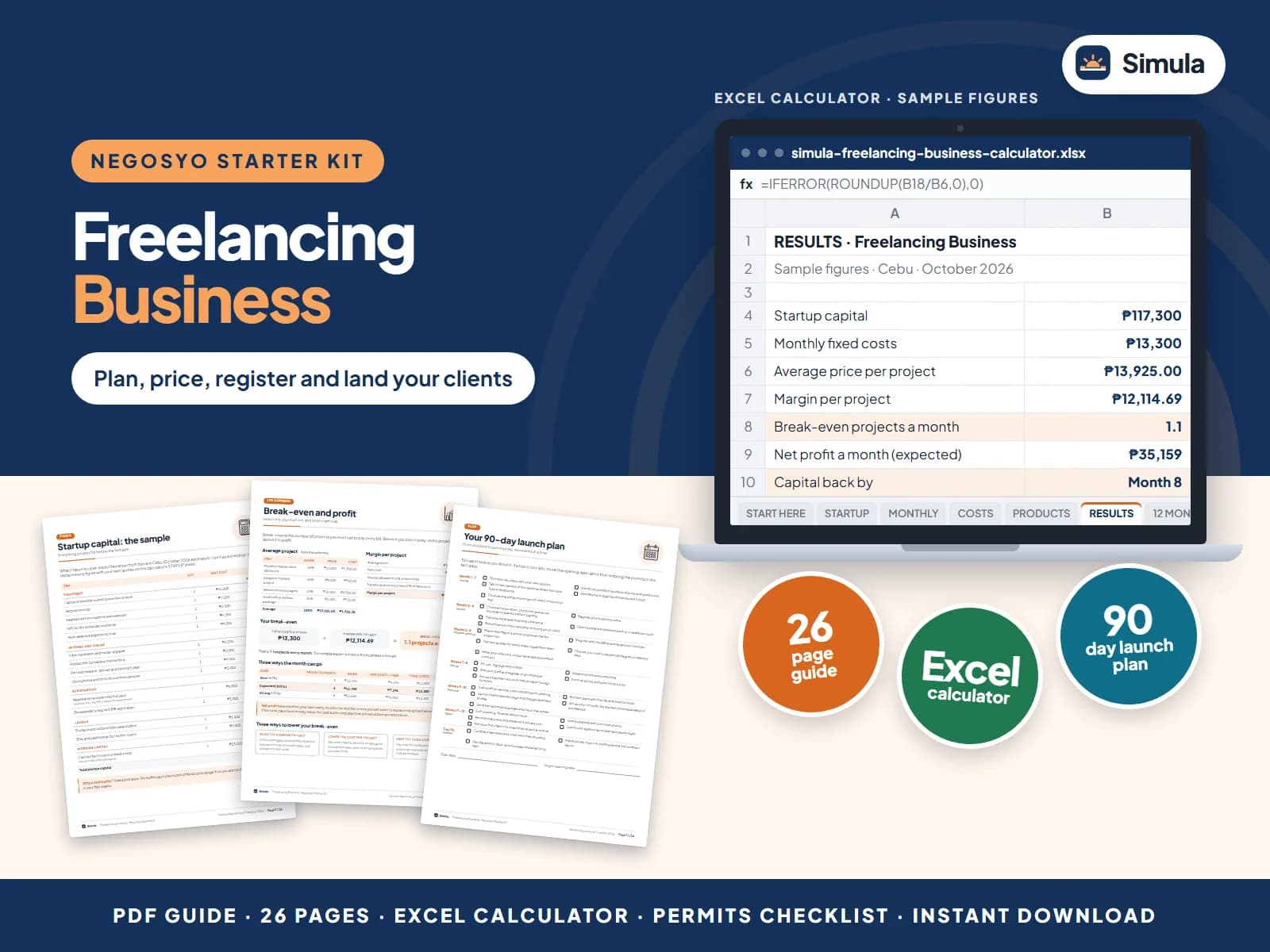
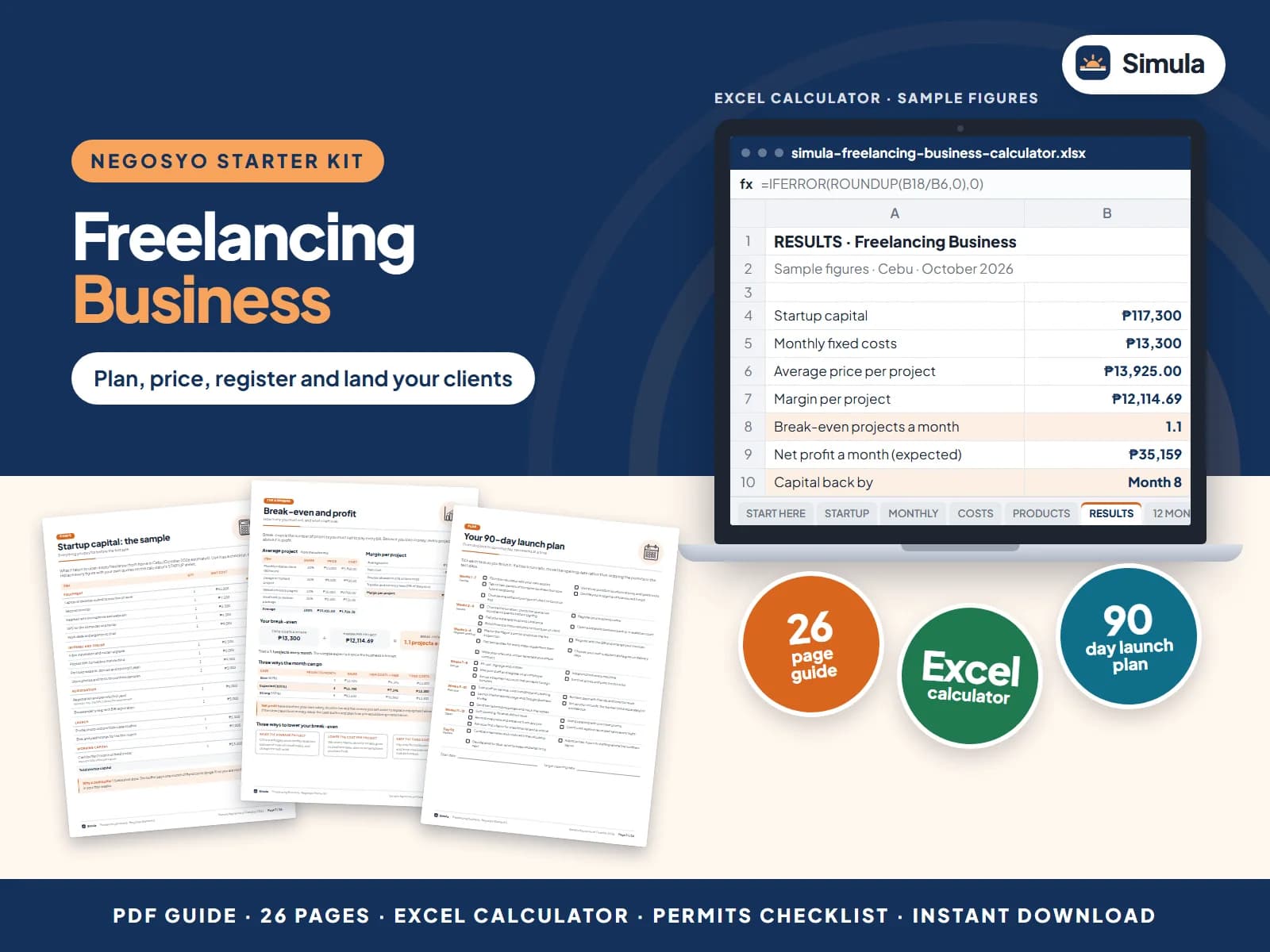
- Sample startup capital: ₱117,300 (October 2026, Cebu).
- Break-even: 1.1 projects a month.
- Register with DTI, the barangay, the city (Mayor's permit) and BIR; also professional Tax Receipt (PTR), permit for a home-based business and data privacy check.
A freelancing business sells your skills, such as admin support, design, writing, video or web work, to clients in the Philippines and abroad, paid per project or by monthly retainer. Most start alone from home with a laptop and a fast internet line. The money is made on steady repeat clients, clear scopes and getting paid in full and on time.
This guide walks through what it takes to start a freelancing business in the Philippines: the capital, the monthly costs, the permits and the first 90 days. The peso figures are sample estimates for a solo freelancer from home in Cebu as of October 2026; get your own quotes before you decide.
How much capital you need
The sample comes to about ₱117,300 including one month of fixed costs kept as a cash buffer. It splits into equipment (₱79,500), internet and online (₱12,000), registration (₱9,000), launch (₱3,500) and working capital (₱13,300). Other ways to start: small team with 2–3 subcontractors at ₱150,000–₱300,000 and registered studio with an office at ₱500,000–₱1 million.
Monthly costs and break-even
Fixed costs in the sample are ₱13,300 a month; the biggest are electricity share (₱2,500), equipment replacement set aside (₱2,500) and software subscriptions (₱2,000). Each project sold earns about ₱12,115 after its own costs, so the break-even is 1.1 projects a month, and the startup capital comes back by month 8 if sales start slow and build up.
Permits and registration
Register the business name with DTI (or SEC or CDA), then get the barangay business clearance, the Mayor's permit through the city or municipal BPLO, and BIR registration; register with SSS, PhilHealth and Pag-IBIG once you hire. A freelancing business also needs: professional Tax Receipt (PTR), permit for a home-based business and data privacy check. Requirements and fees differ by city, so ask each office for its checklist first. DTI Negosyo Centers help for free.
Where to set up
- A quiet room at home with a door you can close during calls
- A home on a fiber line, with mobile data as backup
- A coworking space near home for days the power or internet is down
- An area with stable power, or a home with a UPS or small generator
Mistakes to avoid
- A client does not pay. A written scope and terms, a deposit before work starts, milestone billing, and no final files until the balance is paid.
- Depending on one big client. Keep looking for clients even when busy, and aim for no client above about half of your income.
- Scope creep eats your hours. Write down what is included, log every extra request and quote it separately.
- Brownouts and internet outages. A UPS, a mobile data backup and a coworking space you can go to on bad days.
Plan it with the starter kit
The Freelancing Business · Negosyo Starter Kit has every worksheet behind this guide in a 26-page PDF, plus an Excel calculator: type in your own quotes and it works out your capital, break-even, profit and payback month. It costs ₱349 and downloads right after payment.