Key takeaways
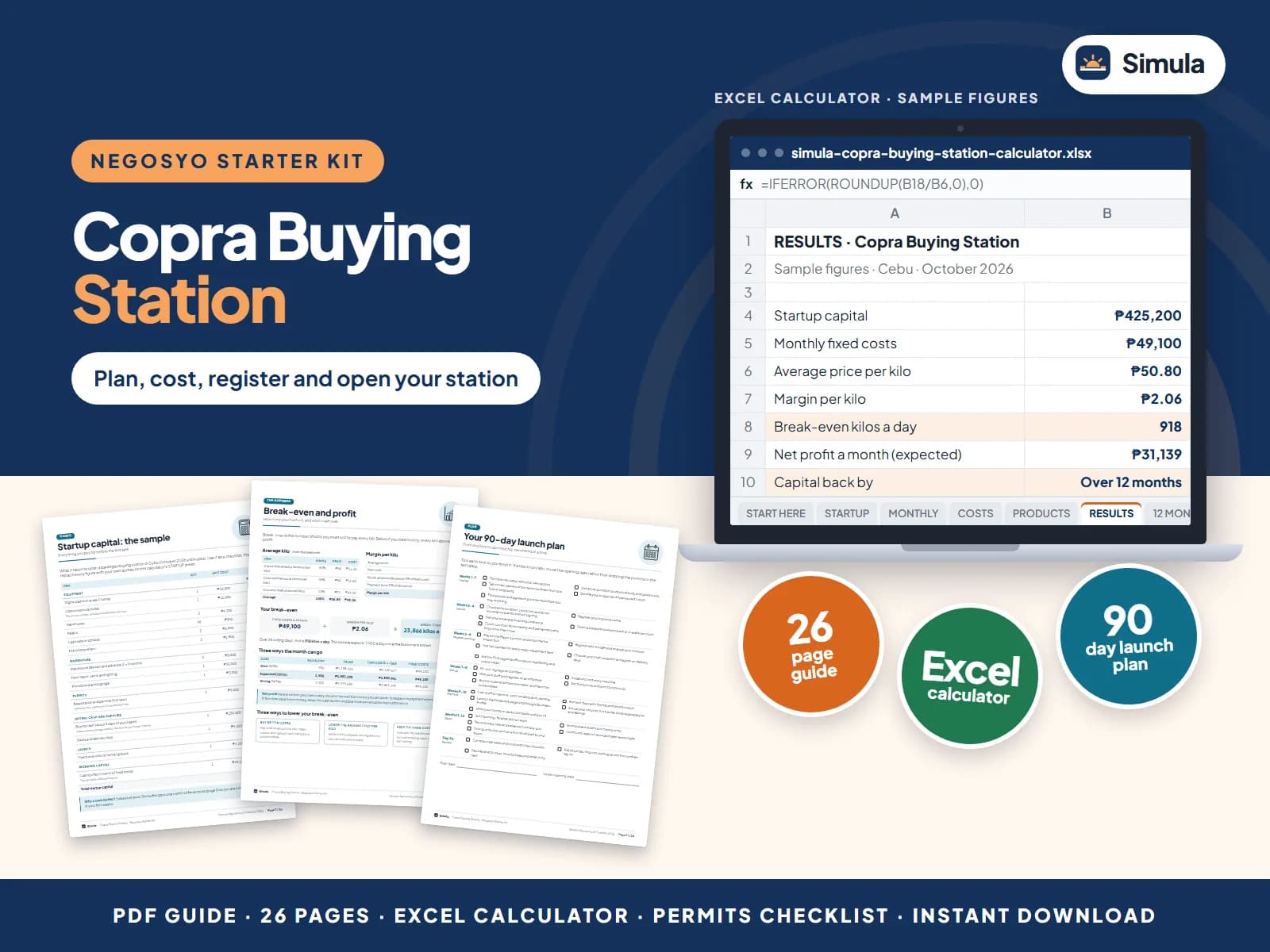
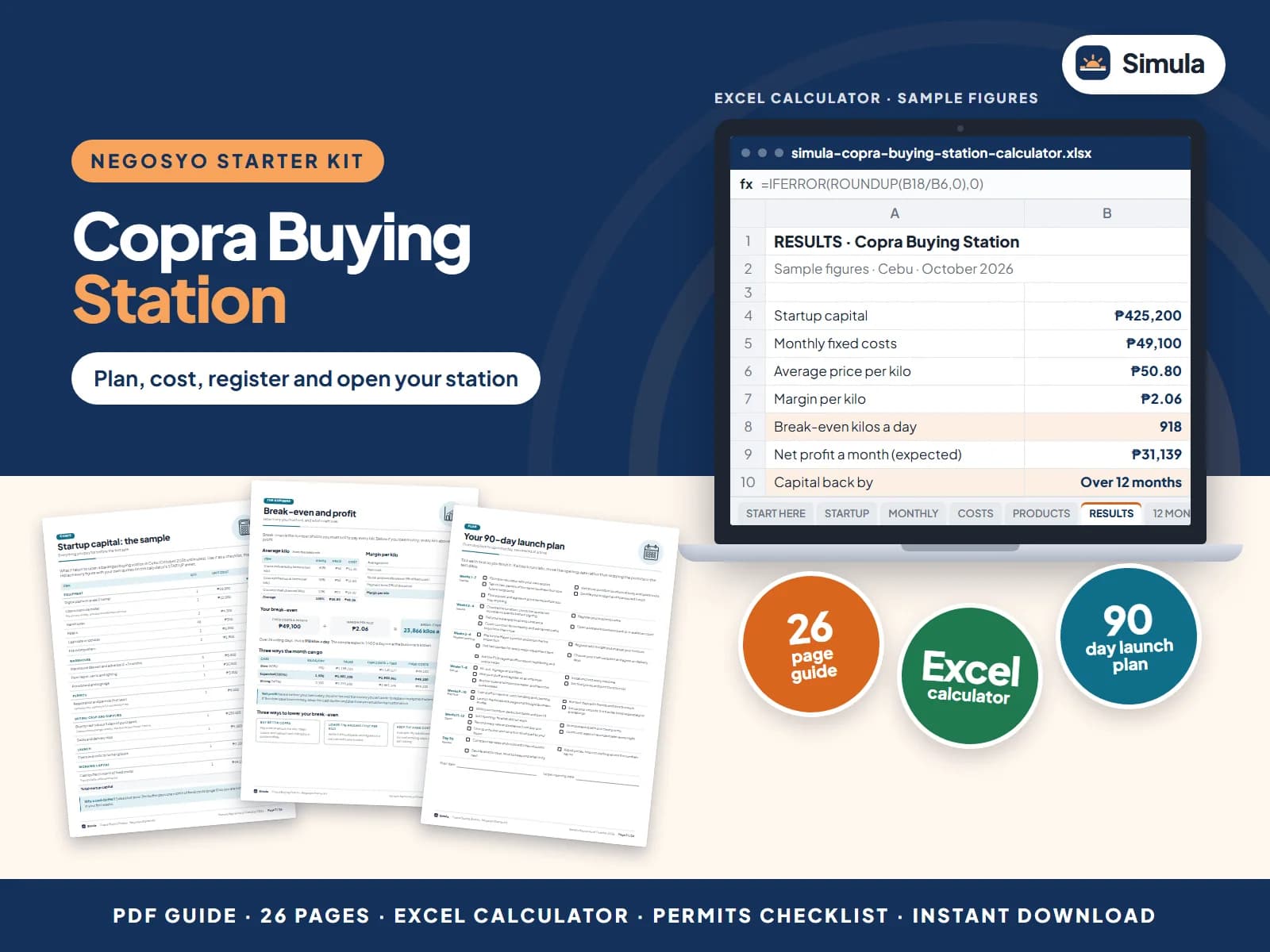
- Sample startup capital: ₱425,200 (October 2026, Cebu).
- Break-even: 918 kilos a day.
- Register with DTI, the barangay, the city (Mayor's permit) and BIR; also registration as a coconut trader and scale inspection and sealing.
A copra buying station buys dried coconut meat from farmers by the kilo, deducts for moisture and sells it in bulk to oil mills or bigger traders. Most start with a dry warehouse, a sealed scale, a moisture meter and enough cash to pay farmers on the spot. Margins per kilo are small; the money is made on volume, fair grading, quick turnover and a buyer who pays on time.
This guide walks through what it takes to start a copra buying station in the Philippines: the capital, the monthly costs, the permits and the first 90 days. The peso figures are sample estimates for a barangay buying station in Cebu as of October 2026; get your own quotes before you decide.
How much capital you need
The sample comes to about ₱425,200 including one month of fixed costs kept as a cash buffer. It splits into equipment (₱72,600), warehouse (₱57,000), permits (₱9,000), buying cash and supplies (₱235,000), launch (₱2,500) and working capital (₱49,100). Other ways to start: buying agent for a bigger trader at ₱50,000–₱150,000 and trader with own truck and dryer at ₱2 million–₱4 million.
Monthly costs and break-even
Fixed costs in the sample are ₱49,100 a month; the biggest are helpers' wages (₱31,200), warehouse rent (₱8,000) and SSS, PhilHealth and Pag-IBIG (₱4,350). Each kilo sold earns about ₱2 after its own costs, so the break-even is 918 kilos a day, and the startup capital takes about 14 months to come back at full sales.
Permits and registration
Register the business name with DTI (or SEC or CDA), then get the barangay business clearance, the Mayor's permit through the city or municipal BPLO, and BIR registration; register with SSS, PhilHealth and Pag-IBIG once you hire. A copra buying station also needs: registration as a coconut trader and scale inspection and sealing. Requirements and fees differ by city, so ask each office for its checklist first. DTI Negosyo Centers help for free.
Where to set up
- On the main road of a coconut-farming barangay
- Where farmers already pass on market day
- On a road a 6-wheel truck can use in the rainy season
- Close to your buyer, or on its trucks' route
Mistakes to avoid
- Copra prices fall while you hold stock. Sell often, in full loads, and do not hold stock waiting for a better price.
- Wet copra and moisture disputes. Test several sacks, post the deduction table, and show farmers the meter reading.
- Your buyer pays late or cuts the price. Agree on terms in writing, keep a second buyer, and never ship more than you can wait for.
- Moldy copra is rejected by the buyer. Store on pallets in a dry, aired warehouse and sell within days.
Plan it with the starter kit
The Copra Buying Station · Negosyo Starter Kit has every worksheet behind this guide in a 26-page PDF, plus an Excel calculator: type in your own quotes and it works out your capital, break-even, profit and payback month. It costs ₱349 and downloads right after payment.