Key takeaways
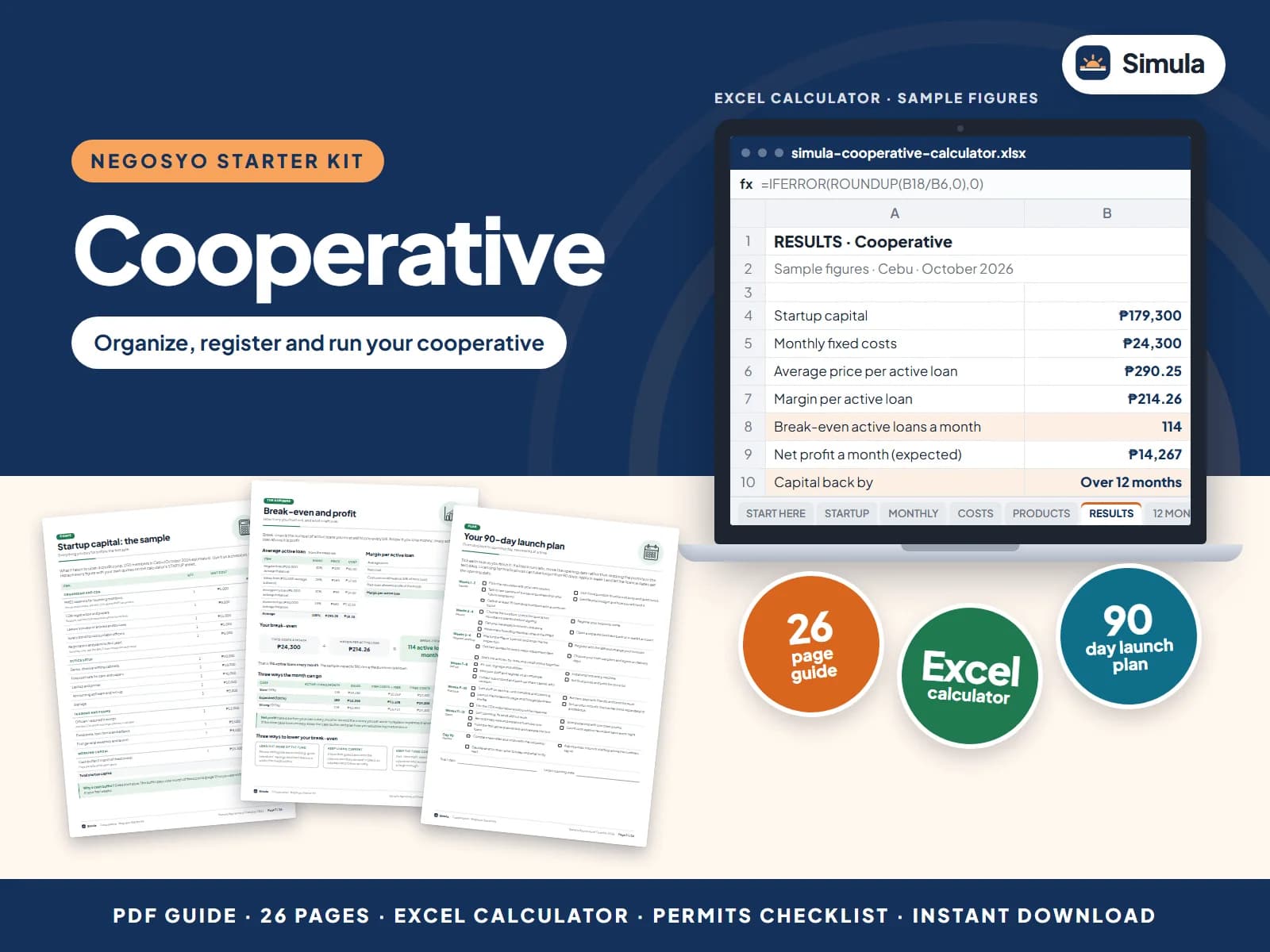
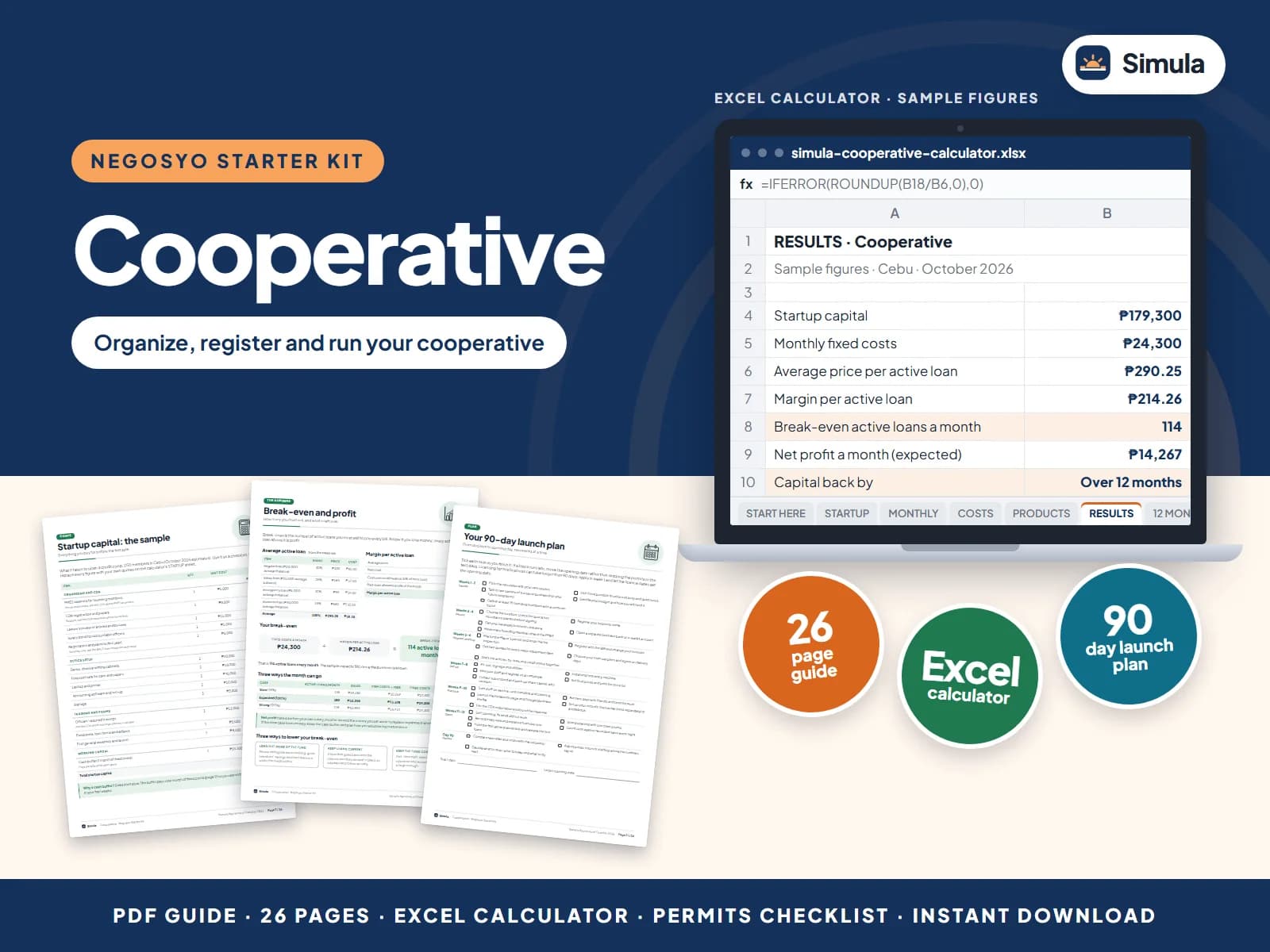
- Sample startup capital: ₱179,300 (October 2026, Cebu).
- Break-even: 114 active loans a month.
- Register with DTI, the barangay, the city (Mayor's permit) and BIR; also CDA registration as a cooperative, certificate of Tax Exemption, bond of accountable officers and yearly reports to the CDA.
For groups registering a cooperative with the CDA. A cooperative is a business owned and run by its members; the most common start is a savings and credit cooperative of coworkers, vendors or neighbors who pool share capital and savings and lend to one another. The money is made on loan interest repaid on time; the surplus goes to the funds the law requires and back to members.
This guide walks through what it takes to start a cooperative in the Philippines: the capital, the monthly costs, the permits and the first 90 days. The peso figures are sample estimates for a credit coop, 250 members in Cebu as of October 2026; get your own quotes before you decide.
How much capital you need
The sample comes to about ₱179,300 including one month of fixed costs kept as a cash buffer. It splits into organizing and cda (₱39,000), office setup (₱91,000), training and forms (₱25,000) and working capital (₱24,300). Other ways to start: workplace coop run by volunteers at ₱30,000 + the loan fund and multipurpose coop with a store at ₱500,000 + the loan fund.
Monthly costs and break-even
Fixed costs in the sample are ₱24,300 a month; the biggest are bookkeeper and cashier (₱12,000), office space (₱3,000) and SSS, PhilHealth and Pag-IBIG (₱1,700). Each active loan sold earns about ₱214 after its own costs, so the break-even is 114 active loans a month, and the startup capital takes about 13 months to come back at full sales.
Permits and registration
Register the business name with DTI (or SEC or CDA), then get the barangay business clearance, the Mayor's permit through the city or municipal BPLO, and BIR registration; register with SSS, PhilHealth and Pag-IBIG once you hire. A cooperative also needs: CDA registration as a cooperative, certificate of Tax Exemption, bond of accountable officers and yearly reports to the CDA. Requirements and fees differ by city, so ask each office for its checklist first. DTI Negosyo Centers help for free.
Where to set up
- Inside or near the members' workplace, market or parish
- A ground-floor room members can reach on paydays
- Near the bank where the coop keeps its deposits
- A space the members' group can lend or rent cheaply
Mistakes to avoid
- Loans go unpaid. A written credit policy, limits tied to share capital, payroll deduction where allowed and early follow-up.
- Fraud or misuse by an officer. Two people at every cash count, bonded officers, a monthly bank reconciliation and an active audit committee.
- Too few loans to cover the costs. Start with volunteers and part-time staff, and add staff only when interest income pays for them.
- Members lose trust. Open books, regular reports, general assemblies held on time and fair treatment of every member.
Plan it with the starter kit
The Cooperative · Negosyo Starter Kit has every worksheet behind this guide in a 26-page PDF, plus an Excel calculator: type in your own quotes and it works out your capital, break-even, profit and payback month. It costs ₱499 and downloads right after payment.