Key takeaways
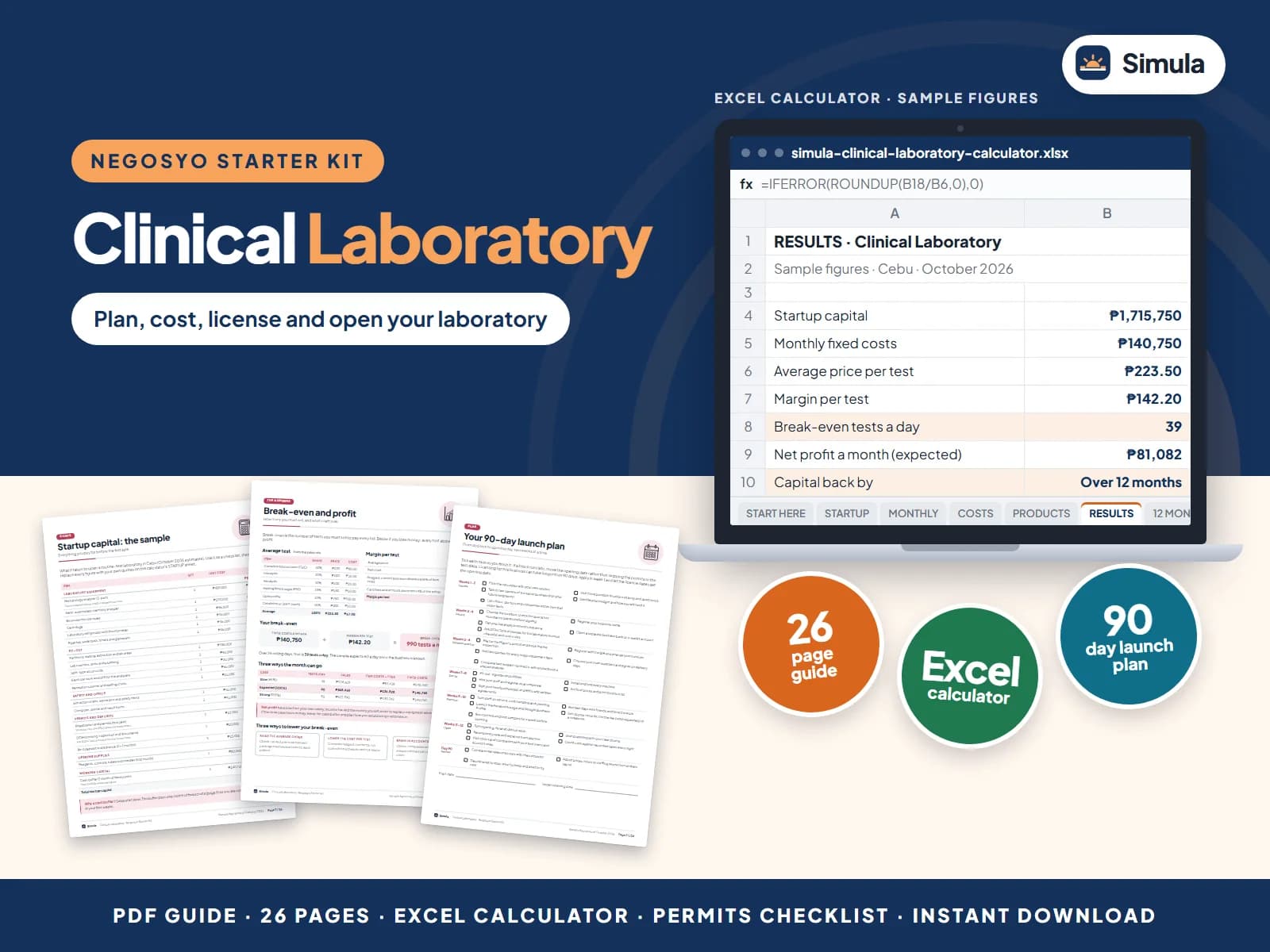
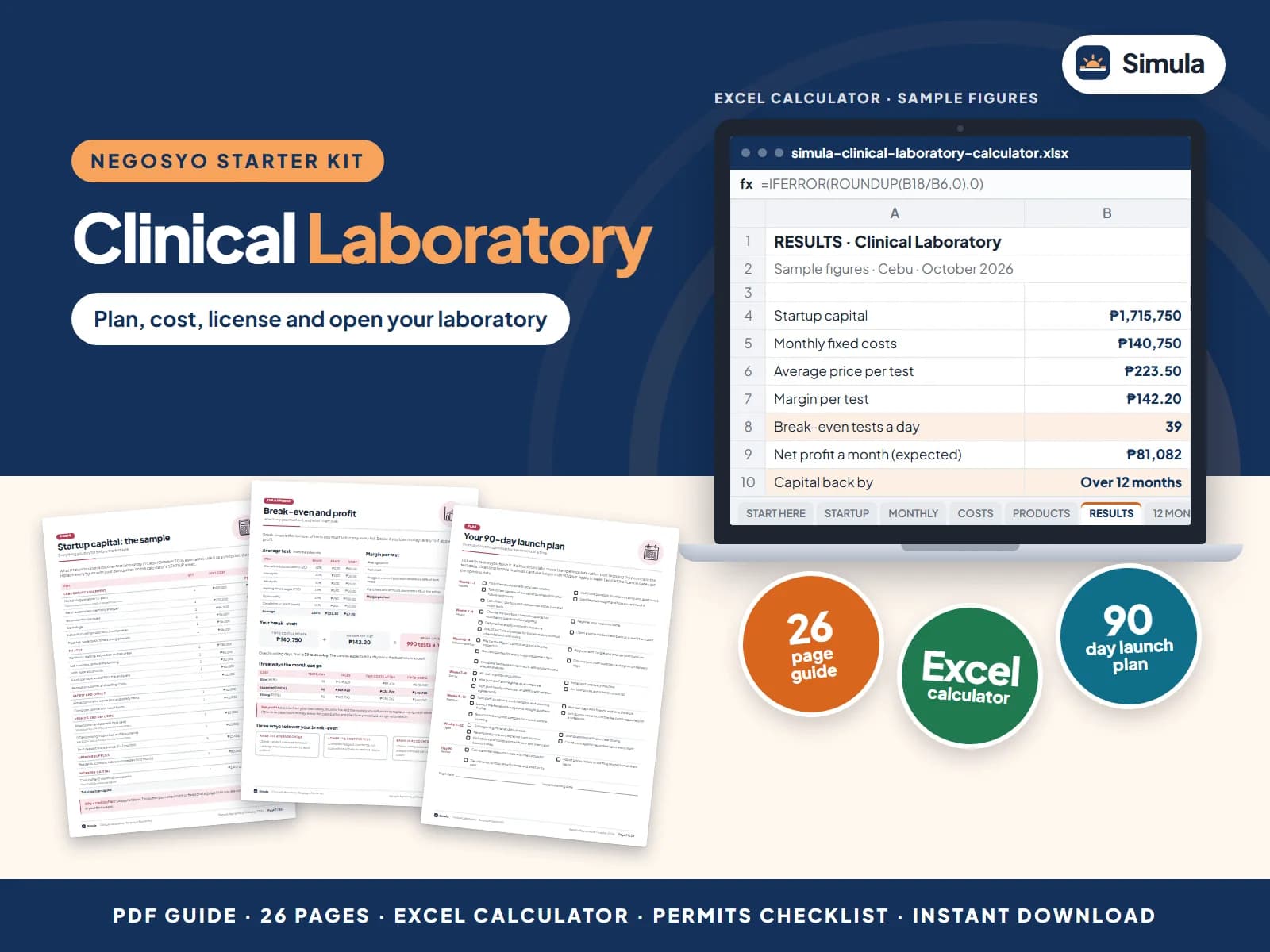
- Sample startup capital: ₱1,715,750 (October 2026, Cebu).
- Break-even: 39 tests a day.
- Register with DTI, the barangay, the city (Mayor's permit) and BIR; also DOH licence to operate (clinical laboratory), hazardous waste generator registration, drug testing accreditation (if offered) and professional tax receipt (PTR).
For medical technologists and owners working under a licensed pathologist: a clinical laboratory runs blood, urine and stool tests for walk-in patients, clinics, companies and HMOs. Most start as a small DOH-licensed laboratory near clinics or a hospital, doing routine tests. The money is made on steady volume, accounts that send patients, and tight control of reagent and rerun costs.
This guide walks through what it takes to start a clinical laboratory in the Philippines: the capital, the monthly costs, the permits and the first 90 days. The peso figures are sample estimates for a routine-test laboratory in Cebu as of October 2026; get your own quotes before you decide.
How much capital you need
The sample comes to about ₱1,715,750 including one month of fixed costs kept as a cash buffer. It splits into laboratory equipment (₱895,000), fit-out (₱410,000), safety and office (₱80,000), permits and deposits (₱110,000), opening supplies (₱80,000) and working capital (₱140,750). Other ways to start: laboratory inside a clinic building at ₱900,000–₱1.5 million and laboratory with x-ray and drug testing at ₱5 million and up.
Monthly costs and break-even
Fixed costs in the sample are ₱140,750 a month; the biggest are medical technologists (₱41,600), rent (₱25,000) and head pathologist (₱20,000). Each test sold earns about ₱142 after its own costs, so the break-even is 39 tests a day, and the startup capital takes about 21 months to come back at full sales.
Permits and registration
Register the business name with DTI (or SEC or CDA), then get the barangay business clearance, the Mayor's permit through the city or municipal BPLO, and BIR registration; register with SSS, PhilHealth and Pag-IBIG once you hire. A clinical laboratory also needs: DOH licence to operate (clinical laboratory), hazardous waste generator registration, drug testing accreditation (if offered) and professional tax receipt (PTR). Requirements and fees differ by city, so ask each office for its checklist first. DTI Negosyo Centers help for free.
Where to set up
- Near clinics, doctors' offices or a hospital
- Near offices and BPOs for pre-employment tests
- Ground floor on a busy street
- A medical building where doctors refer patients downstairs
Mistakes to avoid
- Wrong or delayed results. Daily controls, sample labelling rules, double checks before release, and a pending-results list.
- An analyzer goes down on a busy morning. A service contract, a partner lab for send-outs, and a UPS against brownouts.
- Account discounts that are too deep. Check the margin of each account every month and renegotiate the ones that lose money.
- Reagents expire unused. Order to your real volume, use the oldest stock first, and track expiry dates.
Plan it with the starter kit
The Clinical Laboratory · Negosyo Starter Kit has every worksheet behind this guide in a 26-page PDF, plus an Excel calculator: type in your own quotes and it works out your capital, break-even, profit and payback month. It costs ₱499 and downloads right after payment.