Key takeaways
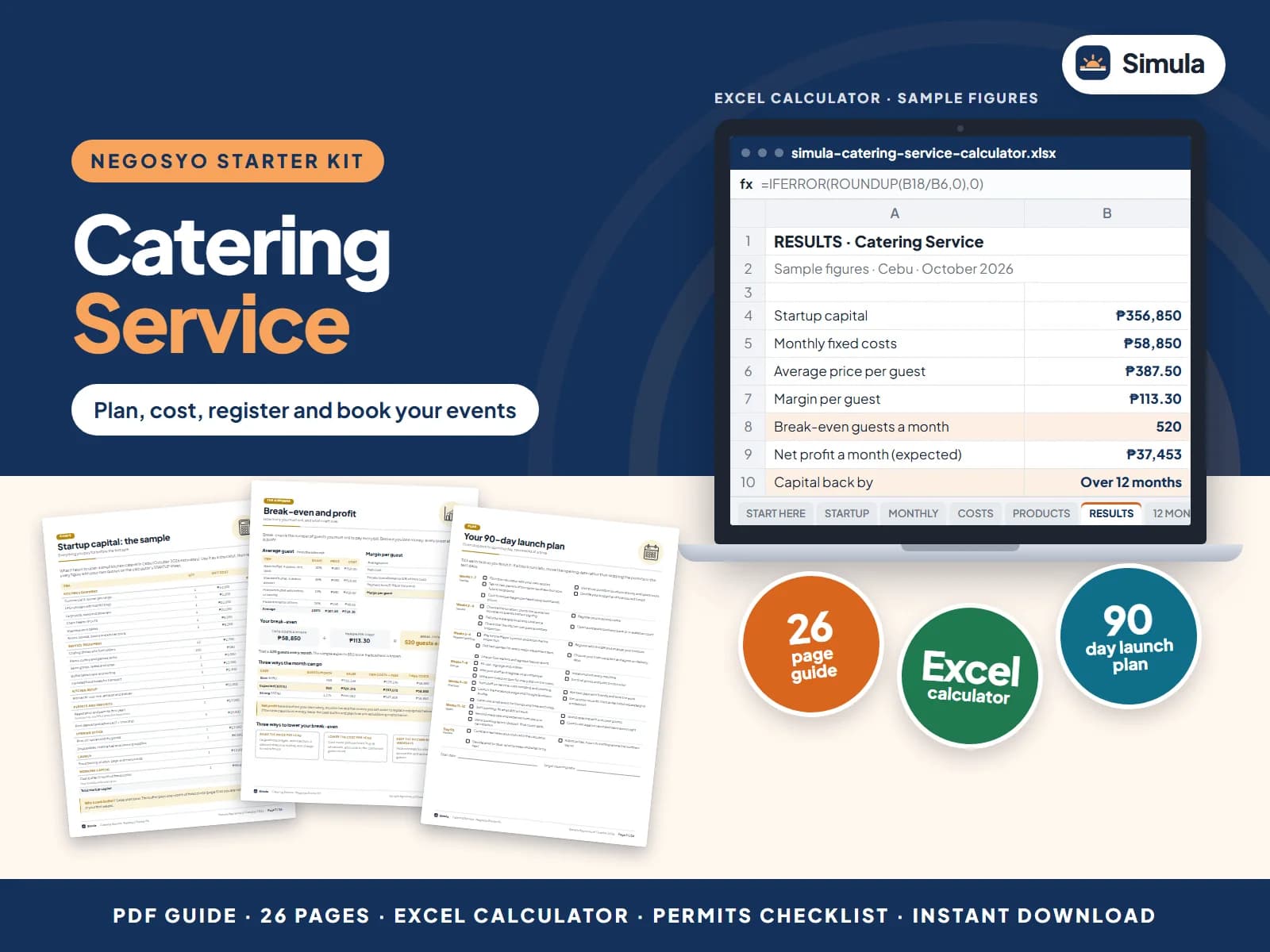
- Sample startup capital: ₱356,850 (October 2026, Cebu).
- Break-even: 520 guests a month.
- Register with DTI, the barangay, the city (Mayor's permit) and BIR; also sanitary permit, health certificates for all cooks and crew and venue accreditation or caterer's fee.
A catering service cooks and serves food for weddings, birthdays, company events and handaan, priced per guest and usually booked weeks ahead. Most start from a home or rented kitchen with two cooks, their own chafing dishes, and waiters hired per event. The money is made on careful costing per head, a deposit on every booking and not cooking far more than the guest count.
This guide walks through what it takes to start a catering service in the Philippines: the capital, the monthly costs, the permits and the first 90 days. The peso figures are sample estimates for a small kitchen caterer in Cebu as of October 2026; get your own quotes before you decide.
How much capital you need
The sample comes to about ₱356,850 including one month of fixed costs kept as a cash buffer. It splits into kitchen equipment (₱92,600), service equipment (₱98,400), kitchen setup (₱35,000), permits and deposits (₱42,000), opening stock (₱18,000), launch (₱12,000) and working capital (₱58,850). Other ways to start: packed meals for offices and schools at ₱150,000–₱300,000 and full-service events caterer at ₱1.5 million and up.
Monthly costs and break-even
Fixed costs in the sample are ₱58,850 a month; the biggest are cook wages (₱31,200), kitchen rent (₱10,000) and SSS, PhilHealth and Pag-IBIG (₱4,350). Each guest sold earns about ₱113 after its own costs, so the break-even is 520 guests a month, and the startup capital takes about 10 months to come back at full sales.
Permits and registration
Register the business name with DTI (or SEC or CDA), then get the barangay business clearance, the Mayor's permit through the city or municipal BPLO, and BIR registration; register with SSS, PhilHealth and Pag-IBIG once you hire. A catering service also needs: sanitary permit, health certificates for all cooks and crew and venue accreditation or caterer's fee. Requirements and fees differ by city, so ask each office for its checklist first. DTI Negosyo Centers help for free.
Where to set up
- A kitchen within 30–45 minutes of most venues
- Near a public market or wholesale suppliers
- Road access for loading a van early in the morning
- A space with room to store chafing dishes and linens
Mistakes to avoid
- Guest count drops after you have shopped. Fix a final count date, a minimum count per package and a non-refundable deposit.
- Food poisoning at an event. Cook close to serving time, keep food hot in transport, and train crew on food handling.
- Running out of food. Cook to the count plus a small buffer, and serve measured portions.
- Clients who pay late. Collect the balance before or on the event day, as written in the contract.
Plan it with the starter kit
The Catering Service · Negosyo Starter Kit has every worksheet behind this guide in a 26-page PDF, plus an Excel calculator: type in your own quotes and it works out your capital, break-even, profit and payback month. It costs ₱349 and downloads right after payment.
