Key takeaways
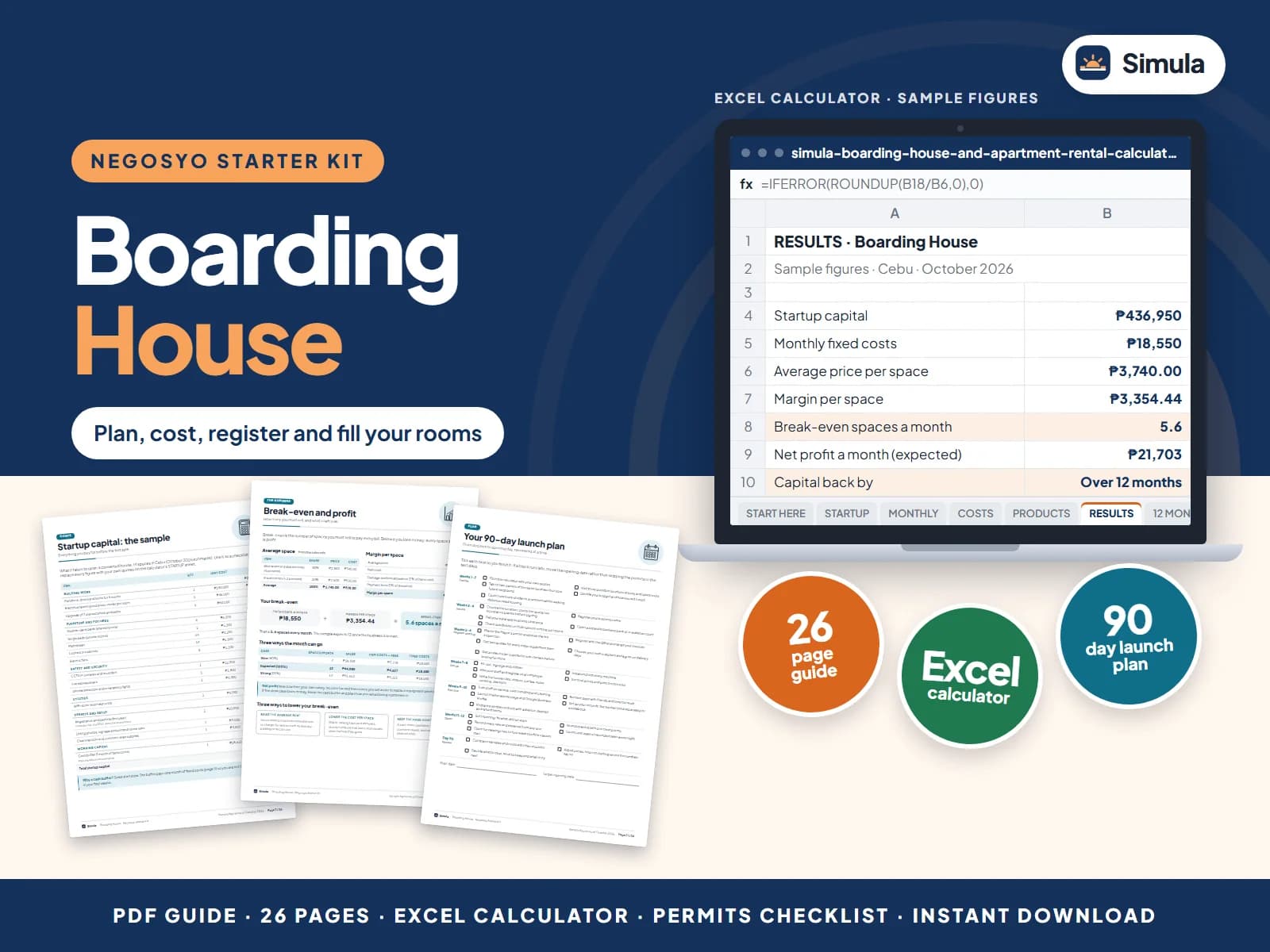
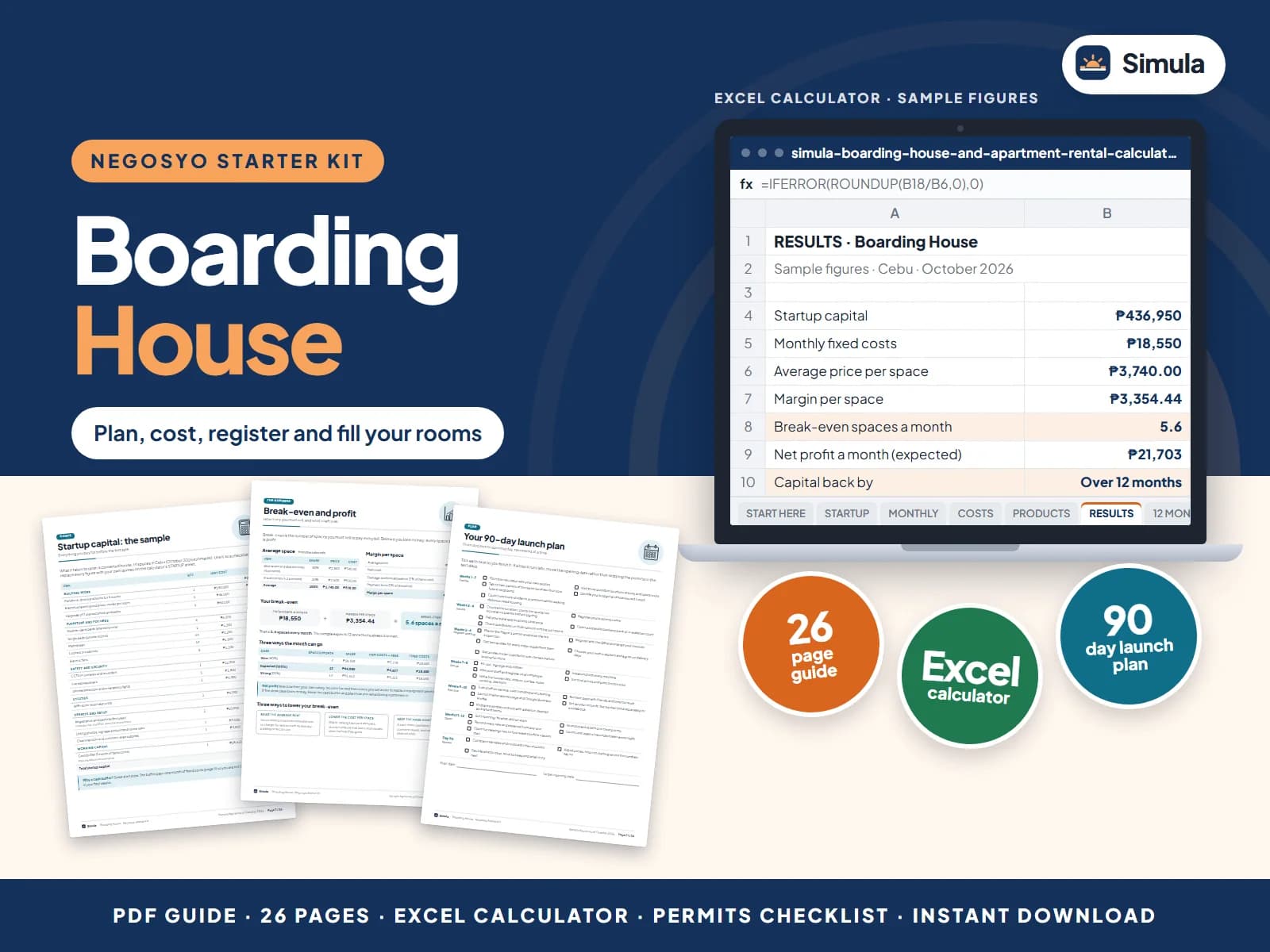
- Sample startup capital: ₱436,950 (October 2026, Cebu).
- Break-even: 5.6 spaces a month.
- Register with DTI, the barangay, the city (Mayor's permit) and BIR; also sanitary permit, fire safety inspection for a lodging house and subdivision or HOA approval.
A boarding house rents bed spaces and rooms by the month, mostly to students and young workers near schools, hospitals and business districts. Many owners start by converting part of a house they already own. Income is steady once the rooms are full; the work is in the location, keeping the place safe and clean, and collecting rent on time.
This guide walks through what it takes to start a boarding house in the Philippines: the capital, the monthly costs, the permits and the first 90 days. The peso figures are sample estimates for a converted house, 14 spaces in Cebu as of October 2026; get your own quotes before you decide.
How much capital you need
The sample comes to about ₱436,950 including one month of fixed costs kept as a cash buffer. It splits into building work (₱255,000), furniture and fixtures (₱118,000), safety and security (₱23,400), utilities (₱6,000), permits and setup (₱16,000) and working capital (₱18,550). Other ways to start: small apartment block at ₱2 million–₱5 million and purpose-built dormitory at ₱8 million and up.
Monthly costs and break-even
Fixed costs in the sample are ₱18,550 a month; the biggest are caretaker (₱7,800), major repairs set aside (₱2,000) and common-area electricity (₱1,800). Each space sold earns about ₱3,354 after its own costs, so the break-even is 5.6 spaces a month, and the startup capital takes about 20 months to come back at full sales.
Permits and registration
Register the business name with DTI (or SEC or CDA), then get the barangay business clearance, the Mayor's permit through the city or municipal BPLO, and BIR registration; register with SSS, PhilHealth and Pag-IBIG once you hire. A boarding house also needs: sanitary permit, fire safety inspection for a lodging house and subdivision or HOA approval. Requirements and fees differ by city, so ask each office for its checklist first. DTI Negosyo Centers help for free.
Where to set up
- Walking distance to a university or college gate
- Near a hospital, for nurses, medical students and caregivers
- Near BPO and business districts with night shifts
- Along a jeepney or bus route with transport at all hours
Mistakes to avoid
- Rooms stay empty after the school year. Open to workers and reviewees too, and offer summer rates or short stays.
- Late or missed rent. A written contract, advance and deposit, reminders before the due date, and a clear late policy.
- Fire or electrical accident. A licensed electrician for the wiring, no cooking in rooms, and extinguishers and smoke detectors checked monthly.
- Conflicts between tenants. House rules signed at move-in, and act on complaints the same day.
Plan it with the starter kit
The Boarding House · Negosyo Starter Kit has every worksheet behind this guide in a 26-page PDF, plus an Excel calculator: type in your own quotes and it works out your capital, break-even, profit and payback month. It costs ₱349 and downloads right after payment.