Key takeaways
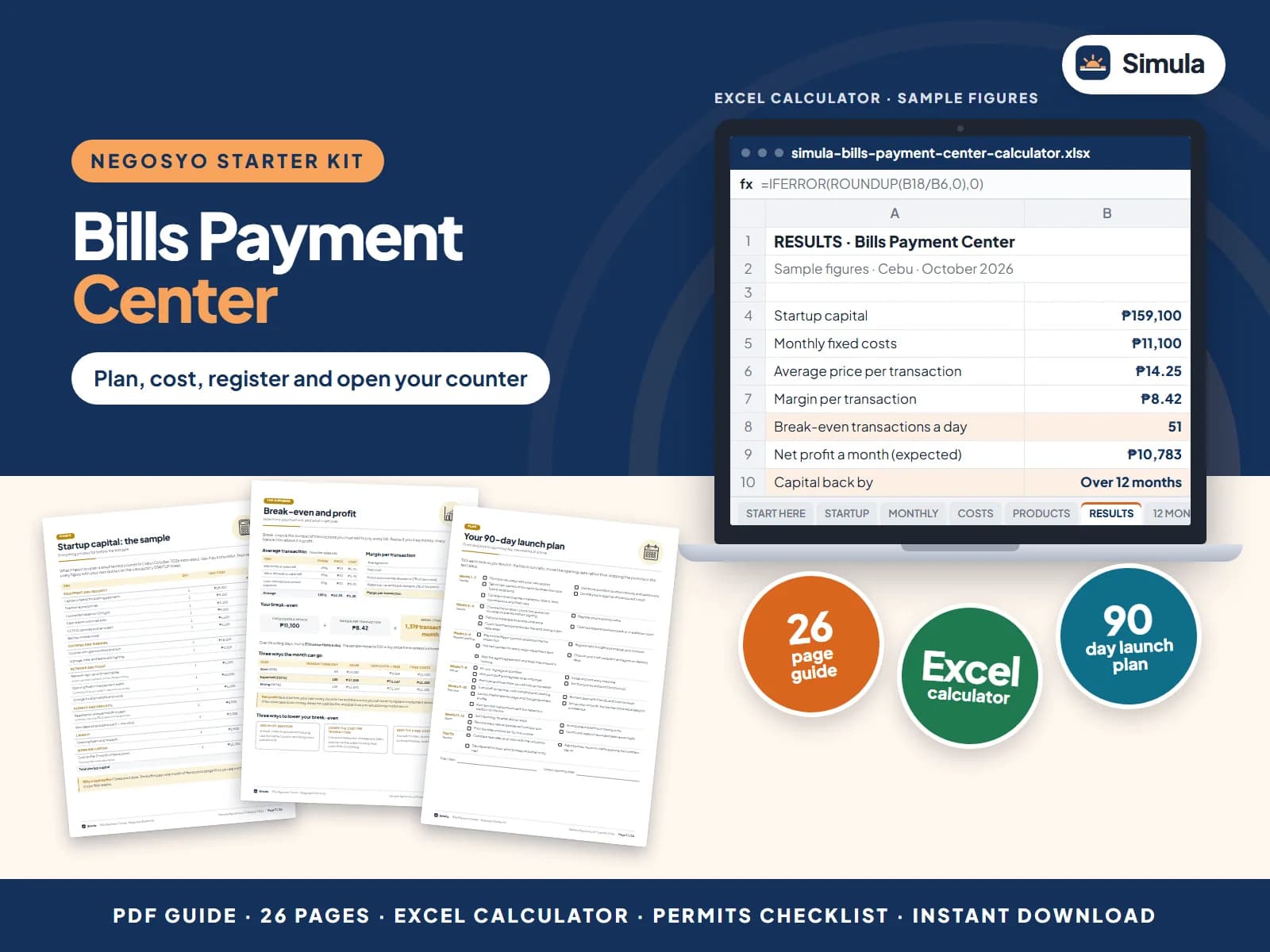
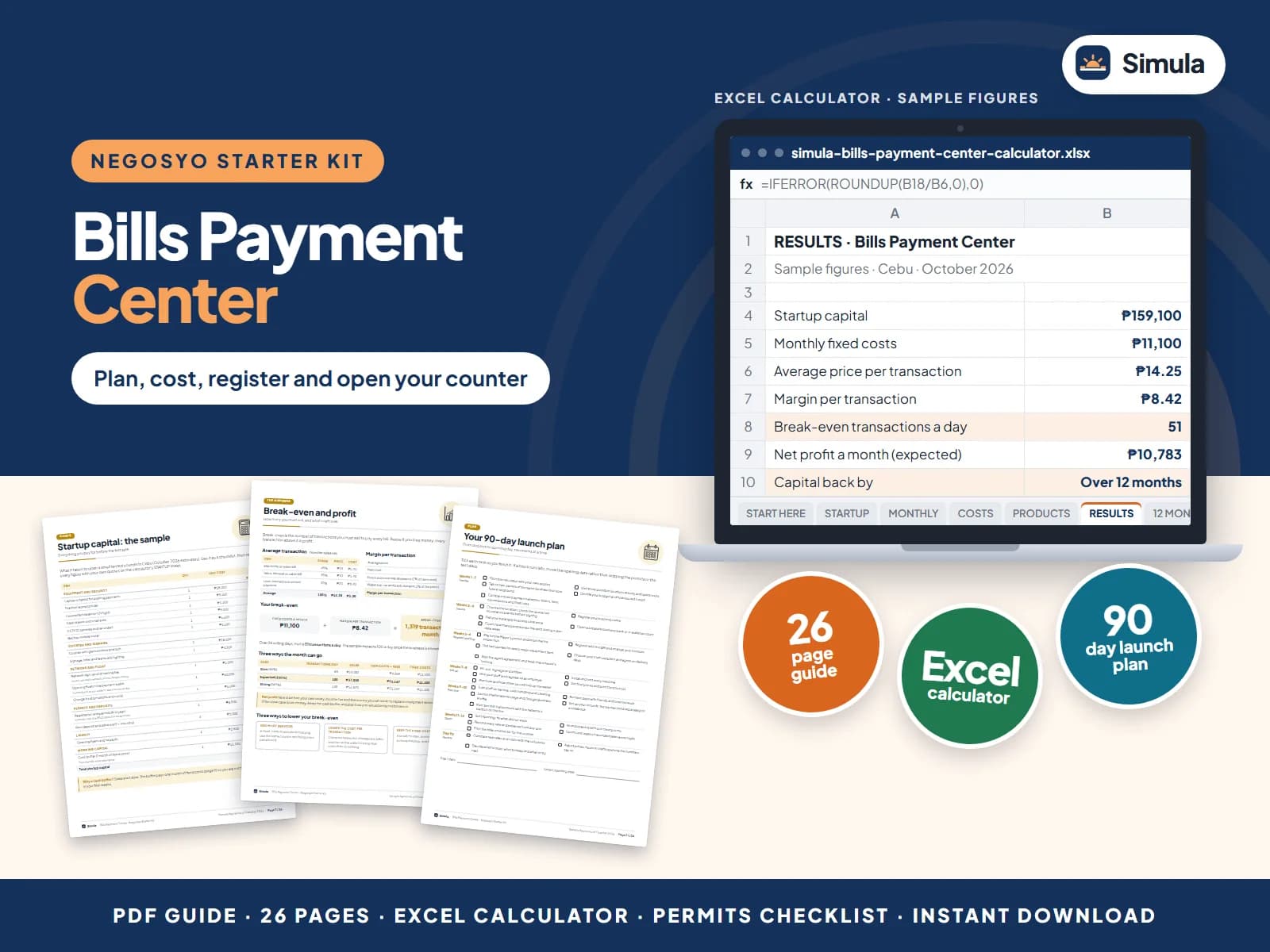
- Sample startup capital: ₱159,100 (October 2026, Cebu).
- Break-even: 51 transactions a day.
- Register with DTI, the barangay, the city (Mayor's permit) and BIR; also agent agreement with an accredited network.
A bills payment center collects payments for electricity, water, telco, loans and other billers, and posts them through an accredited payment network. Most start as a small counter in a market, a store or a row of shops near offices and terminals. You earn a small fee or commission on every transaction, so the money is in volume, accuracy and enough float in the wallet to post bills all day.
This guide walks through what it takes to start a bills payment center in the Philippines: the capital, the monthly costs, the permits and the first 90 days. The peso figures are sample estimates for a small rented counter in Cebu as of October 2026; get your own quotes before you decide.
How much capital you need
The sample comes to about ₱159,100 including one month of fixed costs kept as a cash buffer. It splits into equipment and security (₱40,000), counter and signage (₱22,500), network and float (₱60,000), permits and deposits (₱23,000), launch (₱2,500) and working capital (₱11,100). Other ways to start: counter inside your existing store at ₱40,000–₱80,000 and multi-service payment center at ₱300,000–₱500,000.
Monthly costs and break-even
Fixed costs in the sample are ₱11,100 a month; the biggest are rent (₱5,000), internet and backup data (₱1,800) and electricity (₱1,200). Each transaction sold earns about ₱8 after its own costs, so the break-even is 51 transactions a day, and the startup capital takes about 15 months to come back at full sales.
Permits and registration
Register the business name with DTI (or SEC or CDA), then get the barangay business clearance, the Mayor's permit through the city or municipal BPLO, and BIR registration; register with SSS, PhilHealth and Pag-IBIG once you hire. A bills payment center also needs: agent agreement with an accredited network. Requirements and fees differ by city, so ask each office for its checklist first. DTI Negosyo Centers help for free.
Where to set up
- Public market entrances and rows of shops
- Near jeepney and bus terminals
- Barangays far from the billers' own offices
- Commercial strips near offices and schools
Mistakes to avoid
- A wrong account number or amount. Check twice, read it back, keep a reversal log, and learn the network's reversal steps before opening.
- The wallet runs out on a busy day. Keep a float sized for your busiest day, and top up before it runs low.
- Fake bills or robbery. UV checks, a safe, CCTV, cash moved out during the day, and no counting cash in view.
- The network or a biller is offline. Backup internet, a second network for key billers, and a sign telling customers when to come back.
Plan it with the starter kit
The Bills Payment Center · Negosyo Starter Kit has every worksheet behind this guide in a 26-page PDF, plus an Excel calculator: type in your own quotes and it works out your capital, break-even, profit and payback month. It costs ₱349 and downloads right after payment.