Key takeaways
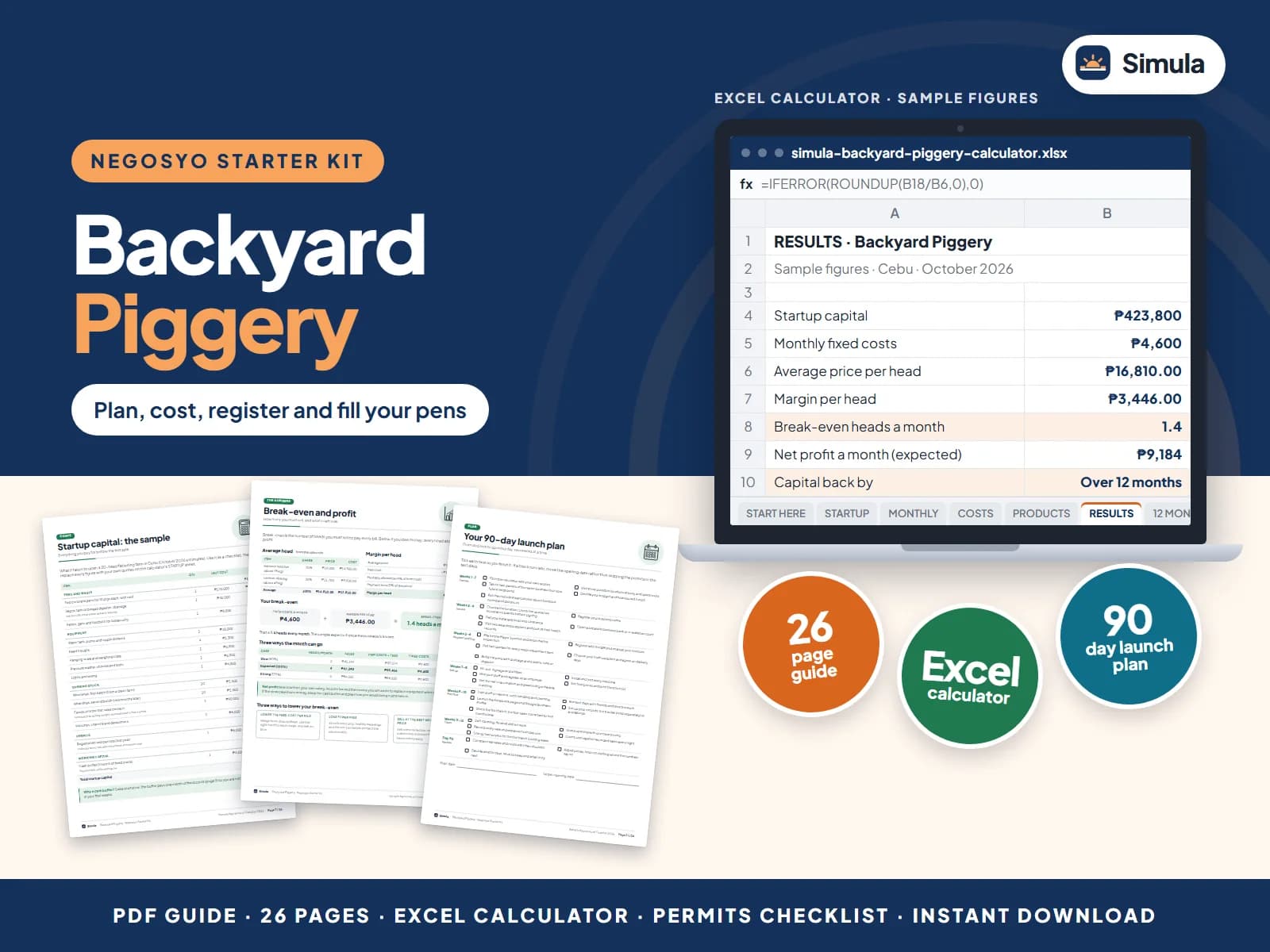
- Sample startup capital: ₱423,800 (October 2026, Cebu).
- Break-even: 1.4 heads a month.
- Register with DTI, the barangay, the city (Mayor's permit) and BIR; also locational clearance for livestock, environmental certificate or exemption and shipping permit or health certificate.
A backyard piggery buys weanlings, raises them for two to four months and sells them live by the kilo to lechon makers, traders and butchers. Most start with two pens on family land, feeding commercial feeds and selling in batches. The first sales come only after the first grow-out, and the money is in the feed cost per kilo, low mortality and strict biosecurity against ASF.
This guide walks through what it takes to start a backyard piggery in the Philippines: the capital, the monthly costs, the permits and the first 90 days. The peso figures are sample estimates for a 20-head fattening farm in Cebu as of October 2026; get your own quotes before you decide.
How much capital you need
The sample comes to about ₱423,800 including one month of fixed costs kept as a cash buffer. It splits into pens and waste (₱168,000), equipment (₱39,200), opening stock (₱206,000), permits (₱6,000) and working capital (₱4,600). Other ways to start: 5-head starter pen at ₱100,000–₱150,000 and small sow and farrowing unit at ₱700,000 and up.
Monthly costs and break-even
Fixed costs in the sample are ₱4,600 a month; the biggest are electricity (₱1,000), repairs (₱800) and water (₱600). Each head sold earns about ₱3,446 after its own costs, so the break-even is 1.4 heads a month, and the startup capital takes about 46 months to come back at full sales.
Permits and registration
Register the business name with DTI (or SEC or CDA), then get the barangay business clearance, the Mayor's permit through the city or municipal BPLO, and BIR registration; register with SSS, PhilHealth and Pag-IBIG once you hire. A backyard piggery also needs: locational clearance for livestock, environmental certificate or exemption and shipping permit or health certificate. Requirements and fees differ by city, so ask each office for its checklist first. DTI Negosyo Centers help for free.
Where to set up
- Agricultural or rural land with a good water source
- At least the distance your LGU requires from houses
- Reachable by truck in all weather
- Near feed stores and a veterinarian
Mistakes to avoid
- African swine fever (ASF) reaches your farm. No outside pork scraps, no visitors in the pens, footbaths, weanlings from clean farms, and call the vet at the first sick pig.
- Feed prices go up. Weigh feed, cut waste, compare agrivet prices, and update your price per kilo when feed rises.
- Complaints about smell or wastewater. A septic tank or biogas digester, daily cleaning, and enough distance from houses.
- Pigs get sick or die. Follow the vet's schedule, keep new and sick pigs apart, and keep the pens dry and clean.
Plan it with the starter kit
The Backyard Piggery · Negosyo Starter Kit has every worksheet behind this guide in a 26-page PDF, plus an Excel calculator: type in your own quotes and it works out your capital, break-even, profit and payback month. It costs ₱349 and downloads right after payment.
