Key takeaways
- Ingredient cost is only one part of a sustainable product price.
- Owner labor, utilities, packaging, wastage, and fees must be visible.
- Track actual net sales and monthly operating expenses.
- Review product contribution and whole-business profit separately.
Watch the supporting video
Watch the YouTube guide here while following this article.
When a food product looks profitable on paper but the cash balance barely grows, an omitted cost is often the reason. Ingredient cost is important, but it is only one layer of a sustainable price.
1. Packaging and labels
Boxes, cups, lids, seals, stickers, ribbons, utensils, napkins, paper bags, and protective inserts can add a meaningful amount to every order. Record the full set used by each product.
2. Owner and staff labor
Preparation, baking or cooking, decorating, packing, customer messages, purchasing, cleaning, and bookkeeping all consume time. Treat owner labor as a cost even when you do not take a formal salary yet.
3. Utilities
Ovens, refrigerators, freezers, mixers, induction cookers, water, gas, and internet support production. Estimate a reasonable amount per batch or allocate the monthly bill using a consistent method.
4. Wastage and yield loss
Spillage, trimming, spoilage, testing, rejects, and unsold products reduce sellable yield. Price from the portions you can consistently sell, not the theoretical maximum.
5. Platform and payment fees
Marketplaces, delivery platforms, payment gateways, and cashless methods may charge commissions, service fees, or transaction rates. Keep each channel's current rate editable instead of assuming one percentage forever.
6. Discounts and promotions
Voucher funding, introductory discounts, bundles, giveaways, and loyalty rewards reduce realized revenue. Record the actual net sale instead of the menu price alone.
7. Delivery preparation
Insulated materials, ice packs, tape, protective dividers, courier waiting time, and replacement risk can remain with the seller even when the buyer pays the delivery charge.
8. Purchasing and transport
Supplier delivery charges, fuel, parking, tolls, and the time spent sourcing ingredients belong in operating expenses or overhead.
9. Marketing and selling
Paid ads, photography, samples, bazaar fees, printing, influencer arrangements, and content tools should be evaluated against the sales they help generate.
10. Equipment wear and repairs
Mixers, sealers, refrigerators, ovens, cookware, and small tools eventually need maintenance or replacement. A regular overhead allowance can prevent these costs from becoming a surprise.
11. Rent, permits, and professional services
Rent, association dues, registrations, permits, bookkeeping, tax support, and other compliance-related costs may not belong to a single recipe, but the business must still earn enough to pay them.
12. Refunds, replacements, and uncollected orders
Quality issues, damaged deliveries, cancellations, and failed collections affect real profit. Track them so the same problem can be reduced and its cost is visible.
Turn the checklist into a routine
Separate product-level costs from monthly operating expenses. Product costs help you estimate a viable price; the monthly view tells you whether the whole business is profitable. Review both.
- Update ingredient and packaging prices.
- Check actual sellable yield.
- Assign labor, utilities, and overhead consistently.
- Enter platform fees and discounts by channel.
- Record all sales and expenses, including small ones.
- Review net profit and cash commitments every month.
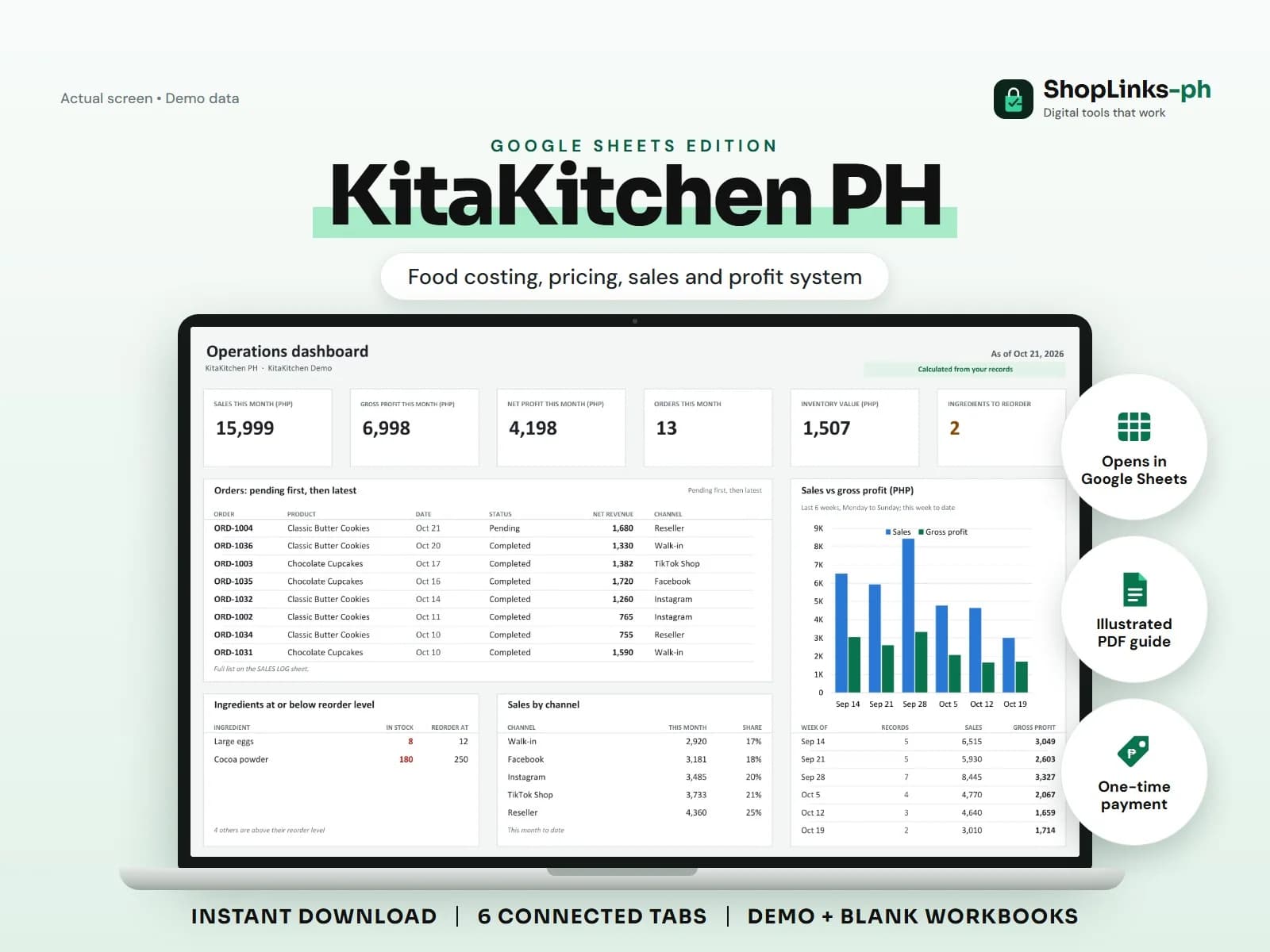
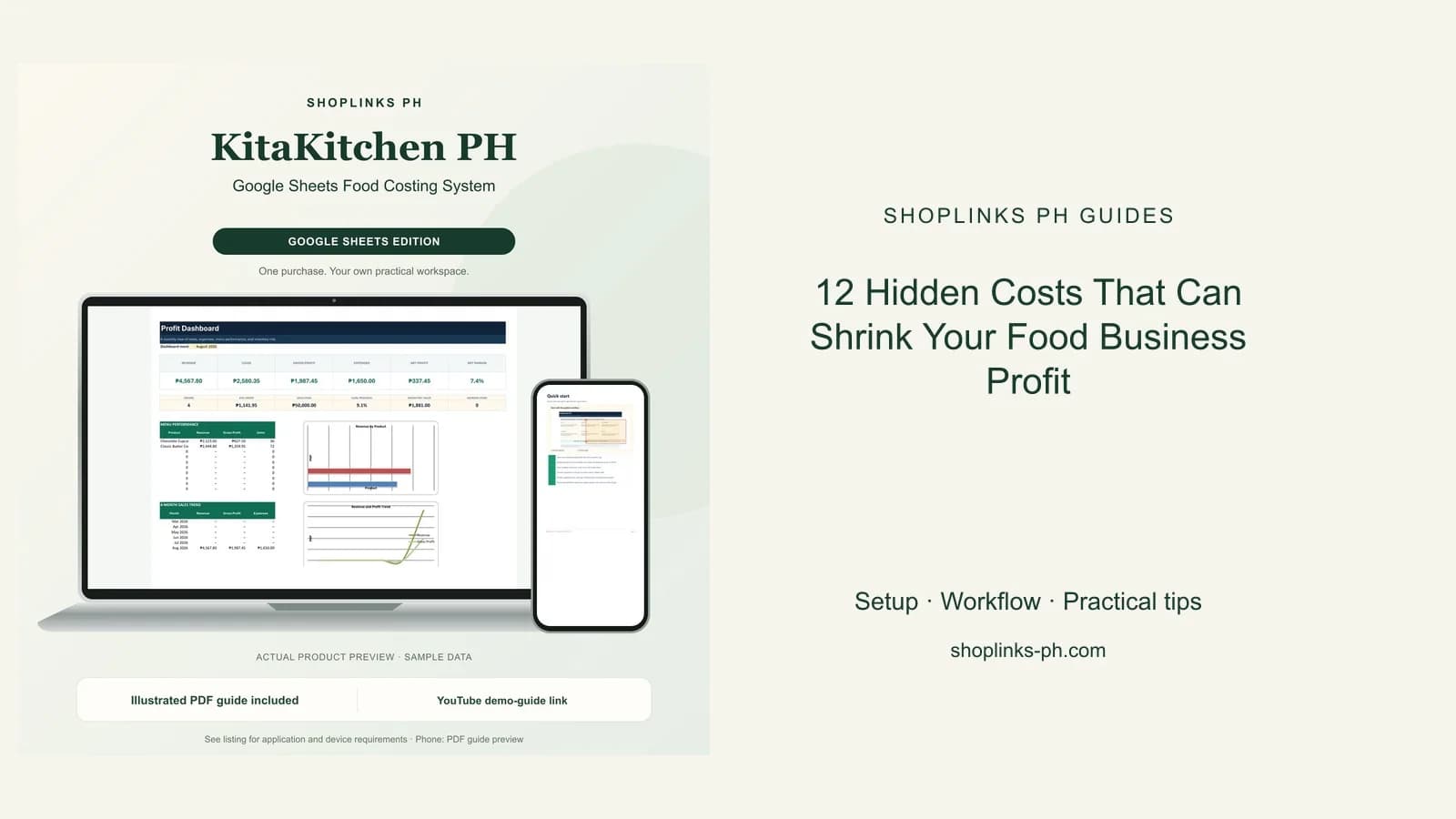
KitaKitchen PH Google Sheets Edition combines recipe costing, price planning, inventory, sales, expenses, and dashboard reporting in one import-ready workbook.
This checklist is educational and may not include every cost or obligation for your business. Consult qualified accounting, tax, legal, and food-safety professionals where appropriate.