Key takeaways
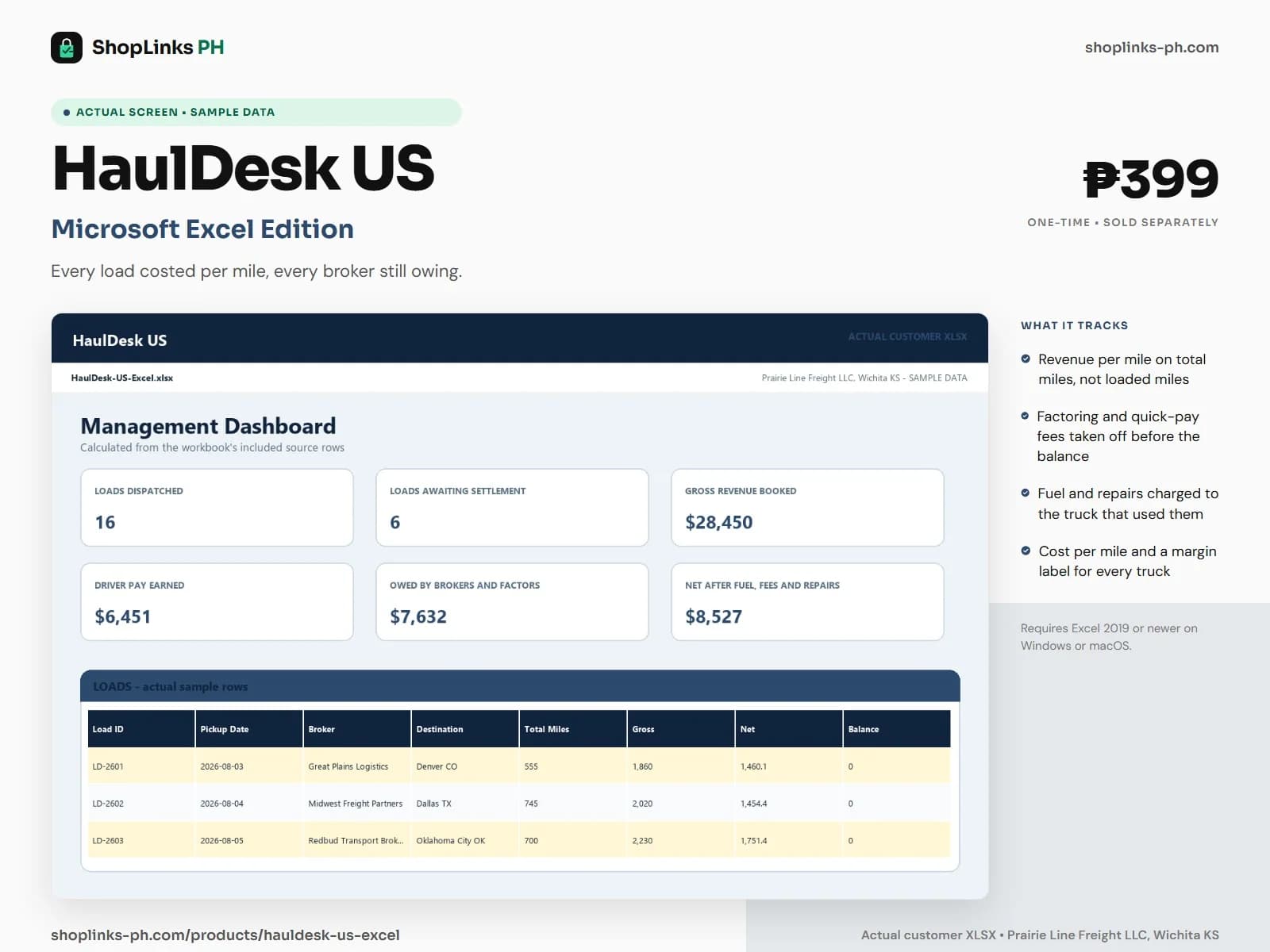
- Revenue per mile counts deadhead.
- Broker and factoring fees are derived per load.
- Fuel and repairs are charged to the truck.
- Every load carries a settlement balance.
A three-truck carrier in Wichita takes a load to Denver at a rate that looks fine on the confirmation. The truck first runs thirty-five miles empty to the shipper, buys fuel at Front Range prices, and the factor takes three percent before the money lands. None of that is on the rate confirmation, and by month end the owner knows the bank balance but not which truck earned it. HaulDesk US puts the miles, the fees and the fuel on the load and the truck.
Miles are the unit
Every load records loaded miles and deadhead miles separately, and revenue per mile is derived from the gross over all of them, not just the miles the broker paid for, so each rate is judged on the truck's real driving.
A rate that looks strong per loaded mile but needs two hundred empty miles to reach the shipper is often the worse load, and the truck summary shows each truck's deadhead share of the month.
Fees off the top
Each broker carries a factoring flag, a fee percent and payment terms, so the fee is derived from gross and the amount due on a delivered load is what will actually land in the bank account.
Driver pay follows the driver record, per mile on total miles or a percent of gross, which means the net for every haul is known the day it delivers instead of at the end of the month.
Fuel and repairs belong to a truck
Fuel purchases carry the truck, the state, the gallons and the price per gallon, while expenses and maintenance carry the truck and a category, so nothing is spread across the fleet by guesswork.
An older unit that needs a turbocharger shows up as that unit's loss in that month, which is exactly the information a decision about repairing, parking or selling that truck needs.
Who still owes
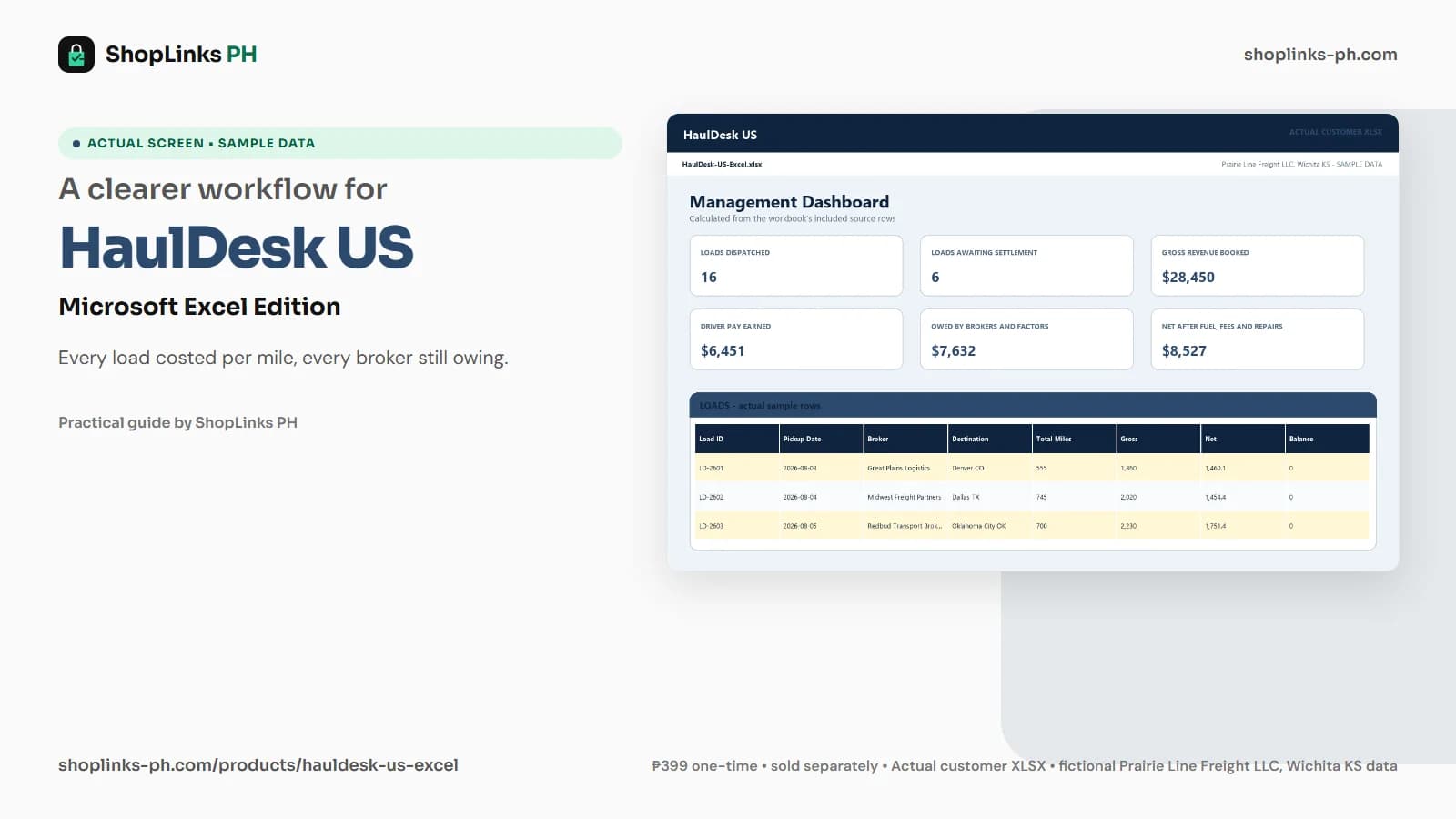
Settlements are recorded against the load, so every delivered load carries a balance and reads Paid, Partial or Unpaid, a load still in transit reads Not Due, and a short-paid lumper dispute stays visible.
The truck summary then derives cost per mile from fees, driver pay, fuel and other cost, and labels each truck Healthy, Thin or Loss against its own gross for the month.
Review exceptions every week
Resolve duplicate IDs, missing links, overdue balances, negative amounts, and open operational items in CHECKS before using the dashboard for decisions.
HaulDesk US Microsoft Excel Edition is designed for Microsoft Excel 2019 or newer on Windows or macOS.
No ELD or hours-of-service logging, no IFTA fuel tax filing or state permit applications, no load board or broker integration, no payroll or 1099 filing for drivers, and no dispatch or route planning.