Key takeaways
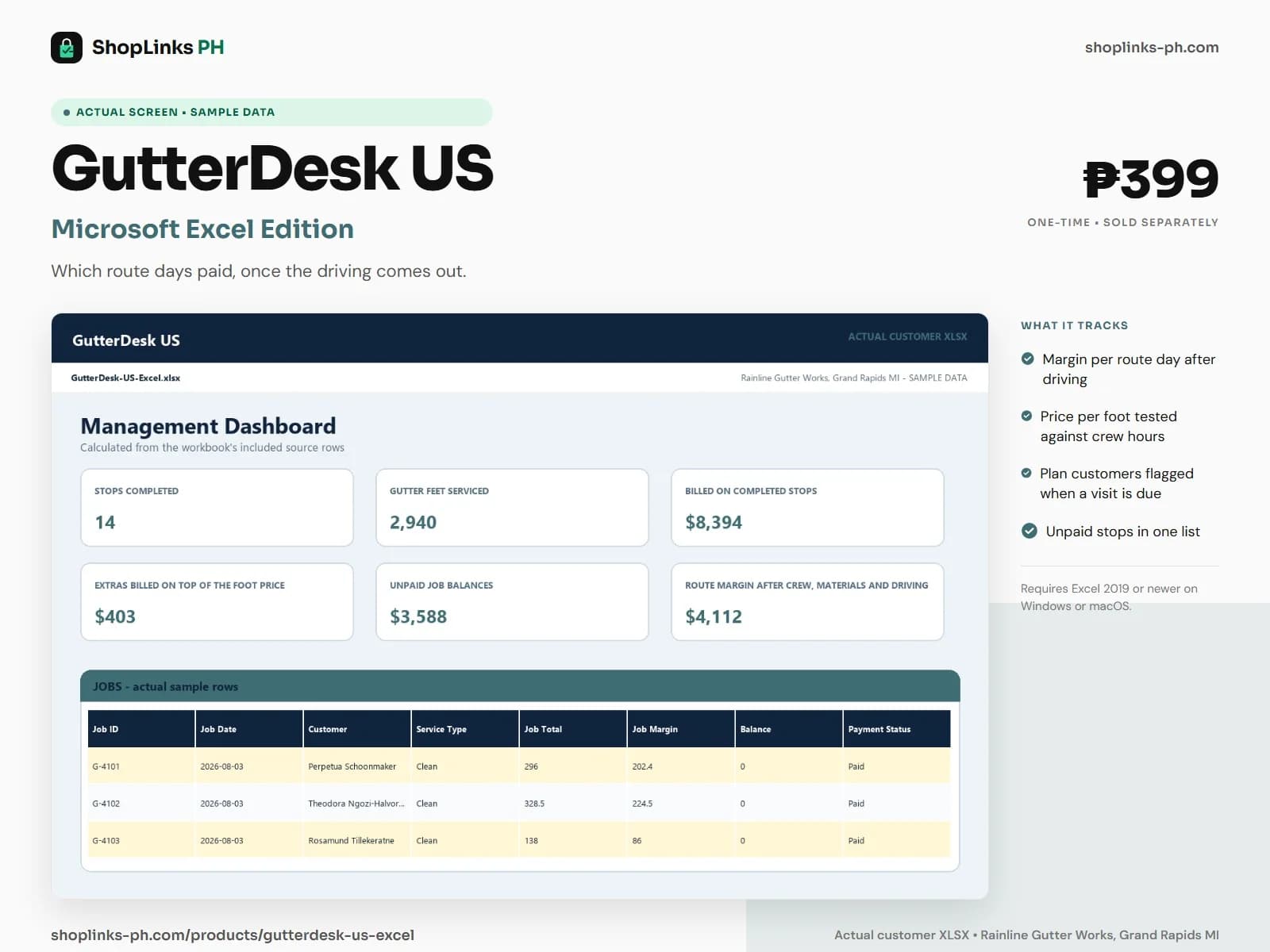
- Every stop prices itself from feet and a foot rate.
- Route margin includes the driving, not just the work.
- Materials are logged against the job that used them.
- Plan customers flag themselves when a visit is due.
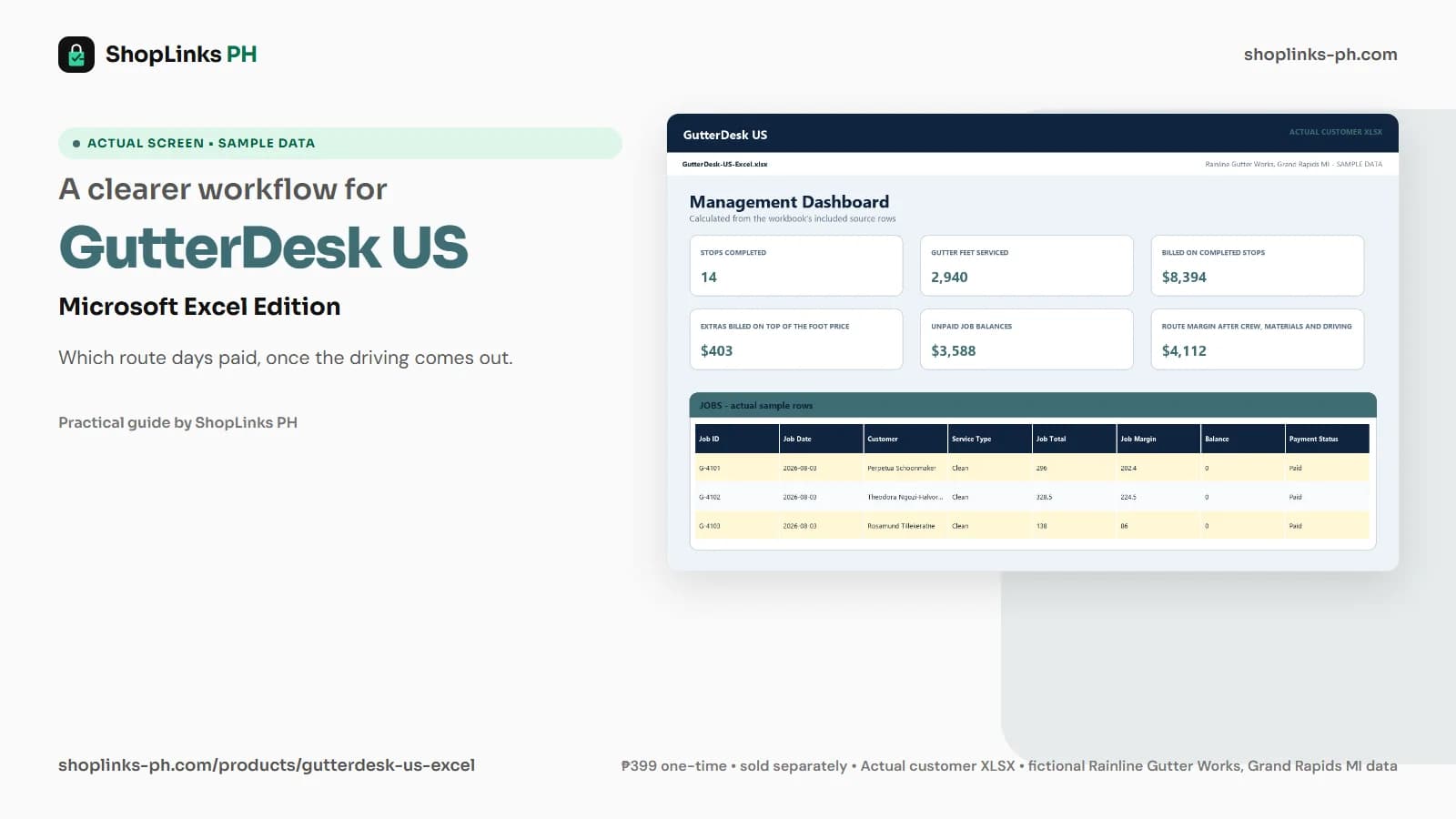
A Grand Rapids gutter crew runs six route days in August: three tight houses on the east side, an apartment complex, a guard install that eats a whole Friday, and a Thursday that wanders from Ada to Kentwood. The invoices all went out. What the owner cannot say is which of those days paid for the truck, and whether one dollar forty-five a foot is still the right number on a two-story house.
A stop prices itself
Every customer carries their gutter feet, and every stop records the feet serviced and the price per foot. The base price derives from those two numbers, so nobody adds it up on a clipboard at the curb.
Extras are logged separately: a roof debris haul, a downspout flush, a ladder stand-off for a third story. They sit beside the foot price instead of hiding inside it, so the real rate stays visible.
The route is the unit that matters
A route day carries the crew lead, the crew size, the drive miles and the drive hours. The crew hourly cost derives from the size and the lead's rate, and the drive cost is miles at the truck rate plus hours at the crew rate.
Route revenue, labor and materials come from the stops actually completed that day. Subtract the driving and you have the number that decides whether the day is worth repeating.
Materials on the guard jobs
Guard installs are where the material cost lives. Each section, hanger and sealant tube used is logged against the job and priced from the materials list, so the job's material cost is never a guess.
Purchases feed the same list, so on-hand stock and a reorder level tell the crew what to load before a Friday install instead of after the ladder is already up.
Unfinished work and plan visits
A guard run with the front fitted and the rear waiting on dry weather is not a finished job. It reads In progress, earns no margin, and is left out of the route total so the day is not flattered.
Each customer's summary counts completed visits against their plan and shows anything outstanding, so a quarterly customer on one visit reads Visit due and a slow payer reads Payment due.
Review exceptions every week
Resolve duplicate IDs, missing links, overdue balances, negative amounts, and open operational items in CHECKS before using the dashboard for decisions.
GutterDesk US Microsoft Excel Edition is designed for Microsoft Excel 2019 or newer on Windows or macOS.
No scheduling app, route optimization or driver tracking, no crew payroll or contractor tax filing, no card processing or automated invoicing, no roofing or siding estimating, and no customer reminder texts or emails.