Key takeaways
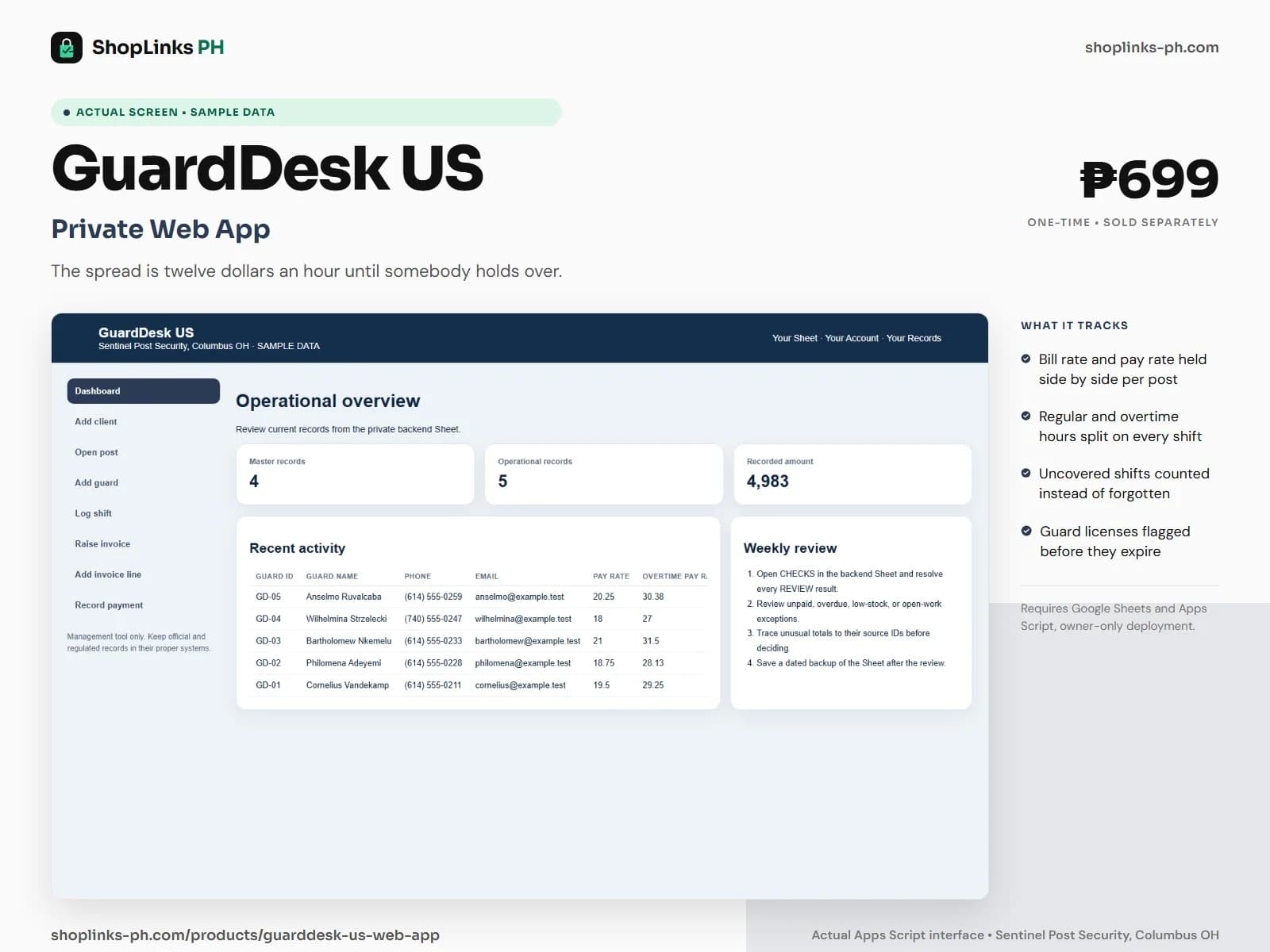
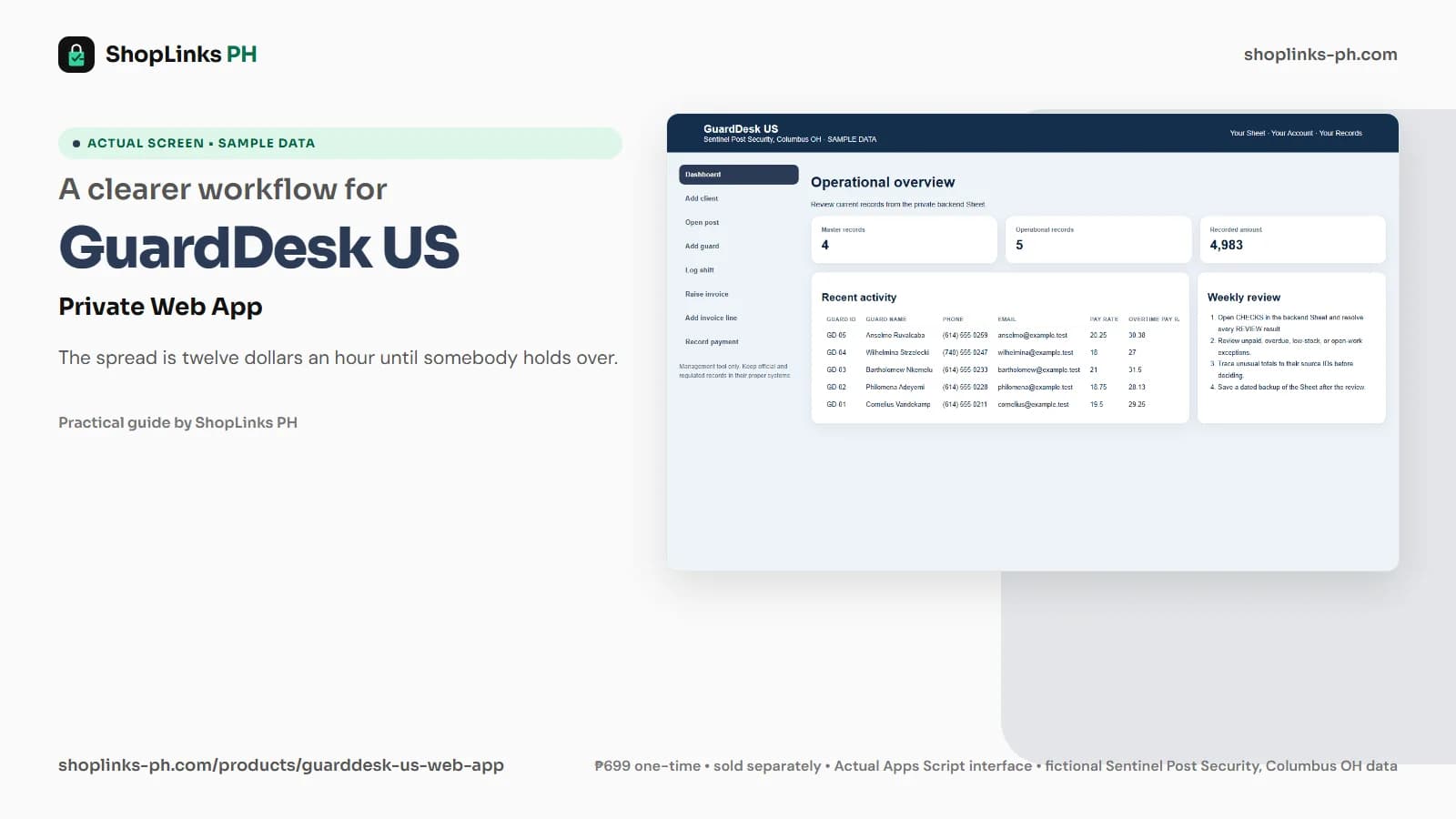
- Bill rate and pay rate live on the same shift row.
- Overtime hours are split out, not buried in a total.
- Uncovered hours are counted per post.
- Guard licenses are flagged thirty days out.
A guard contract is sold on a spread. The post bills thirty-one fifty an hour, the guard is paid nineteen fifty, and the twelve dollars in between pays for everything else the company does. That spread survives a normal week and does not survive a holdover, because the overtime hour is paid at time and a half whether or not the contract lets it be billed at a premium. GuardDesk US keeps both rates on the same row.
Two rates, one hour
Each post carries a bill rate and an overtime bill rate; each guard carries a pay rate and an overtime pay rate.
Every shift is costed with the guard's rates and billed with the post's rates, so a contract that refuses an overtime premium shows up as a shrinking margin rather than a feeling.
Overtime is a recorded number
Scheduled hours and hours worked are both entered, and the difference becomes overtime on the shift row.
A guard who stays four hours because relief did not arrive is visible the same day, not at the end of the pay period.
Coverage and the empty post
When hours worked fall short of hours scheduled, the shortfall is counted as uncovered hours against the post.
That is the number a client eventually asks about, and it is better to have it before they do.
Margin against what was accepted
Post margin compares the invoice lines the client accepted against everything the guards on that post were paid.
The hours variance sits next to it, showing hours paid for and never billed, which on a disputed holdover is the whole argument.
Review exceptions every week
Resolve duplicate IDs, missing links, overdue balances, negative amounts, and open operational items in CHECKS before using the dashboard for decisions.
GuardDesk US Private Google Sheets Web App is designed for use with a Google account, Google Sheets, and Apps Script, using owner-only deployment by default.
No payroll processing, tax withholding, workers compensation or burden calculation, no scheduling engine or shift-offer dispatch, no guard tour or GPS checkpoint tracking, no incident report writing, and no state licensing submission.