Key takeaways
- The insurer on the claim sets the labor rate.
- Every calibration attempt and outcome is recorded.
- Deductibles and insurer balances are chased separately.
- Each insurer gets an average days to pay.
A Reno glass shop writes fifteen work orders in August: a Tacoma windshield, two break-in door glasses on the same truck, three chip repairs, and four jobs that need the camera recalibrated before the vehicle leaves. Every claim was filed. What the owner cannot say is which insurer is quietly forty days behind, which of those fifteen jobs paid for the bay, and how many deductibles walked out unpaid.
The insurer sets the price
Each insurer carries its approved labor rate, its deductible handling and its pay terms. A work order takes the labor rate from whichever insurer is on the claim, so the labor billed follows the hours at that rate.
A self-pay job points at the same register with the shop's retail rate, so cash jobs and claims are priced by the same rule and sit in the same list.
Calibration attempts, not just fees
Every calibration is a row: static, dynamic or both, the attempt number, the technician and the outcome. A first attempt that had to be retried is logged at zero fee, and the successful one carries the charge.
Retries and referrals stay visible instead of disappearing into a single line on the invoice, which is the only way to see whether calibration is earning its keep.
Who owes what
The deductible handling decides the split. A deductible-collected policy puts the deductible on the customer and the rest on the insurer, an insurer-pays-all policy puts the whole total on the claim, and a self-pay job is all customer.
Payments record their payer, so the uncollected deductibles and the insurer balance are two different numbers, chased in two different ways.
How slowly each insurer pays
Every payment derives the days between the work order and the money arriving. Averaged per insurer and compared with that insurer's own stated terms, it turns a vague complaint into a number.
The summary labels each one Paid up, Pays on terms, Slow payer or Nothing received yet, which is the list to take into the next call with a claims department.
Review exceptions every week
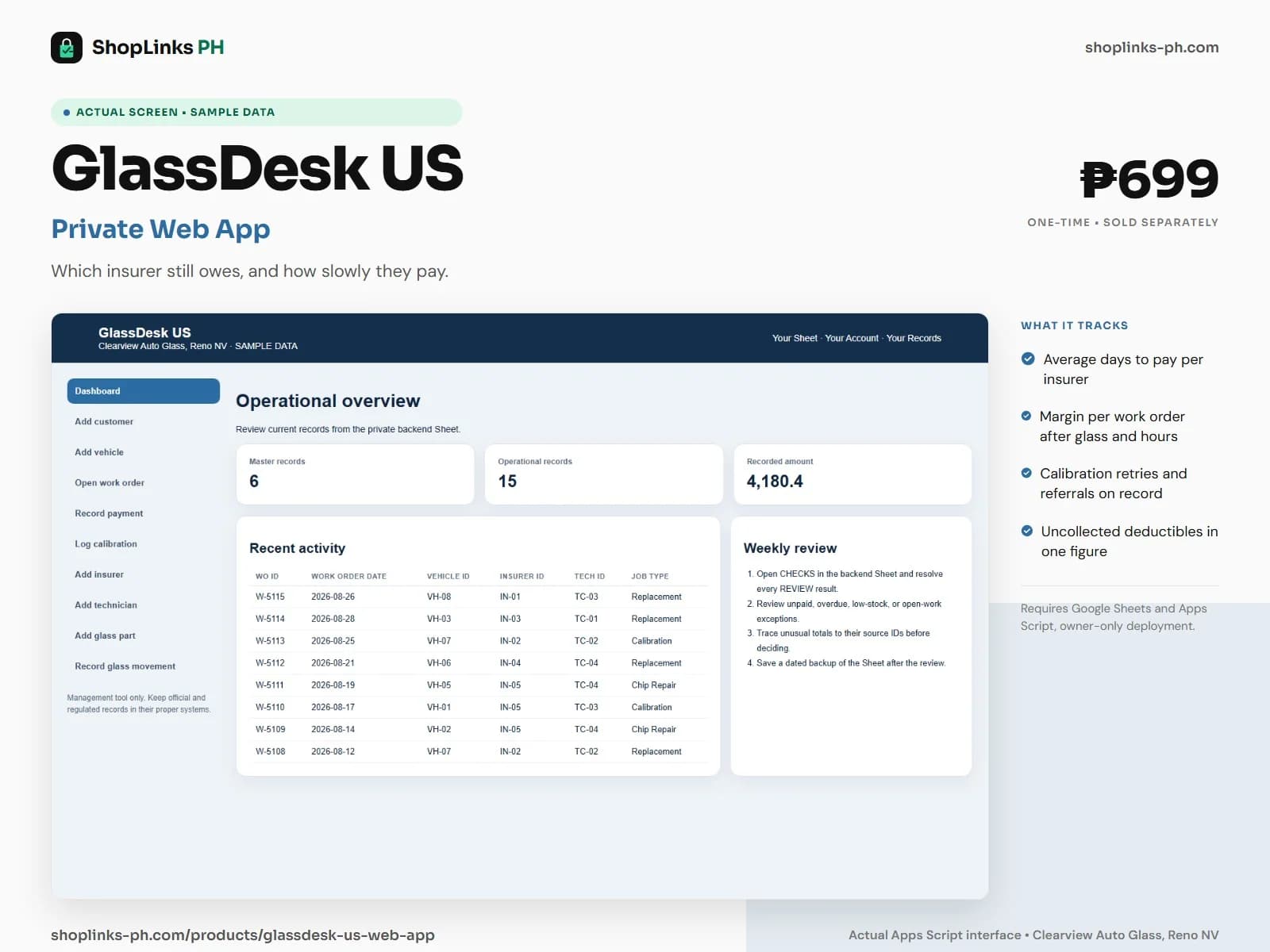
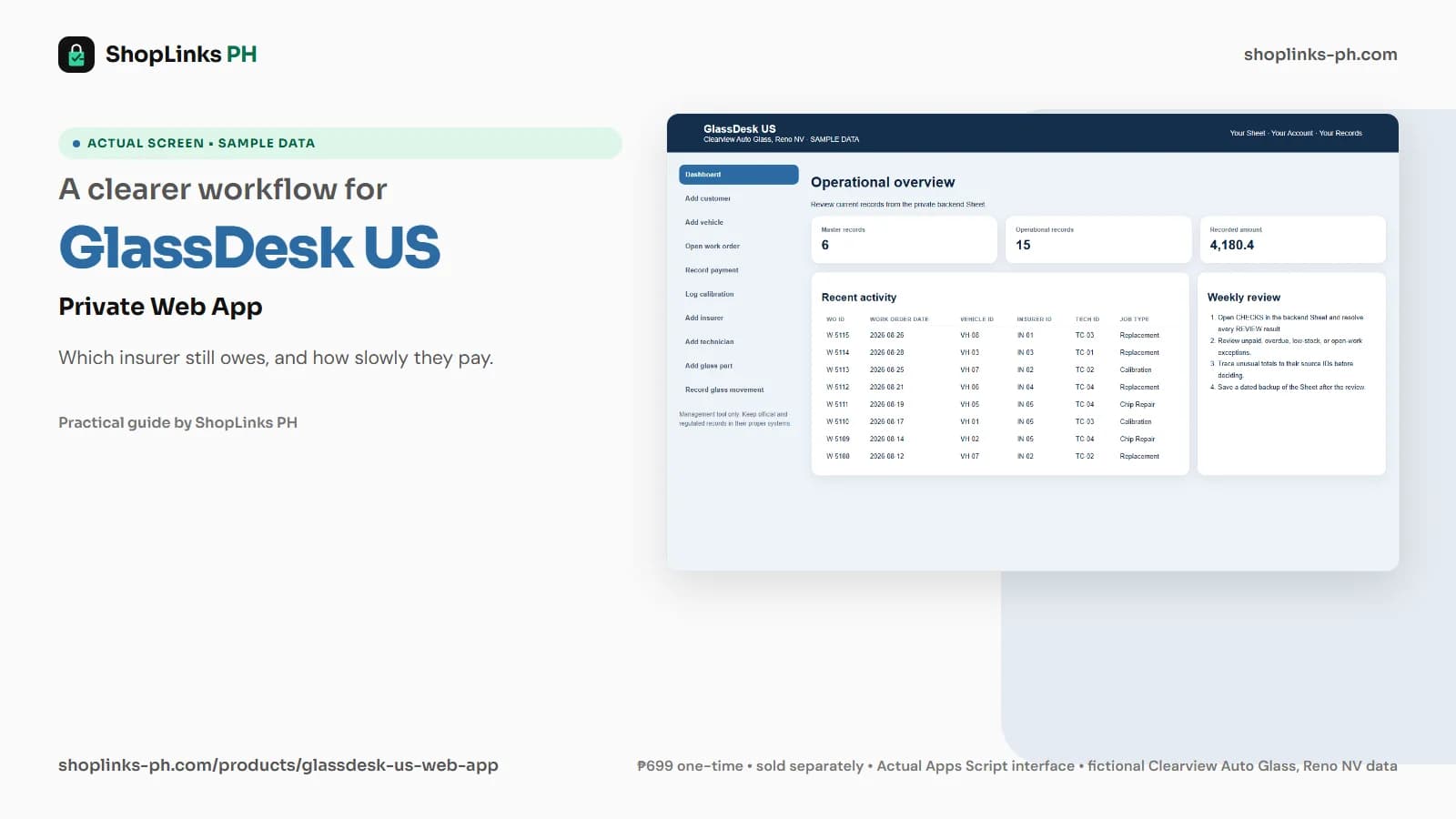
Resolve duplicate IDs, missing links, overdue balances, negative amounts, and open operational items in CHECKS before using the dashboard for decisions.
GlassDesk US Private Google Sheets Web App is designed for use with a Google account, Google Sheets, and Apps Script, using owner-only deployment by default.
No claims submission or insurer EDI, no NAGS or glass catalog pricing feed, no VIN decoding or vehicle history lookups, no sales tax filing or technician payroll, and no scheduling app or customer reminder texts.