Key takeaways
- Refill price and deposit are set once per cylinder size.
- Released minus returned is the count of cylinders outside.
- A swap nets the deposit to zero automatically.
- Deposit held is a liability, not income.
Watch the supporting video
Watch the YouTube guide here while following this article.
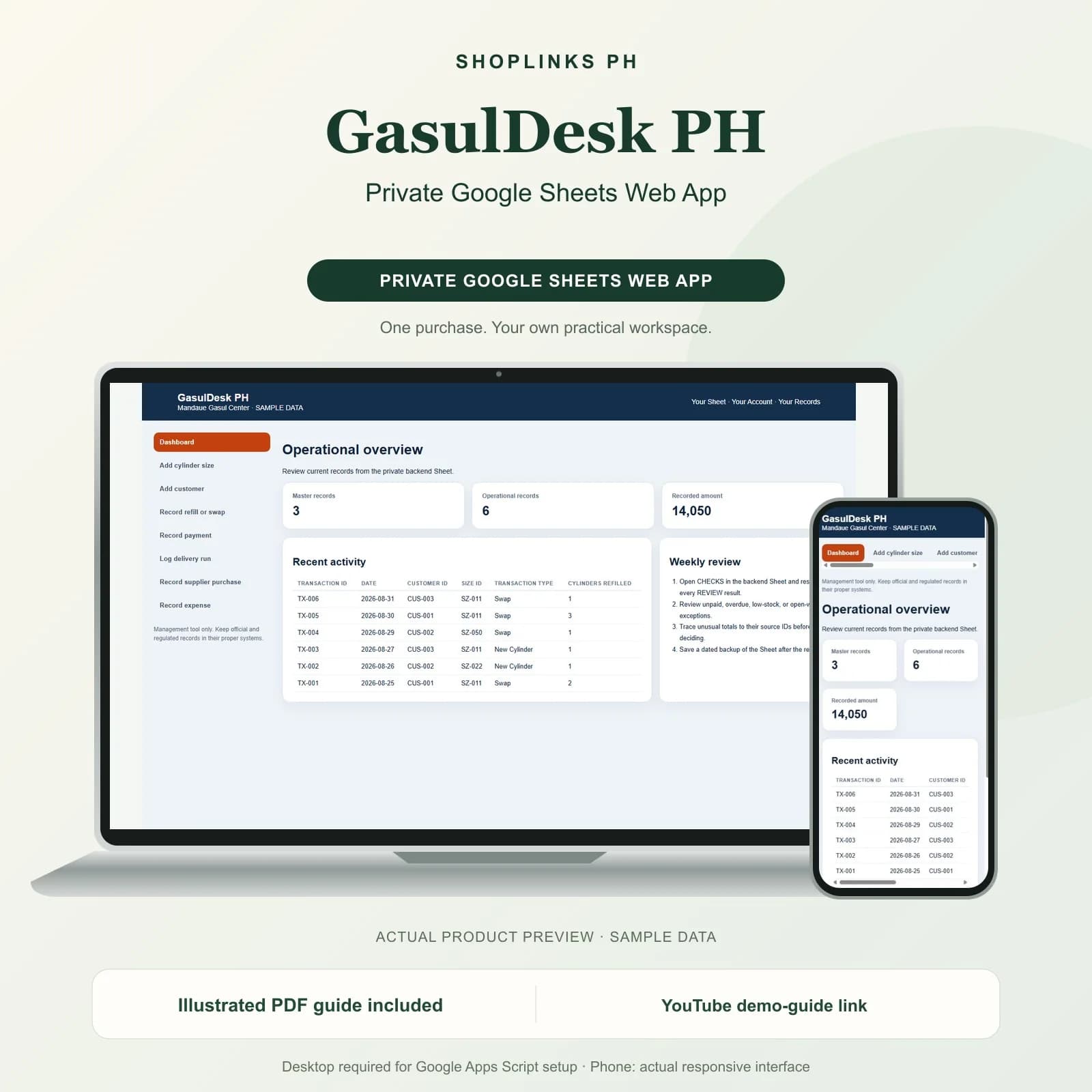
An LPG dealer sells gas but lends steel. Every cylinder that leaves the outlet is an asset in someone's kitchen, held against a deposit that has to be given back when the tank comes home. The refill money is easy to count and the cylinders are not, so a dealer can be profitable on paper while quietly losing tanks. GasulDesk PH counts both on the same transaction row, and the cylinder report tells you how many are still out and what deposit you are holding for them.
Price the refill from the size
Each cylinder size carries a refill price and a cylinder deposit. A transaction only needs the size, the customer, and how many cylinders were refilled; the refill amount comes from the size's own price.
When the plant raises its price, you change one cell and every transaction after that follows it. The old rows keep the price you actually charged that day.
Charge and refund the deposit on one row
Cylinders released and cylinders returned are entered separately, and the deposit is charged on what went out and refunded on what came back, both at the size's deposit rate.
A swap, where the customer hands over an empty and takes a full one, releases one and returns one, so the deposit charge and refund cancel and only the refill and delivery fee are due. A first-time customer returns nothing, so the deposit is charged and stays with you.
Know how many cylinders are outside
Cylinders with customers is released less returned, computed per size in CYLINDER REPORT and per customer on the customer sheet. Deposit held is that count times the size's deposit, which is the money you would owe if everyone came back at once.
A negative figure in that column means more cylinders were returned than were ever released against that size, which almost always means a transaction was entered under the wrong size ID.
Run deliveries and buy stock against the same numbers
Delivery runs record the driver, area, stops, cylinders loaded, delivered, and returned, and the sheet shows how many came back unsold. That is the number that tells you whether a route is worth the fuel.
Supplier purchases record cylinders bought, unit cost, what has been paid, and the payable left. Between that and the cylinders with customers, you can see whether the next order should be for gas or for more steel.
Review exceptions every week
Resolve duplicate IDs, missing links, overdue balances, negative amounts, and open operational items in CHECKS before using the dashboard for decisions.
GasulDesk PH Private Google Sheets Web App is designed for use with a Google account, Google Sheets, and Apps Script, using owner-only deployment by default.
No DOE or fire safety compliance filing, cylinder inspection or requalification records, leak testing logs, tare weight or seal certification, supplier ordering integration, tax filing, or official receipts.