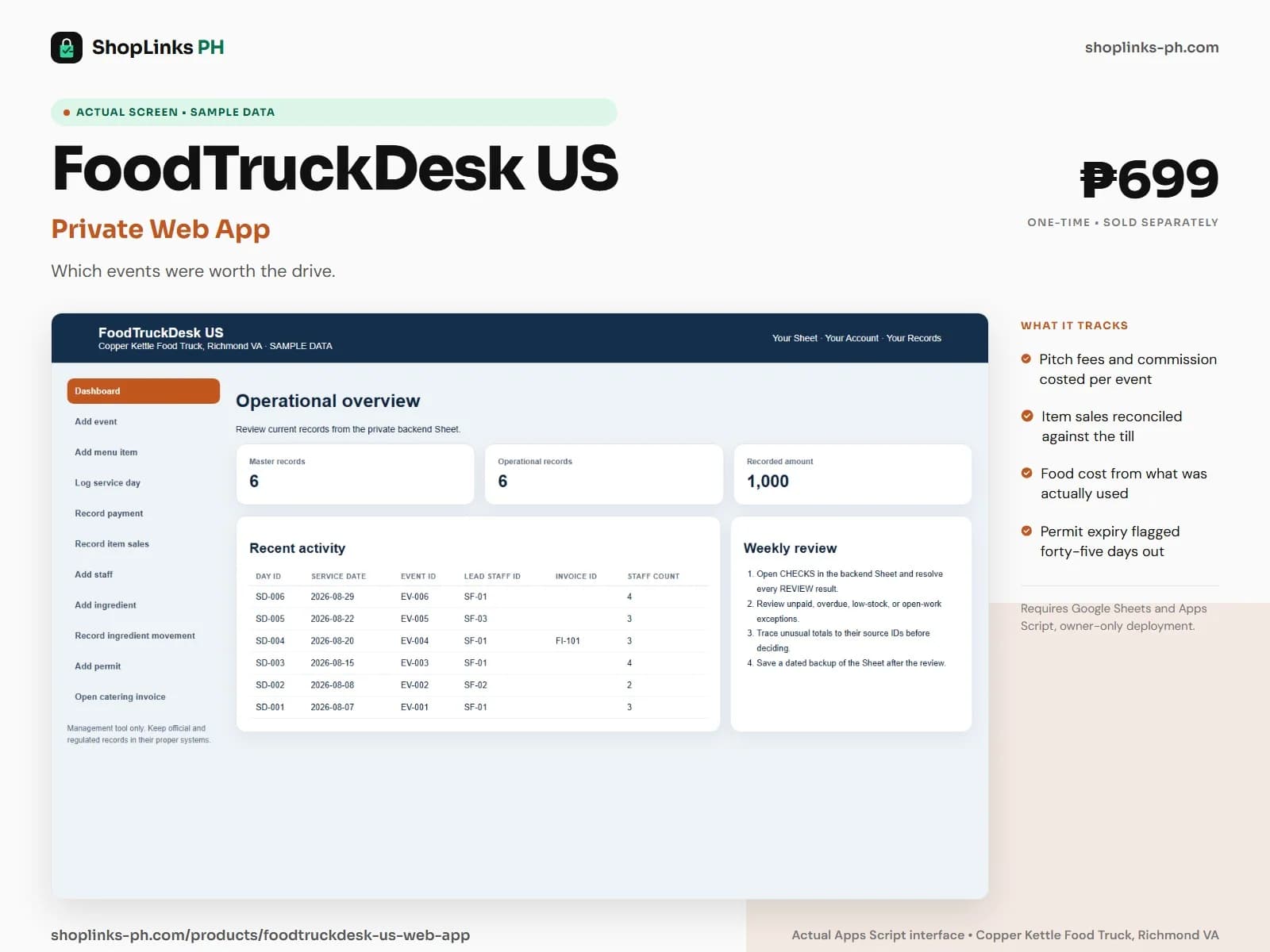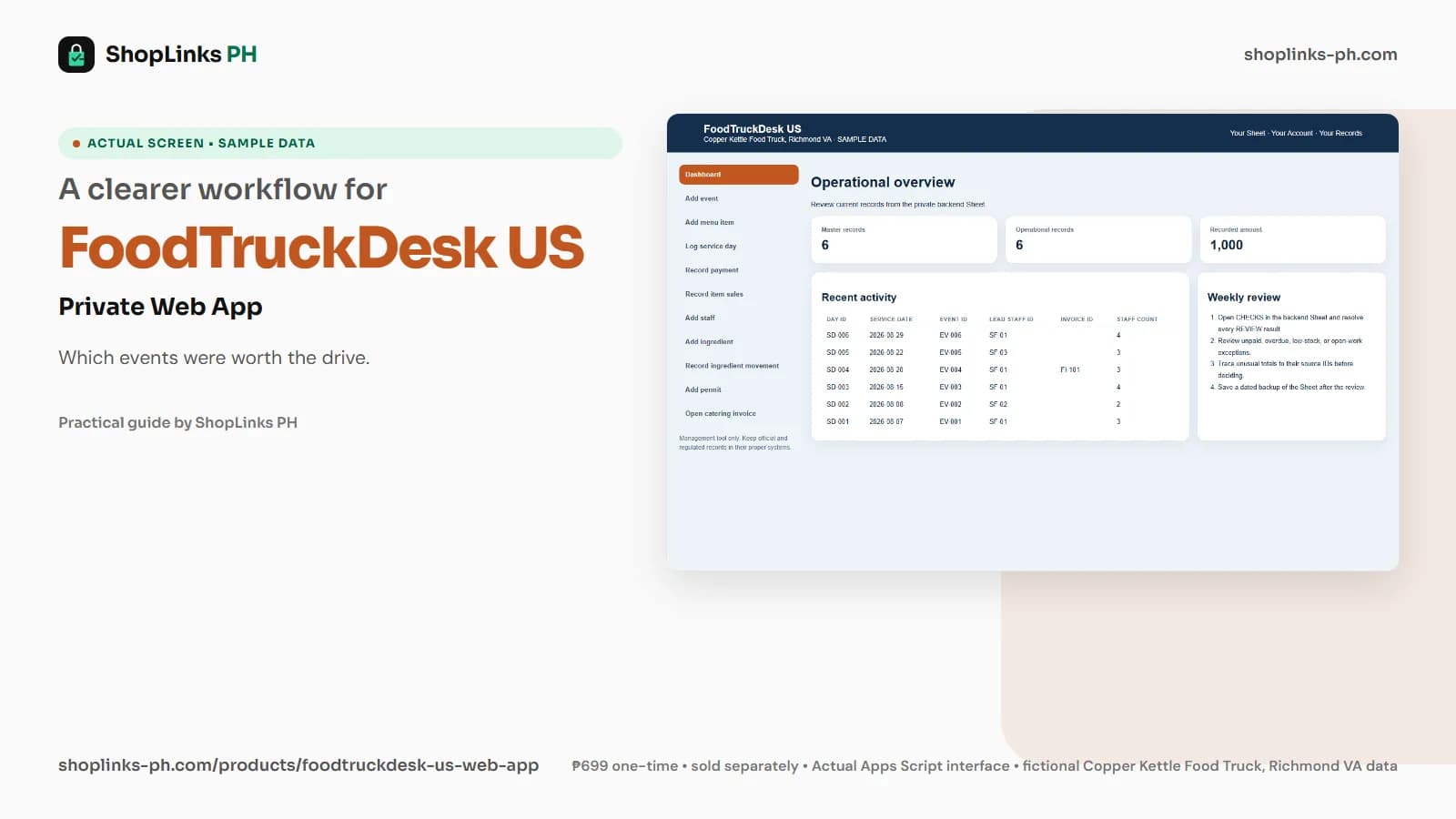
Key takeaways
- Pitch fees and commission come from the event.
- Item sales reconcile against the till.
- Waste is costed alongside service use.
- Permit expiry is flagged before it stops the truck.
A food truck judges an event by how long the line was. That is a poor measure, because the busiest days are often the ones with the largest deductions. A festival taking a pitch fee and fifteen percent of gross needs to sell a great deal more than a brewery lot taking nothing, and the crew needed to serve that line costs more too. FoodTruckDesk US computes the day after everything the day actually cost.
The event decides the deductions
Each event carries its own pitch fee and commission percentage, so the deduction is applied automatically to the day's gross.
A flat-fee street market and a percentage festival then become directly comparable, which is the comparison that should drive next season's bookings.
The till against the board
Item sales are recorded per line, and the sales variance compares that total against the gross taken.
A difference found the same night is a miscount or a missed item. A difference found in a month is unexplainable, which is why the reconciliation belongs on the day record.
Food cost from what was used
Ingredient movements marked as service use or waste count toward the day's food cost; a delivery does not.
Recording waste separately matters on a truck, where product held too long on a hot line is a real and recurring cost that never appears on any invoice.
Permits are an operating asset
Mobile food permits, temporary event permits and manager certifications each carry an expiry, and the status reads Renew soon forty-five days out.
This is a small register that prevents the largest possible failure, because an expired permit is a truck that cannot open.
Review exceptions every week
Resolve duplicate IDs, missing links, overdue balances, negative amounts, and open operational items in CHECKS before using the dashboard for decisions.
FoodTruckDesk US Private Google Sheets Web App is designed for use with a Google account, Google Sheets, and Apps Script, using owner-only deployment by default.
No point of sale or card reader integration, no health inspection or food safety logging, no permit application filing, no event booking marketplace, and no employee scheduling or payroll.