Key takeaways
- Measured area is built from the rooms.
- Material is booked as boxes and converted at box coverage.
- Achieved waste factor is compared with the quoted one.
- Margin is read against what has been billed.
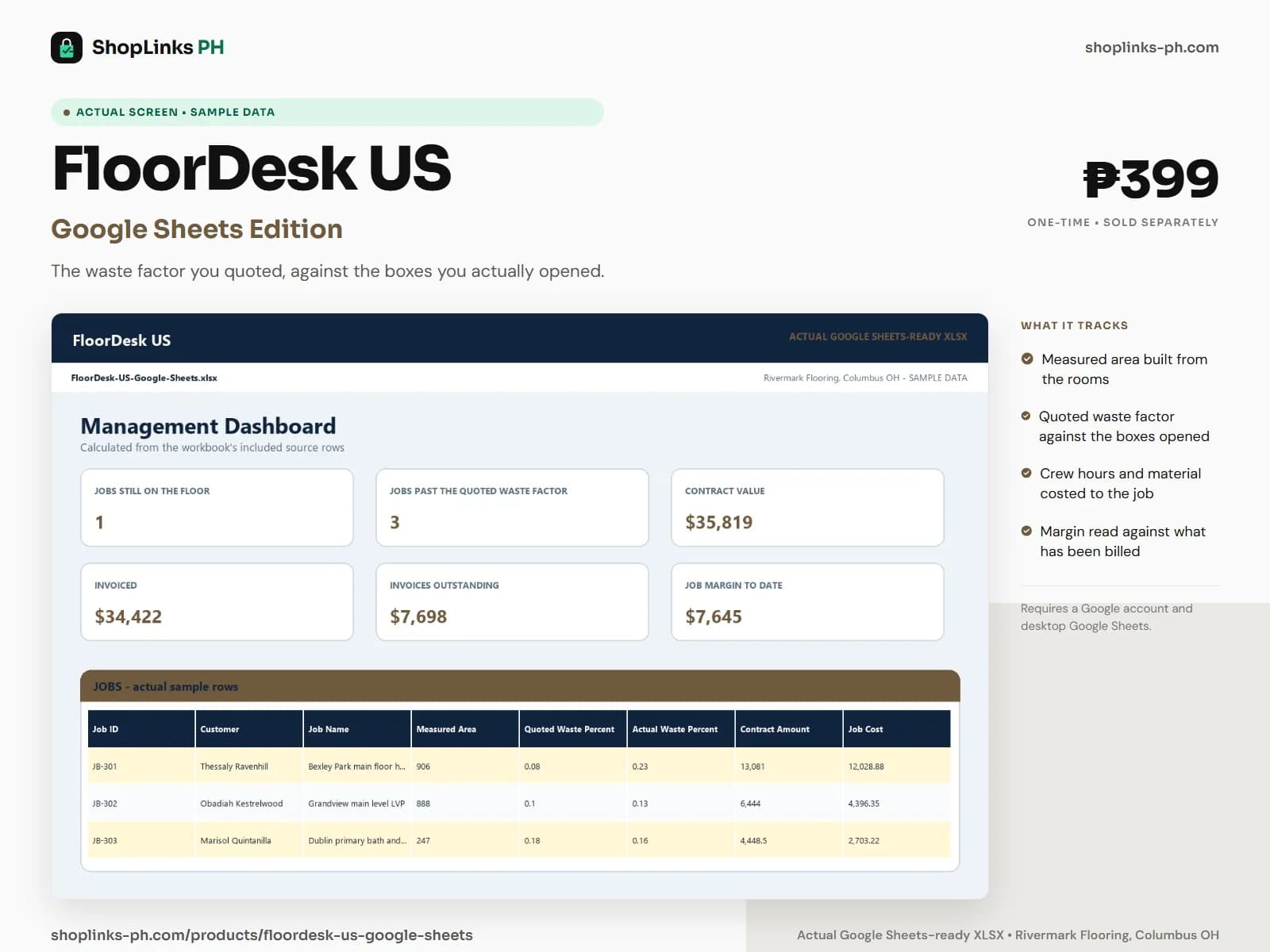
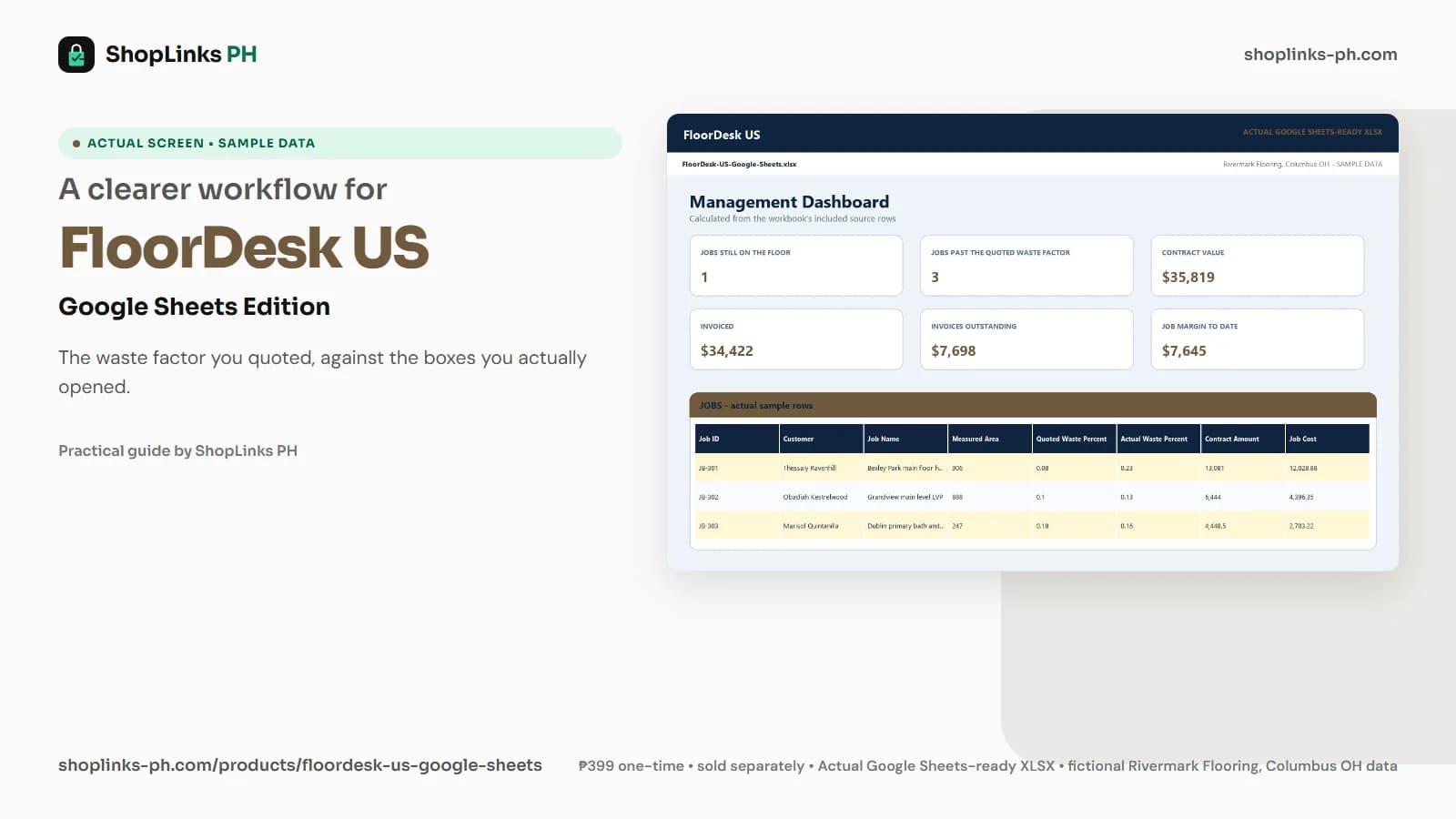
Flooring is bought by the box and sold by the square foot, and the gap between the two is the waste factor. Most contractors quote eight or ten percent because that is what they have always quoted, then open a second order halfway through a diagonal install and never write down why. FloorDesk US keeps the quoted factor and the achieved factor on the same row.
Area that comes from the rooms
Every room is entered with its length and width, and the job's measured area is those rooms added up.
A measured area built from rooms can be checked against the house later, which a single number written on a quote sheet cannot.
Boxes, not square feet
Each material carries its cost per square foot and the square footage a box covers, so material booked to a job is entered as boxes and converted for you.
That is the unit the supplier ships and the unit the crew opens, and it is where a second order quietly becomes the whole margin.
The factor you achieved
Material square footage divided by measured area gives the waste factor the job actually ran at, and the variance compares it with the quote.
Diagonal layouts, pattern matching and rooms full of doorways all show up here, job after job, until the next quote allows for them.
Margin against what was billed
Job margin subtracts material, sundries and crew hours from what has been invoiced rather than the full contract.
A floor that is half laid has spent nearly all its material money already, and measuring it against the contract would hide that.
Review exceptions every week
Resolve duplicate IDs, missing links, overdue balances, negative amounts, and open operational items in CHECKS before using the dashboard for decisions.
FloorDesk US Google Sheets Edition is designed for use with a Google account and current desktop Google Sheets.
No takeoff from plans or laser measuring, no supplier ordering or dye lot tracking, no scheduling calendar or crew dispatch, no payroll, and no customer-facing portal.