Key takeaways
- Gates, corners and removal are priced separately from the run.
- Posts quoted are compared with posts set.
- Hours variance exposes ground conditions early.
- Permits and approvals carry their own decision state.
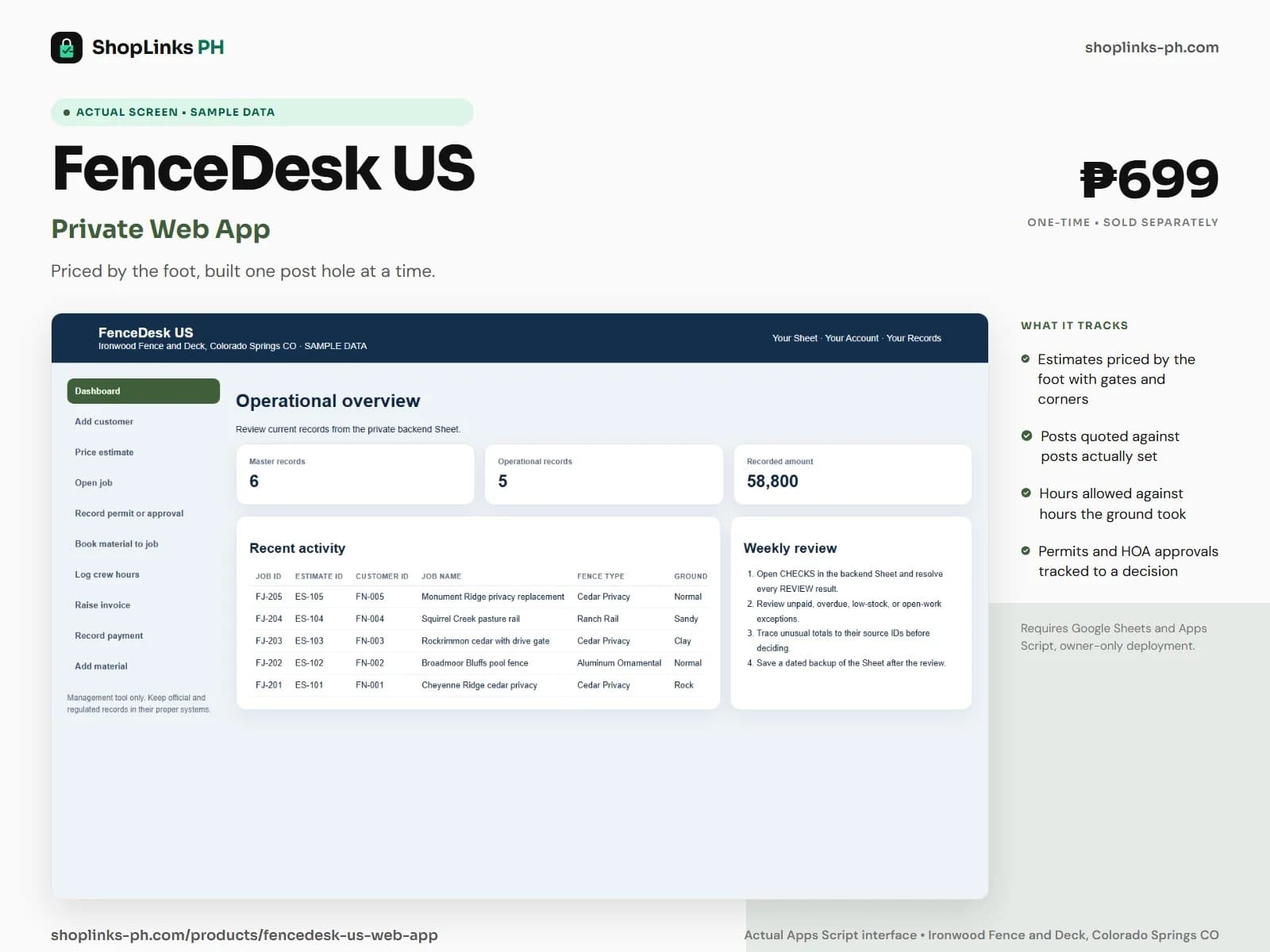
A fence is sold by the linear foot and built by the post hole, and those two units agree with each other right up until the auger hits something. Rock, hardpan, an old slab, roots: the price is already signed and the ground was never tested. FenceDesk US keeps the quote, the post count and the hours in one place so the next estimate for that soil is not guesswork.
An estimate that separates the extras
The run is priced by the foot, and gates, corners and removal are priced on their own lines.
Gates and corners are where a per-foot price quietly fails, because both take hours that the straight run never does.
Posts quoted against posts set
The job records the posts the takeoff called for and the posts the crew actually put in the ground.
Grade breaks, extra corners and a customer who moved the line all appear as post variance before anyone looks at the invoice.
Ground condition as a number
Every job carries the ground it was built in and the hours the estimate allowed, against the hours the crew logged.
Rock does not cost more material, it costs days, and hours variance is the only place that shows up early.
Permits, approvals and margin
Permits and HOA approvals are recorded with their own decision state, so a job is not started against an approval nobody has.
Cost per foot reads straight against the price per foot sold, which is the comparison that settles whether the trade was worth taking.
Review exceptions every week
Resolve duplicate IDs, missing links, overdue balances, negative amounts, and open operational items in CHECKS before using the dashboard for decisions.
FenceDesk US Private Google Sheets Web App is designed for use with a Google account, Google Sheets, and Apps Script, using owner-only deployment by default.
No CAD or plot plan drawing, no permit filing or 811 ticket submission, no supplier ordering, no payroll or crew scheduling calendar, and no customer-facing portal.