Key takeaways
- Start with one defined situation
- Replace the fictional examples
- Review the final native file
Define the decision
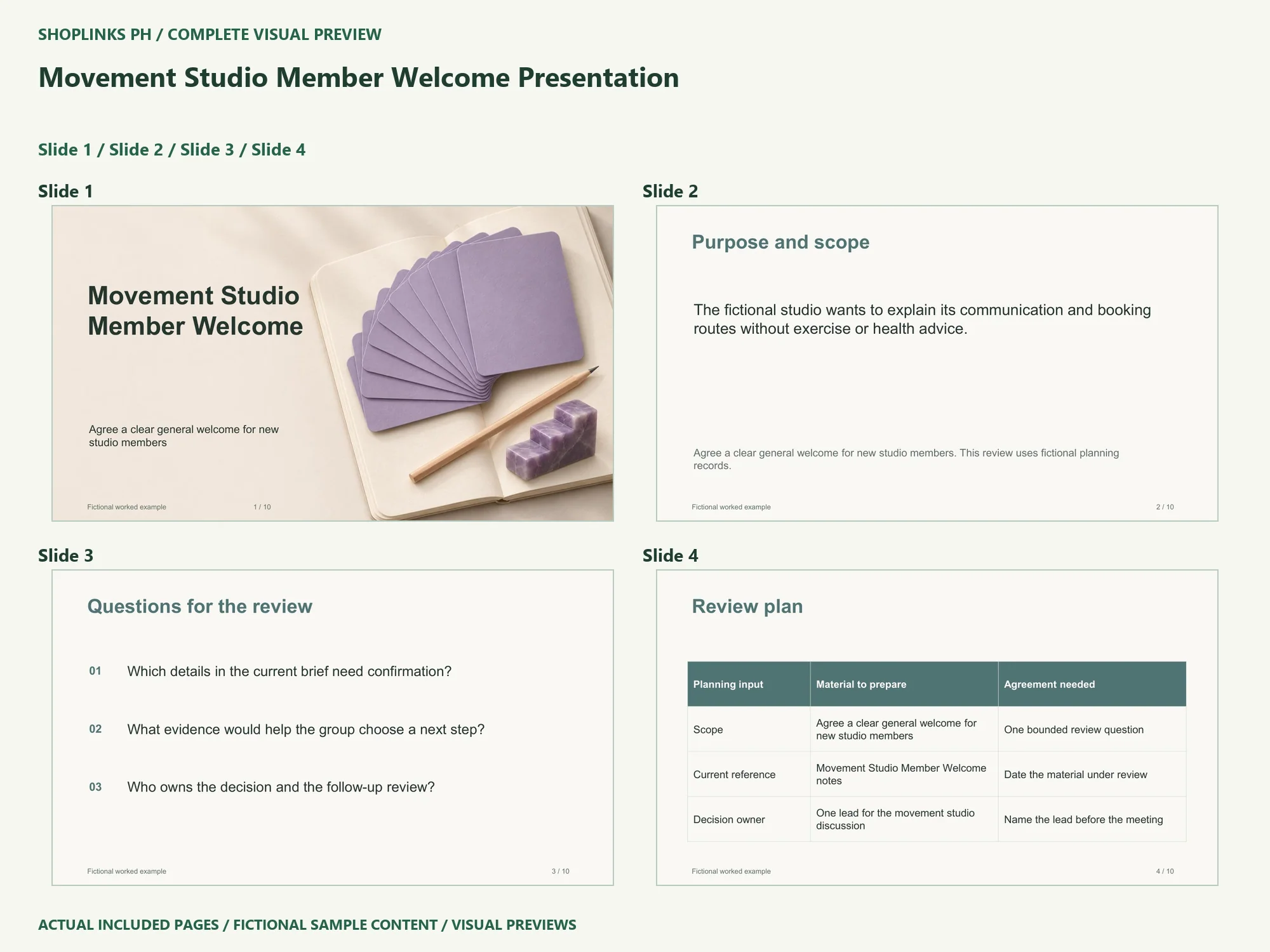
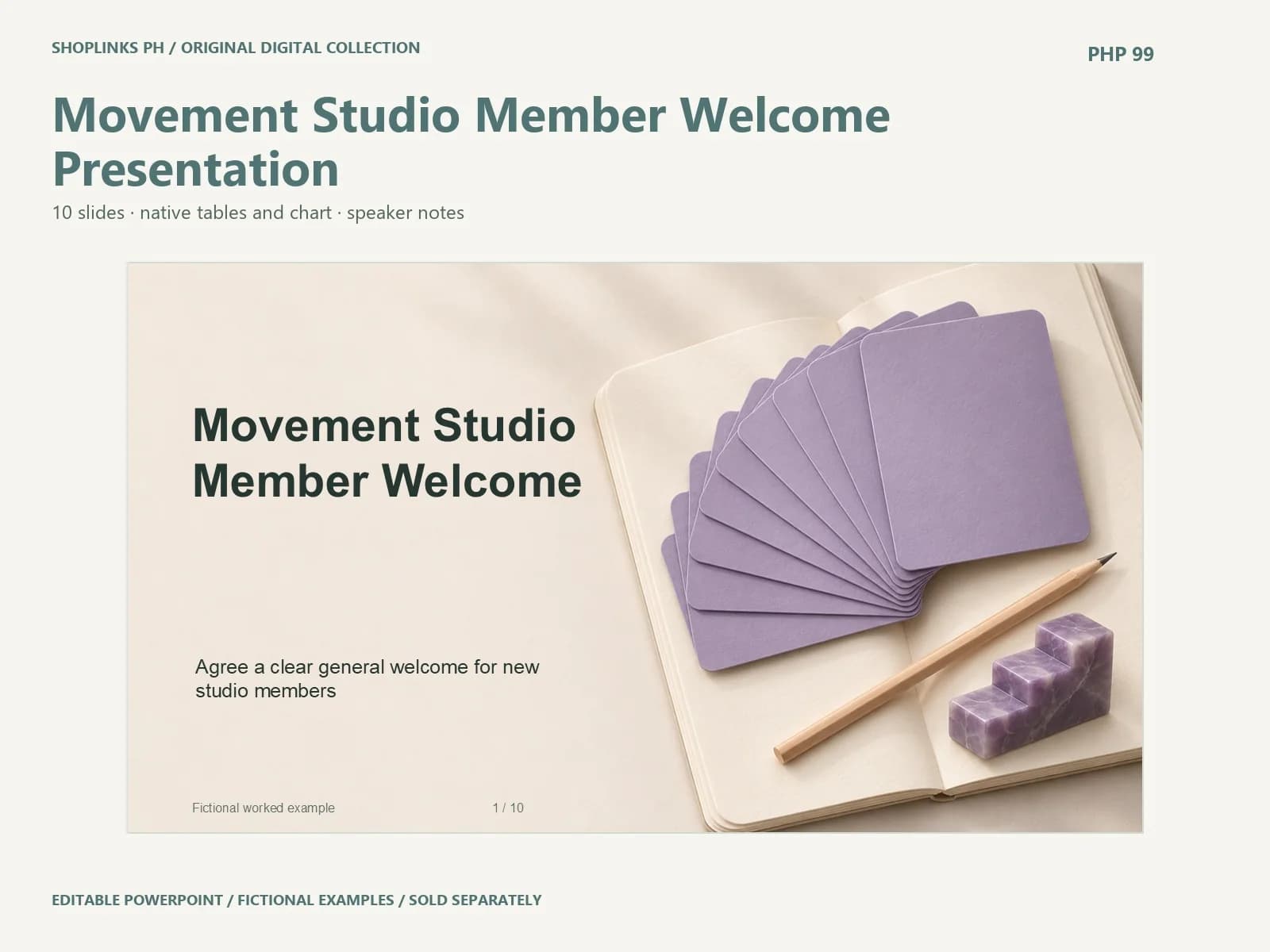
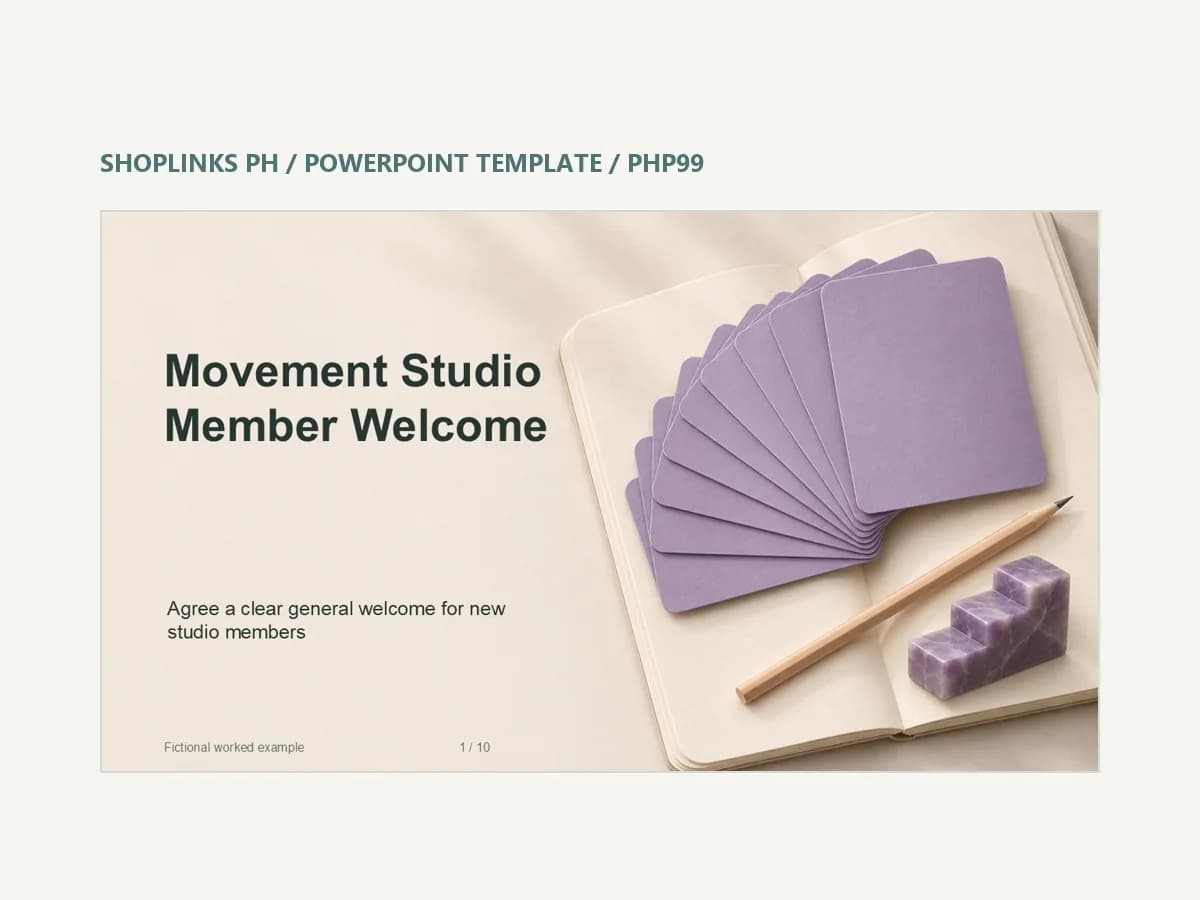
The fictional studio wants to explain its communication and booking routes without exercise or health advice. The purpose is to agree a clear general welcome for new studio members. Keep the first conversation focused on that decision. Name the person who needs the result, the material they can review and the questions outside the current scope. A clear boundary makes it easier to tell whether the presentation contains enough evidence to support its next step.
Prepare a dated reference
Before editing the deck, keep an untouched copy and gather the information for your own situation. Name each source and record its date. Separate a direct observation from an interpretation or a proposed action. The supplied scenario, records and chart values are fictional. They illustrate a usable writing depth and a table structure, rather than providing findings about your business or project.
First visit
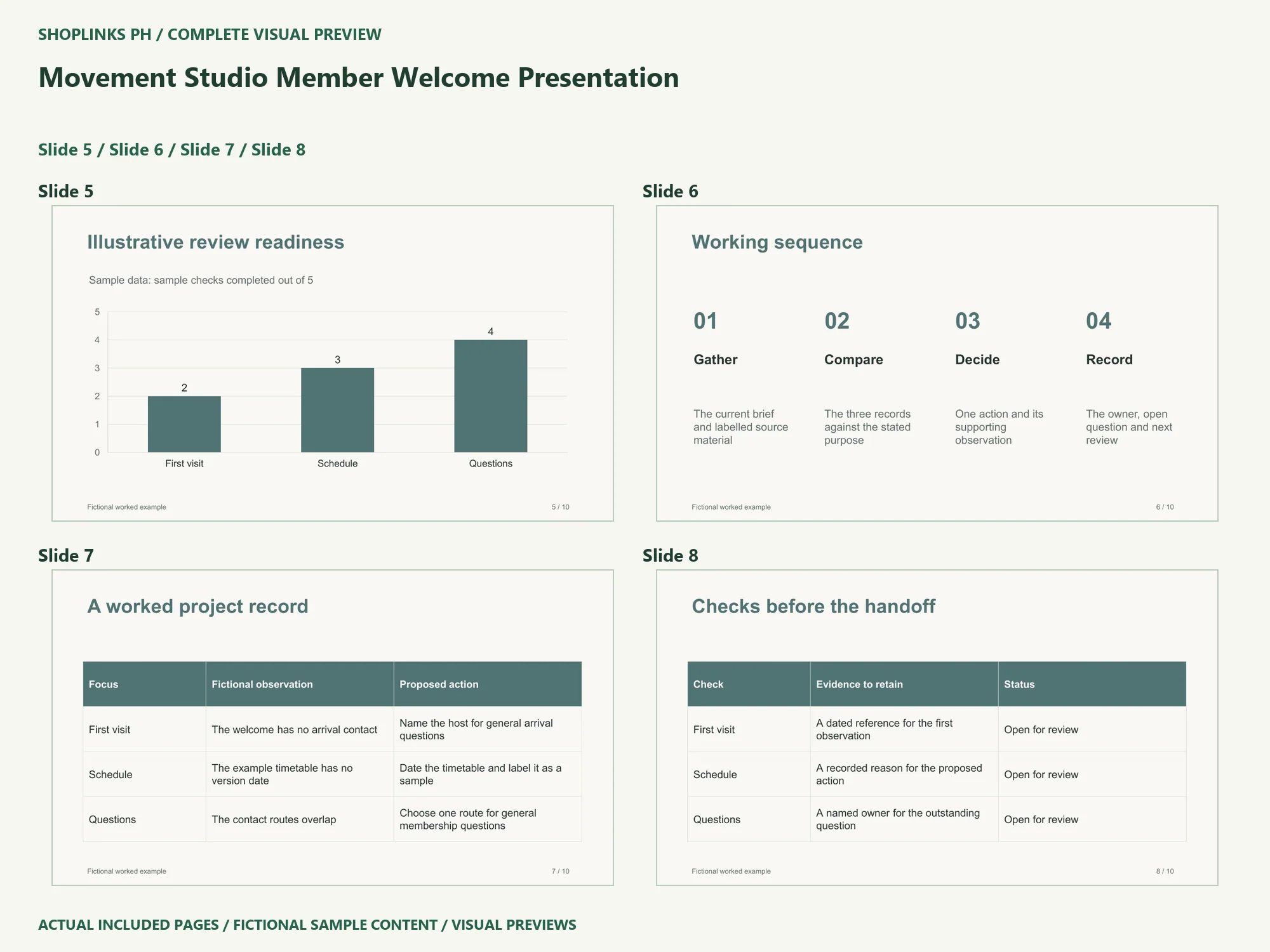
The worked example records this observation: The welcome has no arrival contact. Its proposed action is to name the host for general arrival questions. In your own version, identify the material that supports the observation. Ask whether the action answers the stated review question. If a detail remains uncertain, keep that uncertainty visible and name the person who can help resolve it.
Schedule
The worked example records this observation: The example timetable has no version date. Its proposed action is to date the timetable and label it as a sample. In your own version, identify the material that supports the observation. Ask whether the action answers the stated review question. If a detail remains uncertain, keep that uncertainty visible and name the person who can help resolve it.
Questions
The worked example records this observation: The contact routes overlap. Its proposed action is to choose one route for general membership questions. In your own version, identify the material that supports the observation. Ask whether the action answers the stated review question. If a detail remains uncertain, keep that uncertainty visible and name the person who can help resolve it.
Edit the chart with its unit intact
The native chart on slide5 shows illustrative review checks completed out of five for the three named items. Use PowerPoint’s Edit Data command and replace labels and values together. Retain the zero-to-five scale only when that measure fits your real records. An attractive bar does not establish readiness by itself. Keep the check definitions and their sources beside your project notes.
Keep a usable handoff
Read the complete ten-slide story in Slide Show after customization. Check long names, table wrapping, chart labels and speaker notes. Record the agreed action, its owner and the next review point. Save a new PowerPoint file, export a PDF if useful, and reopen both before sharing. The PHP99 price covers one deck sold individually. Review its source files, guide and requirements at View Movement Studio Member Welcome Presentation
Complete page preview
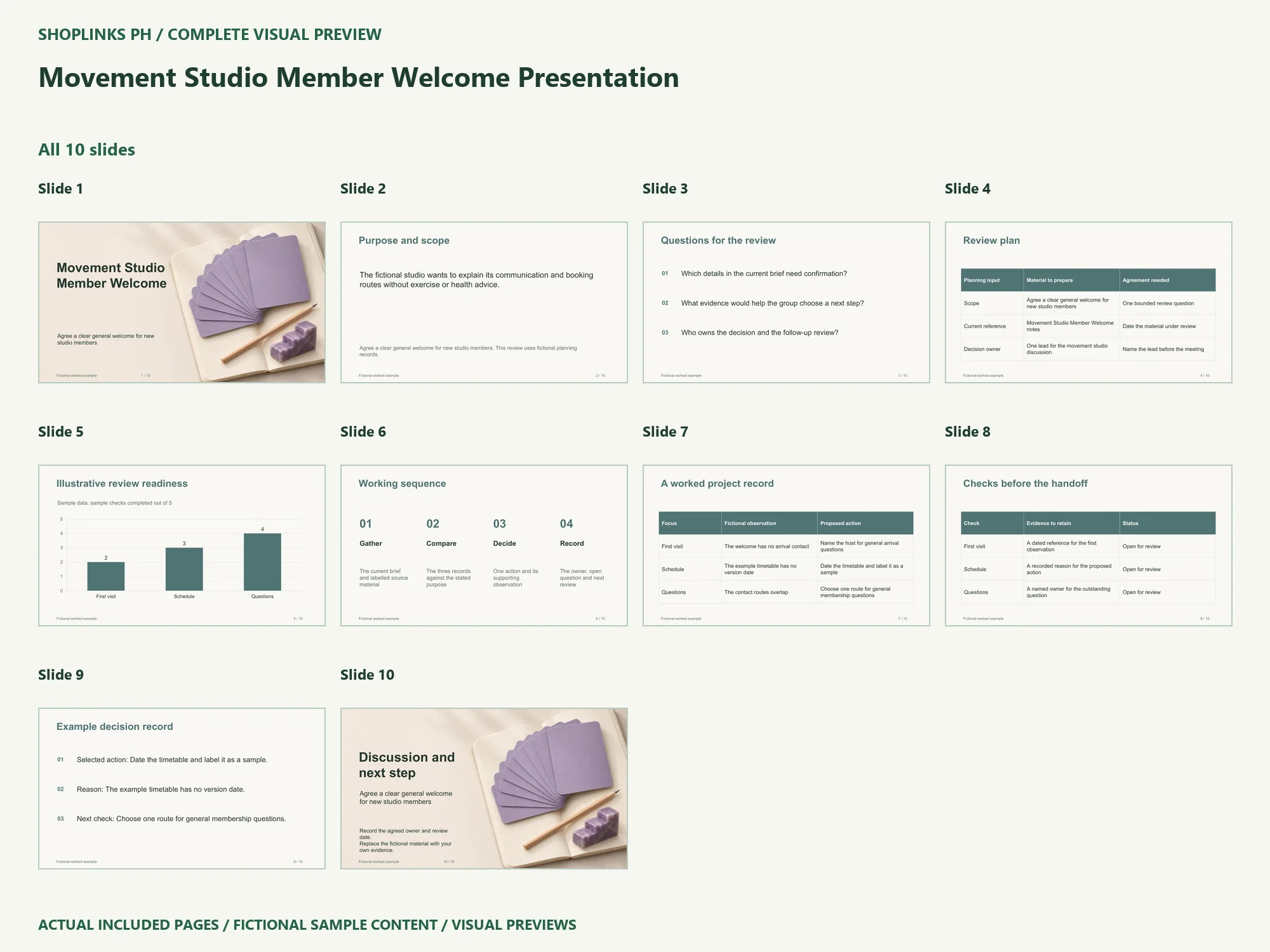
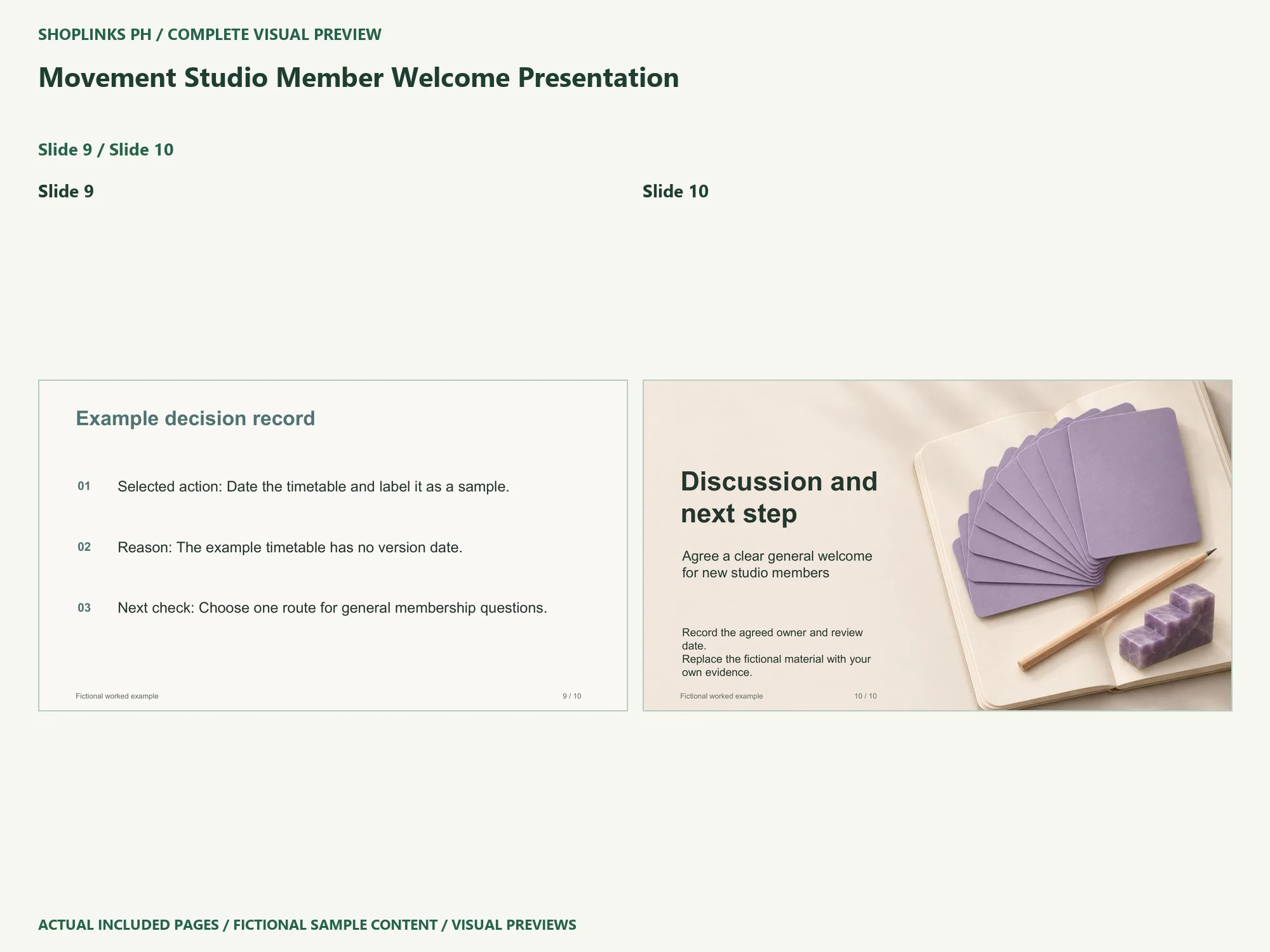
See all 10 slides below. These are static visual previews of the included source, with fictional sample content. Select an image to open it at full size and use browser zoom.