Key takeaways
- Thank-you status derives from two flags on the gift.
- Every dollar points at a restricted or unrestricted fund.
- Pledge balances follow the payments recorded against them.
- Campaign progress and grant reports carry their own dates.
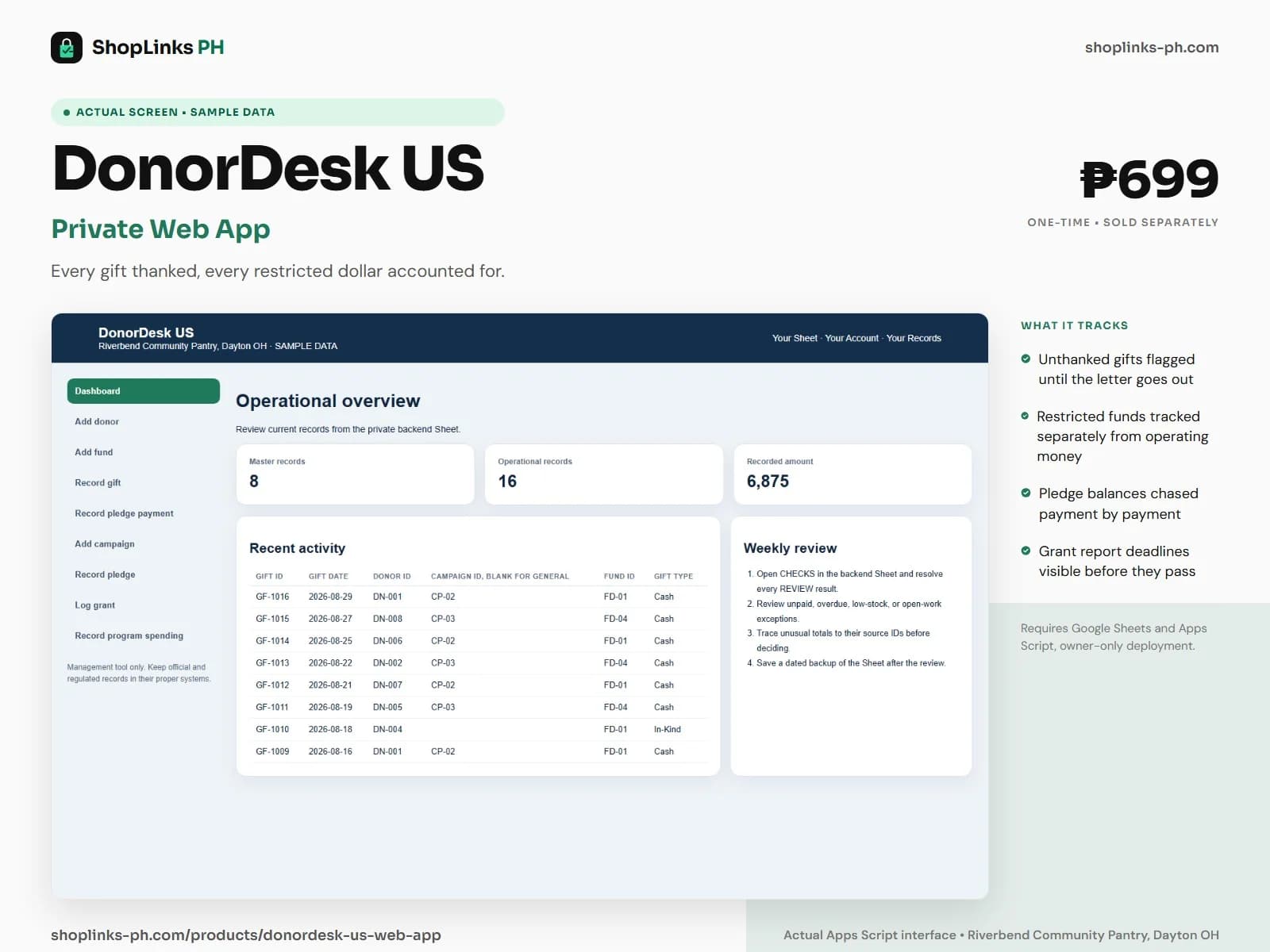
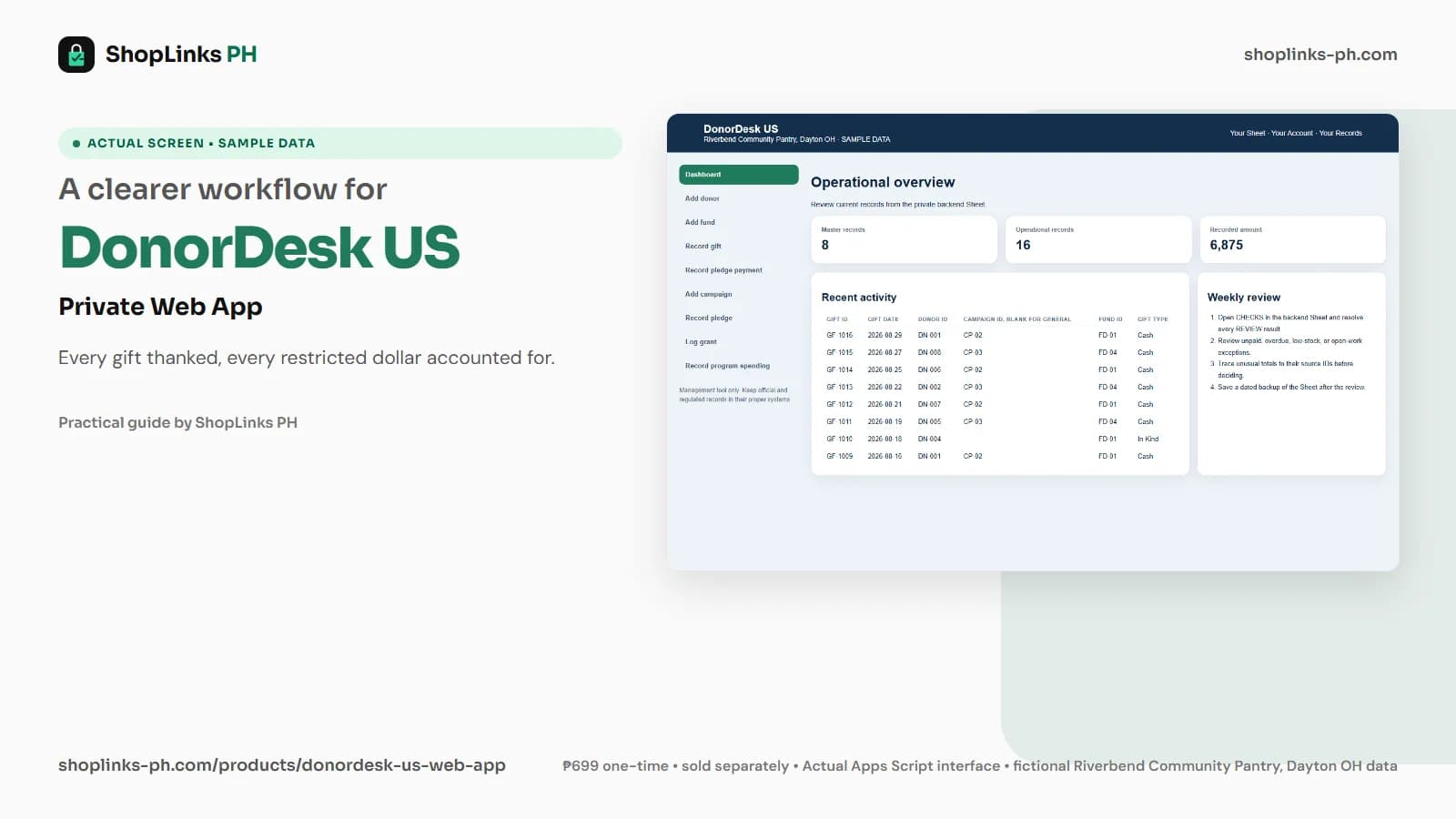
A community food pantry in Dayton took in sixteen gifts, six pledges and two grant checks in August, and the board's only question at the September meeting will be a simple one: is the backpack money still the backpack money? The treasurer knows roughly. A spreadsheet of deposits does not separate a restricted gift from an operating one, and it certainly does not say which donors are still waiting for a thank-you. DonorDesk US keeps both answers ready.
Thank-you as a status, not a memory
Every gift carries an acknowledged flag and a receipt sent flag, and the thank-you status derives from the two, so a gift reads Needs thank-you until someone actually does it.
Donors record how they prefer to be thanked, by email, mail, a call or not at all, which keeps a volunteer from mailing a letter to someone who asked for no recognition.
Restricted money stays restricted
Each fund is marked restricted or unrestricted, and every gift, pledge, grant and program expense points at a fund, so the backpack drive's money is never mixed with the electric bill.
The fund summary adds what came in, subtracts what was spent and labels each fund, and a restricted fund that reads Overspent is a problem the board needs to hear about before an auditor does.
Pledges are promises with balances
A pledge records the amount promised, the schedule and the number of installments, and the balance follows the pledge payments recorded against it, so a sustainer who missed a month shows up.
Pledge payments are entered once, against the pledge, and never again as gifts, which is the discipline that stops a five thousand dollar foundation pledge from being counted twice on the campaign.
Campaigns and grants with dates on them
Each campaign adds gifts and pledge payments tagged to it, divides by the goal and reads Goal met, Nearly there, Building or Early days, which is the line the newsletter needs.
Grants carry the amount requested, awarded and received, so the receivable is visible, and the report due date reads Scheduled, Due soon or Overdue before a funder has to ask.
Review exceptions every week
Resolve duplicate IDs, missing links, overdue balances, negative amounts, and open operational items in CHECKS before using the dashboard for decisions.
DonorDesk US Private Google Sheets Web App is designed for use with a Google account, Google Sheets, and Apps Script, using owner-only deployment by default.
No donor CRM or email marketing platform, no online giving page or payment processing, no accounting ledger or audit-ready financial statements, no IRS filing or tax advice, and no automated receipt or acknowledgment emails.