Key takeaways
- Margin comes from the product's cost, not the driver's price.
- Only deposit-bearing products create empties.
- Empties trace back to a specific invoice.
- Credit limits are checked per outlet, continuously.
Watch the supporting video
Watch the YouTube guide here while following this article.
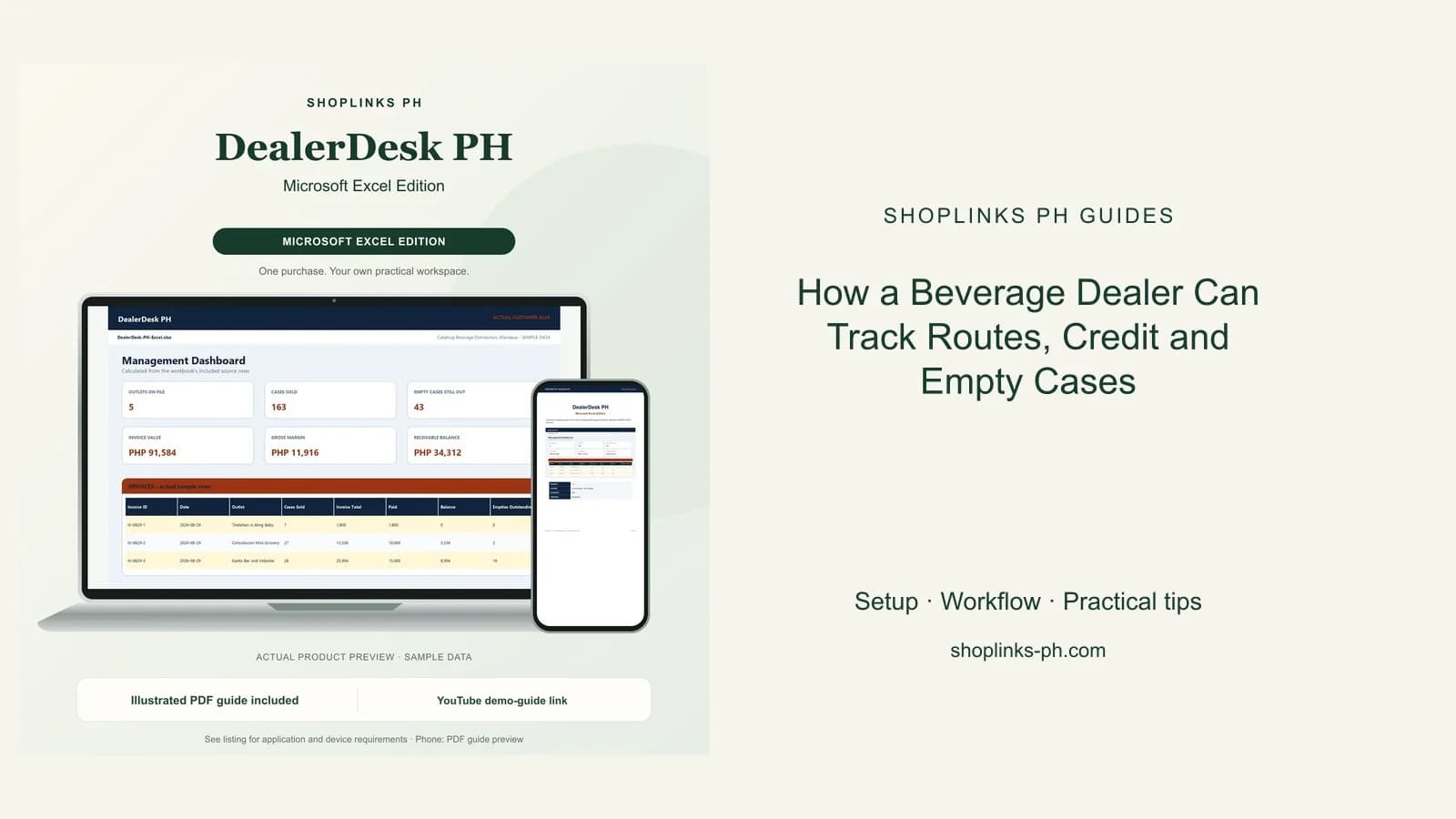
A beverage dealer's biggest hidden asset is a pile of empty bottles scattered across a hundred sari-sari stores, and the biggest hidden risk is credit extended one case at a time until an outlet owes more than it can pay. DealerDesk PH keeps products, routes, outlets, invoices, empties and collections as connected rows, so both the receivable and the empties are numbers rather than hopes.
The product decides the margin
Each invoice line reads the product's own unit cost, so the margin on a delivery is known the moment it is invoiced.
Drivers negotiate prices, but they cannot change costs. Keeping the cost on the product is what makes a route's profitability comparable across weeks.
Only returnables create empties
The deposit lives on the product. A line for PET or cans contributes nothing to empties due; a line for returnable bottles contributes its cases.
That single rule stops the empties figure from drifting upward every time a dealer adds a non-returnable line to the catalogue.
Empties belong to an invoice
Returns are recorded against the invoice that issued the cases, so empties outstanding is traceable to a specific delivery and outlet.
When cases go missing, the search is one route sheet rather than a season of deliveries.
Credit with a visible ceiling
Cash invoices settle themselves. Charge invoices are settled only by collections, so the balance is current, and the outlet ledger compares it against the credit limit.
The checks count duplicate invoice identifiers, invoices naming an outlet that is not on file, lines naming an invoice that does not exist, and any invoice where more empties came back than went out.
Review exceptions every week
Resolve duplicate IDs, missing links, overdue balances, negative amounts, and open operational items in CHECKS before using the dashboard for decisions.
DealerDesk PH Microsoft Excel Edition is designed for Microsoft Excel 2019 or newer on Windows or macOS.
No supplier or principal ordering, no warehouse or van inventory count, no route optimisation or GPS tracking, no BIR-registered sales invoice, no consignment or trade-promo settlement with the principal, and no automatic reminders to outlets.
