Key takeaways
- Every finding is tracked from quote to decision.
- Job margin comes from hours on site and parts fitted.
- Unfinished work never shows a margin.
- Appliances flag themselves overdue for a sweep.
A Burlington sweep works through August getting ahead of the heating season. Fifteen jobs, a dozen findings written on inspection forms, a reline that ran two days, and a goodwill return visit for a stove gasket. The invoices went out. What the owner cannot say is how many of those quoted crowns and caps ever came back as approved work, and which of the fifteen jobs actually paid for the truck.
A finding is not a sale
Every inspection writes findings: a cracked crown, a missing cap, tiles split at two joints. Each one carries a component, a severity and, when it is worth quoting, an amount the customer was told.
The finding then sums the repair work actually billed against it, so it reads Waiting on customer, Approved, not done, Repaired or Declined. That list is the sweep's real pipeline for the fall.
Jobs priced from their parts
A job carries a sweep or inspection fee and a trip fee, and every part fitted is a repair line that takes its cost and sell price from the parts list, so the repair total is never typed twice.
Labor cost is the hours on site times that technician's hourly cost. Subtract labor and parts from the job total and the margin on each visit is a derived figure, not a feeling.
Half-finished work is not profit
A reline booked on the last dry day of August, with the cap fitted and the flashing still to do, is not a finished job. Showing a margin on it would flatter the month badly.
Jobs only earn a margin once they read Complete. Anything else is labelled In progress and is left out of the margin totals and the dashboard tile, so the month is read honestly.
Which flues are due
Every appliance records its last sweep date and the month its sweep normally falls due, then counts the completed sweeps logged against it during the current season.
An appliance with no sweep this season and a last sweep more than a year old reads Overdue. That is the call list for September, and it is produced without anyone reading last year's calendar.
Review exceptions every week
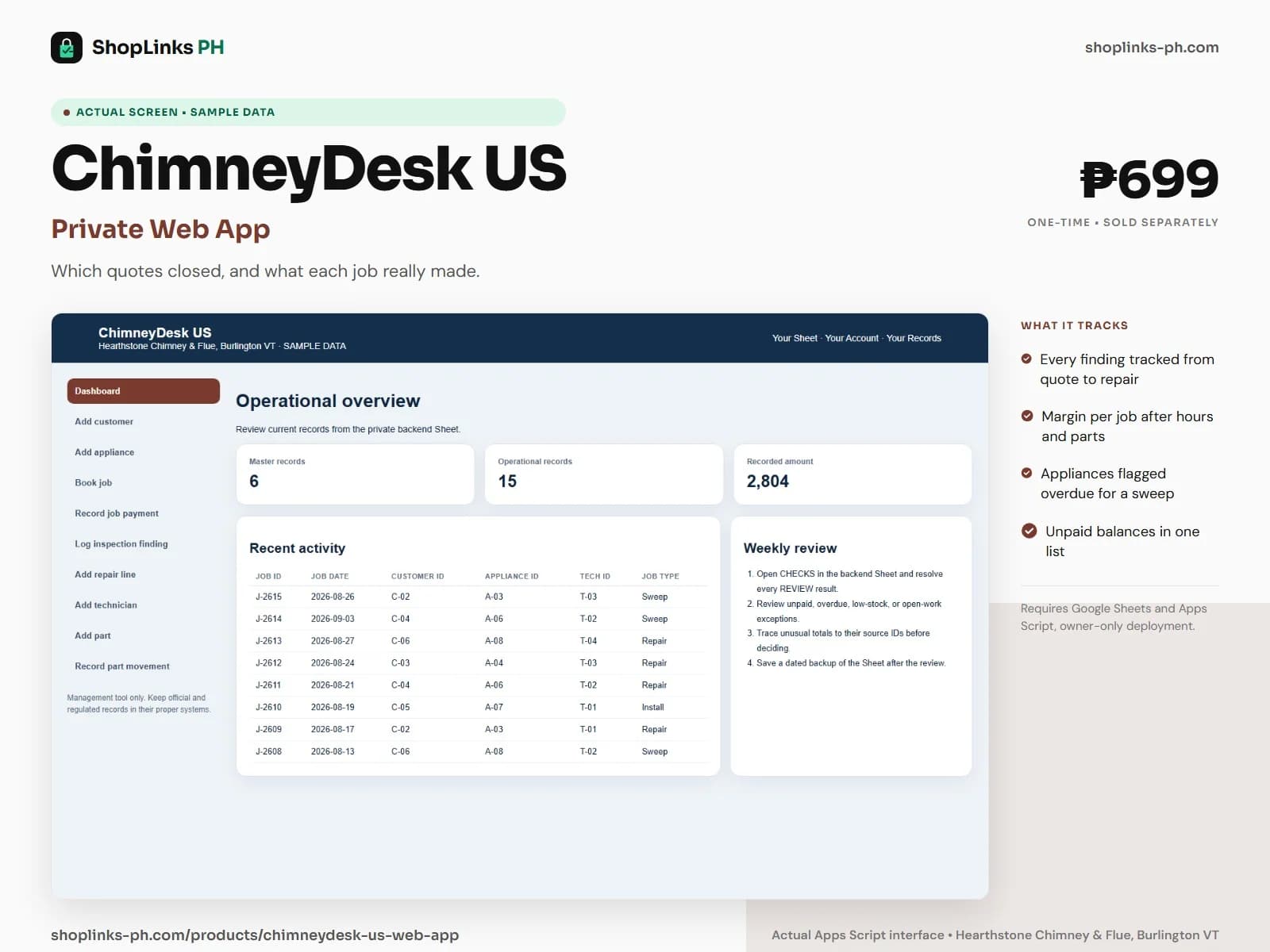
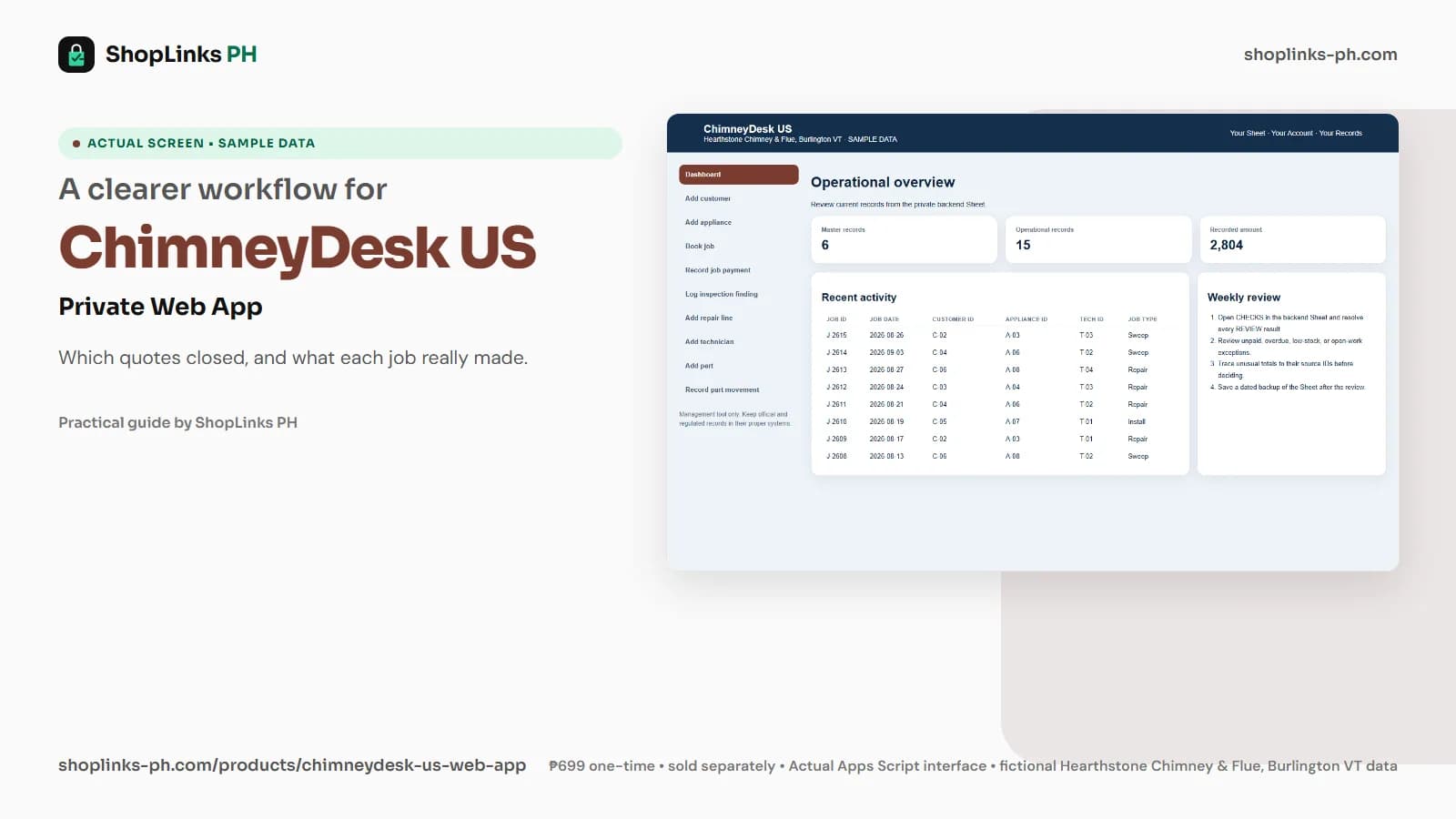
Resolve duplicate IDs, missing links, overdue balances, negative amounts, and open operational items in CHECKS before using the dashboard for decisions.
ChimneyDesk US Private Google Sheets Web App is designed for use with a Google account, Google Sheets, and Apps Script, using owner-only deployment by default.
No code compliance certificates, permits or regulated inspection reporting, no scheduling app or route optimization, no technician payroll or contractor tax filing, no card processing or automated invoicing, and no customer reminder texts or emails.