Key takeaways
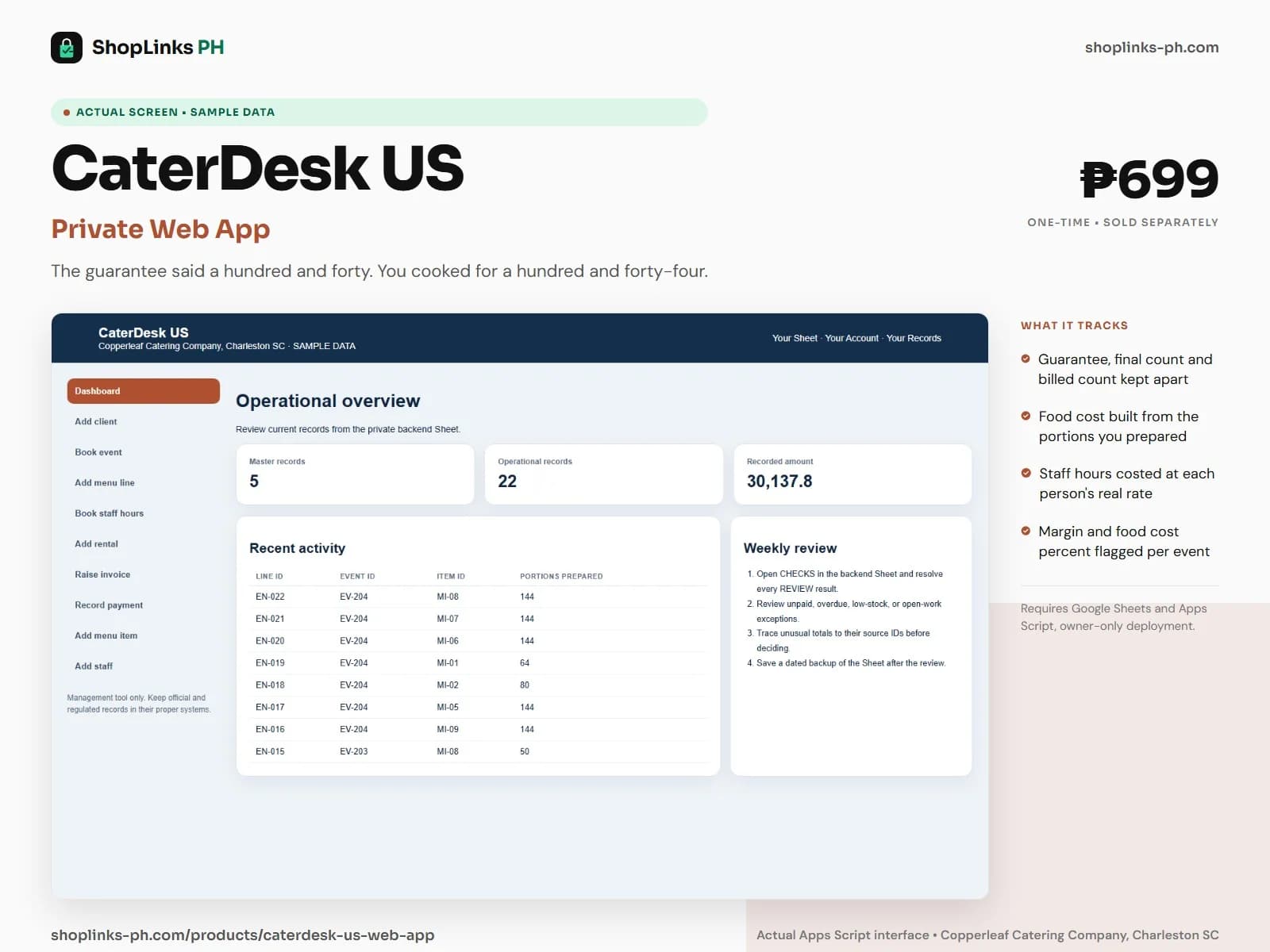
- Guarantee, final count and billed count stay separate.
- Food cost is built from portions prepared.
- Staff hours are costed at their real rate.
- Margin and food cost are flagged per event.
Catering is sold per head against a guaranteed count, and the guarantee is the only thing protecting the kitchen from food nobody eats. It is agreed weeks out, revised by phone, and often quietly abandoned when the final number comes in low. By then the beef is bought and the crew is booked. CaterDesk US keeps the counts, the food cost and the hours in one place.
Three counts, not one
Each event records the guarantee, the final head count and the count actually billed.
Keeping them apart shows the exact moment the guarantee stopped being a floor, and the shortfall adds up across a season.
Food cost from the menu lines
Menu items carry their own food cost, and each event lists the items selected with the portions prepared.
The event's food cost is the sum of those lines, so the percentage is measured rather than assumed.
Hours are the other half
Staff are costed at their own hourly rate and booked to the event with the hours actually worked, prep and travel included.
A long build with a room flip turns a six-hour dinner into a fifteen-hour day for the chef, and the crew was hired against the guarantee.
Margin read per event
The margin sheet subtracts food, staffing, rentals at cost and delivery from the full event revenue.
Two checks read on every row: one on food cost percent, one on margin percent, so a bad event is visible without reading the numbers.
Review exceptions every week
Resolve duplicate IDs, missing links, overdue balances, negative amounts, and open operational items in CHECKS before using the dashboard for decisions.
CaterDesk US Private Google Sheets Web App is designed for use with a Google account, Google Sheets, and Apps Script, using owner-only deployment by default.
No kitchen production sheets or pull lists, no proposal or contract generation, no online menu selection for clients, no payroll or tip reporting, and no card processing.