Key takeaways
- Price and cost per head scale from the same guest count.
- Extras are billed and costed on one line.
- Crew fees sit inside the event cost, not beside it.
- Below-minimum bookings are visible before the day.
Watch the supporting video
Watch the YouTube guide here while following this article.
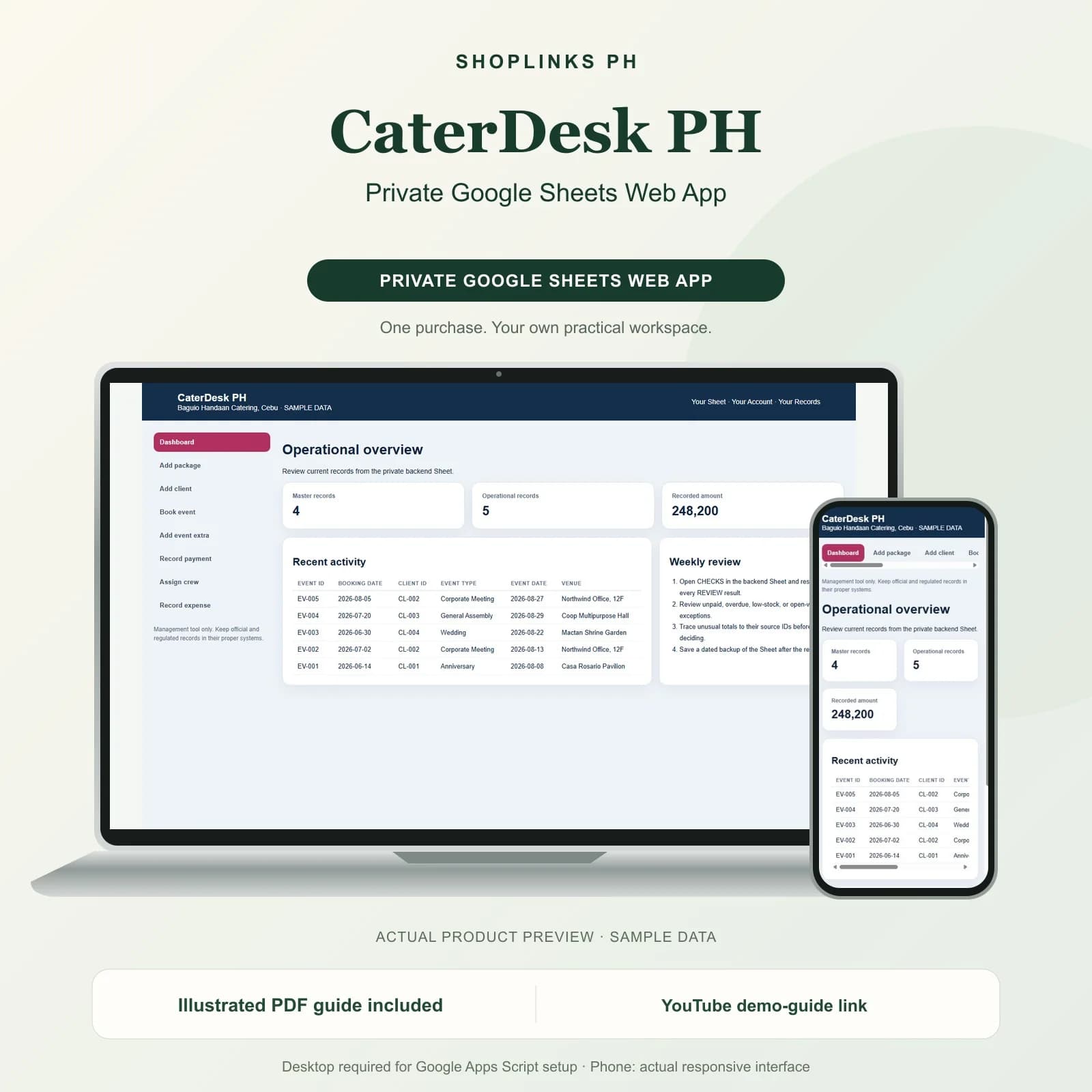
Catering is quoted per head and costed per event, and the gap between those two habits is where the money goes. A caterer knows the price per head by heart and the cost of the crew not at all. CaterDesk PH keeps packages, events, extras, crew and payments as connected rows, so the margin on a wedding is a column rather than a feeling formed on the drive home.
One package, two figures
Every package carries a price per head and a cost per head. An event multiplies both by its guest count, giving the package subtotal and the food cost from the same number.
That means a guest count revised upward the week before the event moves the cost as well as the bill, automatically.
Extras belong in the cost too
A lechon, a chocolate fountain, tiffany chairs, a barista cart: each is an add-on line with a unit price and a unit cost.
Caterers usually price these well and cost them badly. Recording both on the same line is what stops a well-sold extra from being a break-even one.
Crew is the cost that disappears
Head waiters, servers, an on-site chef and a driver are assigned to the event with their fees. Crew cost is summed into the event's cost total.
This is the single most common omission in a catering quotation, and it is usually the difference between a good margin and none at all.
The minimum that protects the package
Each package carries a minimum head count. An event below it reads Below minimum, which is visible while there is still time to renegotiate.
The checks add duplicate event identifiers, events naming a client who is not on file, add-ons pointing at an event that does not exist, and any event collected beyond its own total.
Review exceptions every week
Resolve duplicate IDs, missing links, overdue balances, negative amounts, and open operational items in CHECKS before using the dashboard for decisions.
CaterDesk PH Private Google Sheets Web App is designed for use with a Google account, Google Sheets, and Apps Script, using owner-only deployment by default.
No menu recipe or ingredient inventory, no purchase ordering from suppliers, no venue or equipment availability calendar, no BIR official receipts, no food safety or sanitary permit records, and no automatic reminders to clients with balances.