Key takeaways
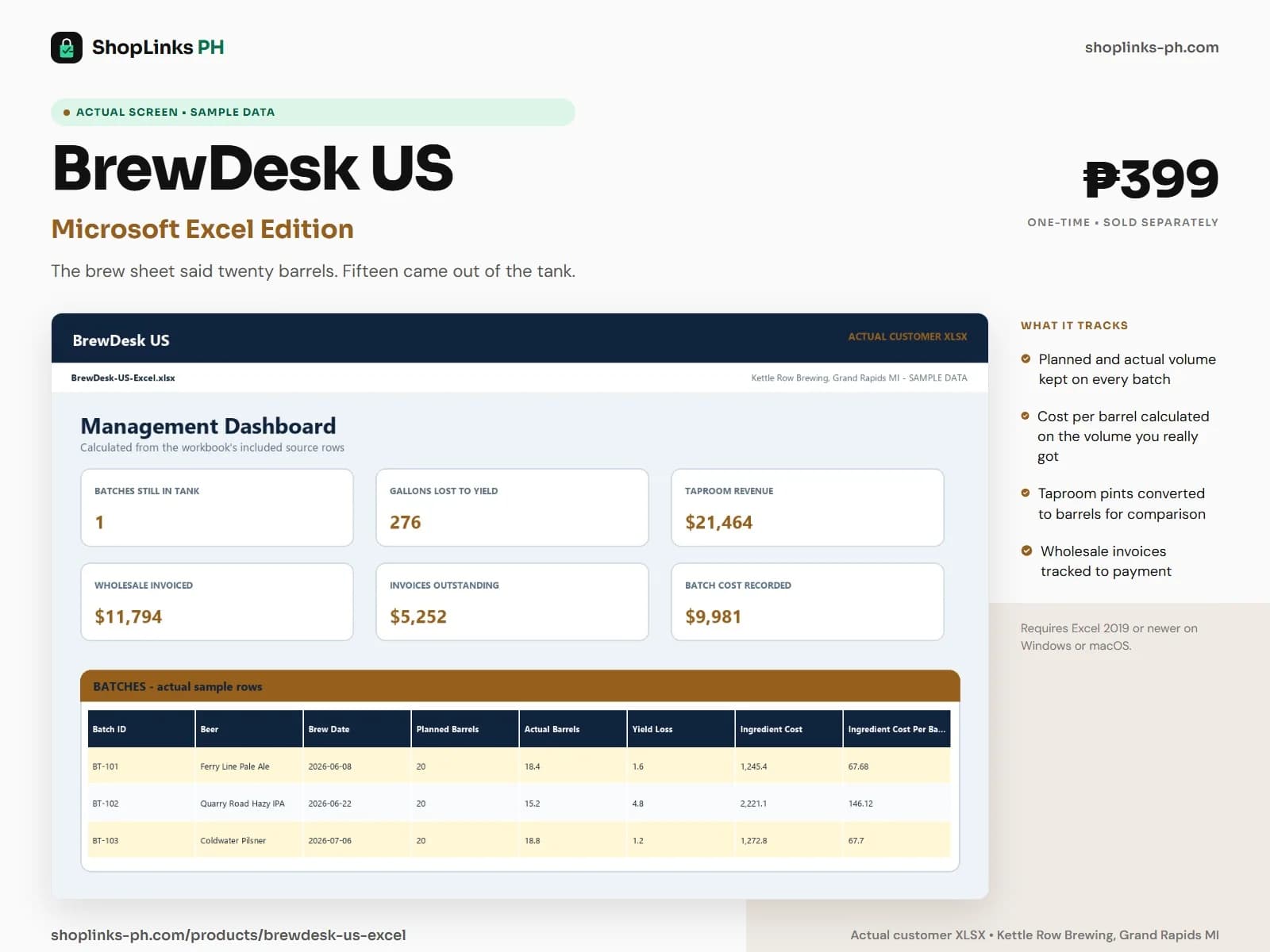
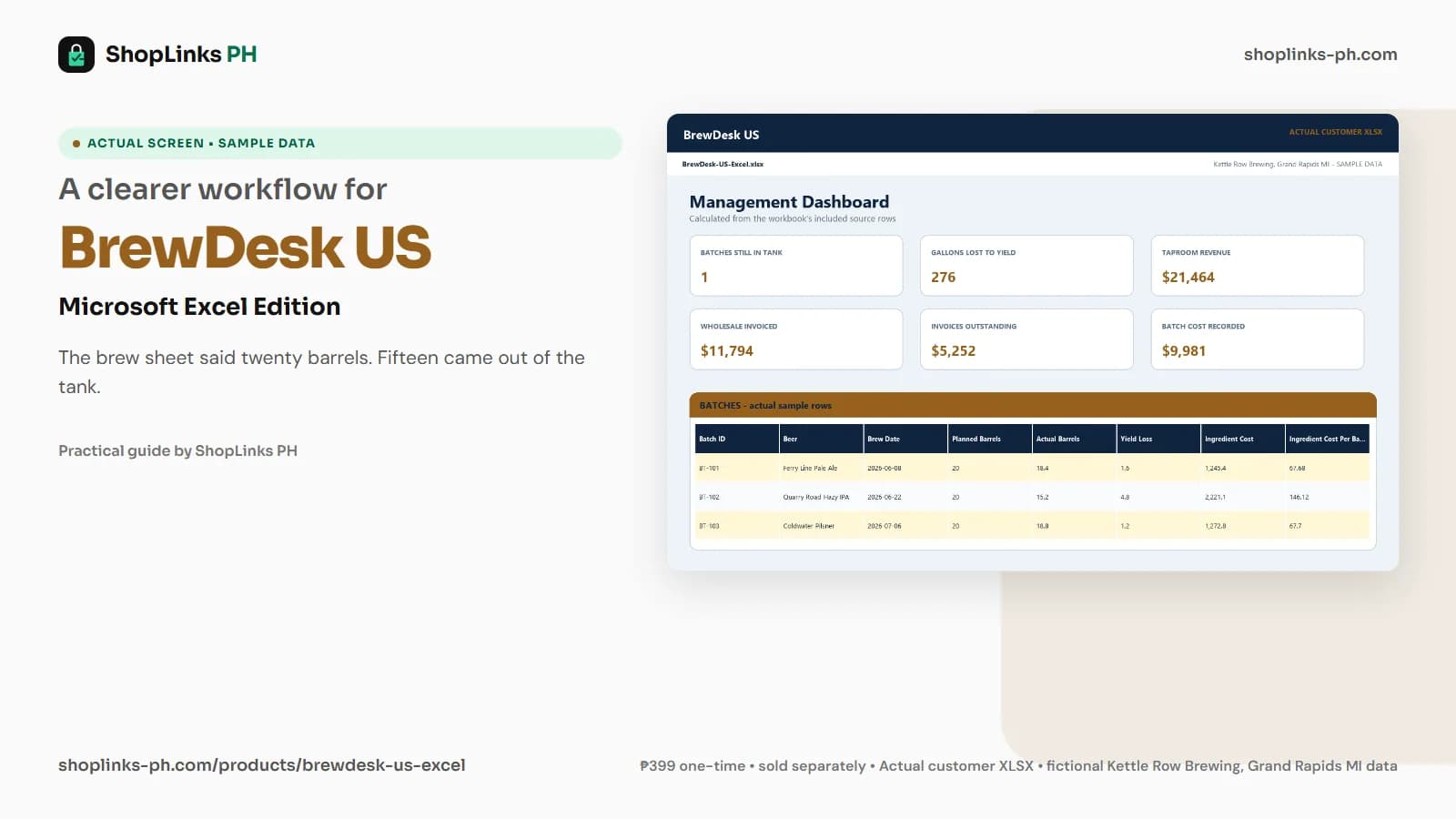
- Planned and actual barrels are both kept.
- Cost per barrel is read on the volume you got.
- Taproom pints convert to barrels for comparison.
- Wholesale invoices carry balance and days late.
A brewery plans in barrels and sells in pints and kegs. A batch sheet says twenty barrels; the tank, after trub, transfer and whatever the packaging line keeps, hands over something less. The ingredients were bought for twenty. BrewDesk US keeps the planned figure and the measured one side by side, so cost per barrel is a result rather than an assumption.
Planned volume and real volume
Each batch records the volume it was planned for and the volume measured at packaging.
Yield loss and yield percentage follow from those two numbers, and a heavily hopped beer is usually the worst of them.
Cost per barrel, calculated twice
Ingredients are recorded per batch at their own unit cost, and packaging runs carry theirs.
The total is divided by planned volume and by actual volume, and the gap between the two is the cost the plan never showed.
Taproom against wholesale
Taproom days convert pints poured into barrels at 248 pints a barrel, which makes the revenue directly comparable with a keg price.
A barrel poured over the bar earns several times what the same barrel earns leaving on a distributor's truck.
Accounts and terms
Each wholesale account carries its terms, and each invoice tracks its balance and days late.
A net fifteen bottle shop running late looks nothing like a net thirty distributor that is not due yet.
Review exceptions every week
Resolve duplicate IDs, missing links, overdue balances, negative amounts, and open operational items in CHECKS before using the dashboard for decisions.
BrewDesk US Microsoft Excel Edition is designed for Microsoft Excel 2019 or newer on Windows or macOS.
It does not file federal or state excise tax returns and is not a TTB reporting system. No brewhouse control or fermentation monitoring, no label or formula approval, no point of sale for the taproom, no payroll, and no card processing.