Key takeaways
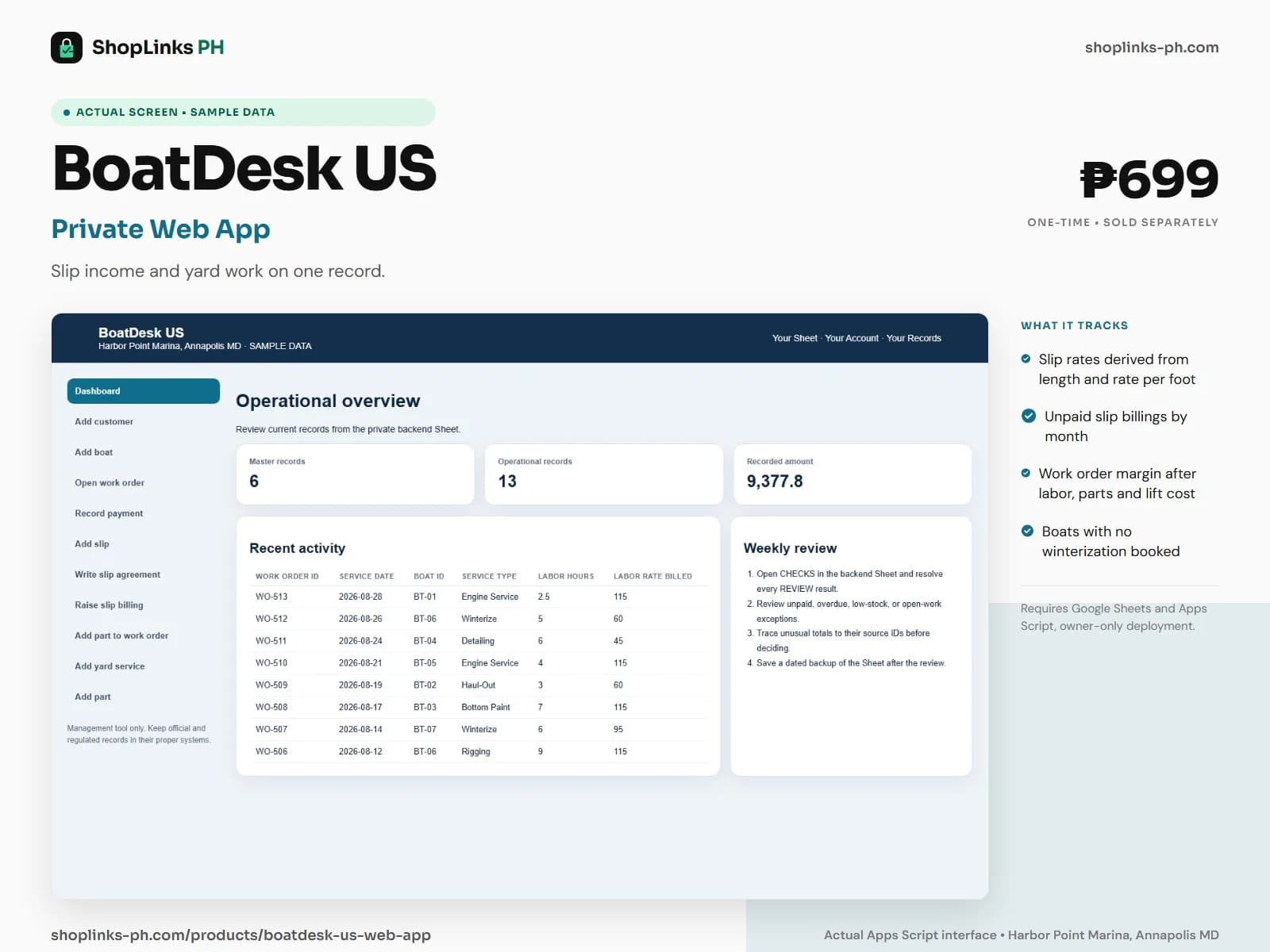
- Slip rates derive from length and rate per foot.
- Yard services carry a fee and a cost of their own.
- Unfinished work orders show In progress, not margin.
- Every slip shows dock income plus service income.
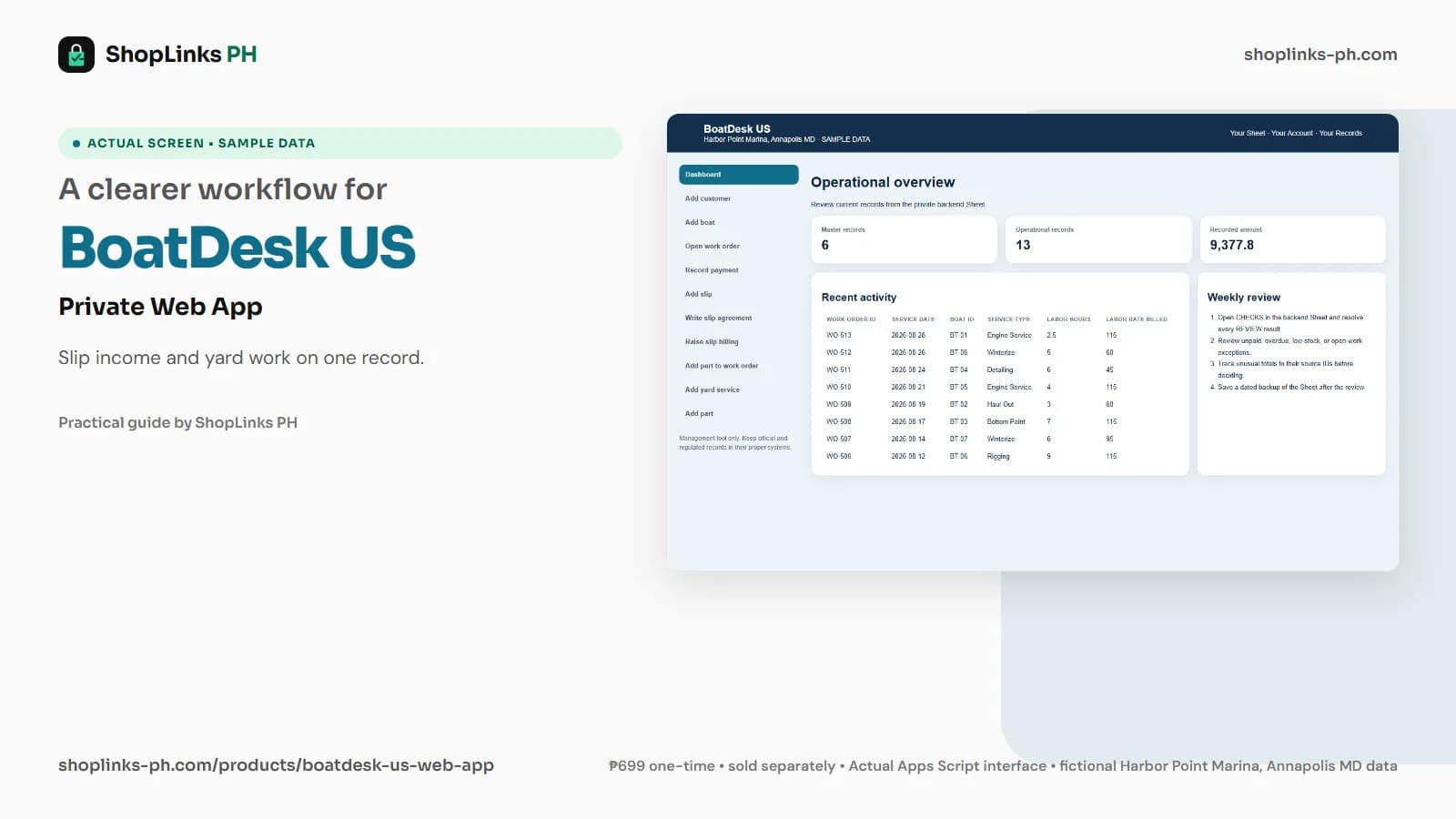
Harbor Point Marina rents twenty-odd slips and repairs the boats tied to them. The dock income is predictable and the yard income is not, and the two live in different places: the slip list in one book, the work orders on a clipboard in the shop. By September nobody can say which slip earned the most or whether the travel lift paid for the crew it takes. BoatDesk US puts both on one record.
Slip rates that derive themselves
A slip carries a length and a monthly rate per foot. An agreement joins a boat to a slip for a season, and the monthly rate is the boat's length times that rate, with the contract value following from the months.
Every monthly billing takes its amount from the agreement rather than from memory, so a rate change at the start of a season flows through every month that follows it without anyone retyping a figure.
A work order that counts the lift
Labor bills at your hourly rate and costs at what the hour actually costs you. Parts price from the parts register at cost and sell. Yard services carry a fee and their own cost: the lift operator, the extra slings, the blocks.
That last column is where yard margin usually disappears. A haul-out fee of three hundred and thirty dollars is a fine number until the outside lift you hired costs three hundred of it.
Open jobs are not profit
A work order that is still waiting on parts has hours and parts recorded but no margin. It reads In progress in the job check and contributes nothing to the margin total, so a half-costed job never looks like a good one.
Once the job closes, the check labels it Healthy, Thin, Low or Loss against its own total. A goodwill labor rate and a flat winter package both show up here as the choices they were.
What each slip is worth
The slip summary mirrors every slip, totals the months contracted, the billings raised, the money collected and what is still outstanding, then adds the service work done on the boat in that slip.
An empty slip reads Empty with a total of zero, which is the cheapest possible reminder that a finger pier needs decking before next season's agreements are written.
Review exceptions every week
Resolve duplicate IDs, missing links, overdue balances, negative amounts, and open operational items in CHECKS before using the dashboard for decisions.
BoatDesk US Private Google Sheets Web App is designed for use with a Google account, Google Sheets, and Apps Script, using owner-only deployment by default.
No online slip reservations or dock diagrams, no fuel dock or ship store point of sale, no marine insurance, survey or registration records, no payroll for yard staff, and no card processing or automatic monthly billing.