Key takeaways
- Batch cost comes from the product's mix.
- Cost per piece counts only good pieces.
- Ready date is computed from curing days.
- Deliveries name the batch they came from.
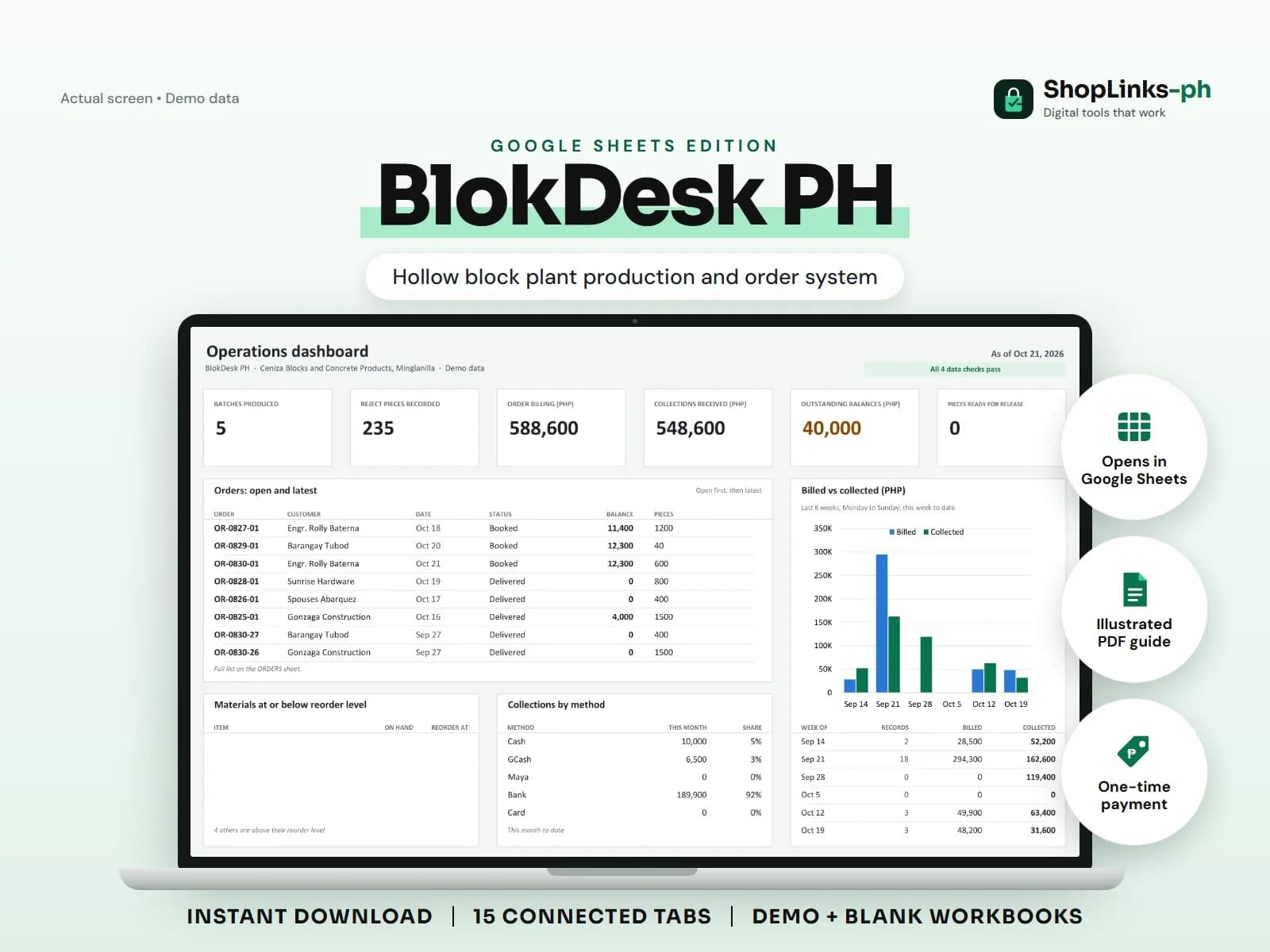
Block making is a business of cement and patience. The cement is the cost, the patience is the curing, and both are usually tracked by eye. A plant that cannot say what a batch cost or how many pieces are genuinely ready to load is a plant that quietly sells at a loss on its busiest week. BlokDesk PH ties the mix, the batch, the yard and the order together.
The mix is the cost
Each product carries its cement bags, sand and gravel per hundred pieces, plus a material cost per piece. A batch then computes what it consumed from the pieces actually made.
That makes the cement drawn from the bodega comparable with what the mix says should have been used, which is the simplest theft and waste check a block yard has.
Rejects raise the real cost
Cost per piece divides the batch's material cost by the good pieces only, not by everything moulded. A batch with sixty rejects therefore costs more per saleable block.
The reject rate on the same row is what tells an owner whether a crew is rushing the mix or the machine needs attention.
Curing is a date, not a feeling
Ready date is the production date plus the product's curing days. Until that date the yard row reads Curing, and the pieces are not counted as ready for release.
Selling green blocks is the fastest way for a small plant to lose a contractor permanently, and it usually happens because somebody was counting stacks rather than dates.
Orders, breakage and balances
Orders are priced per piece with a delivery fee, and deliveries record what was loaded and what broke, so pieces delivered is the honest figure.
Every delivery names the batch it came from, which is what keeps the curing yard truthful and makes a quality complaint traceable to a batch.
Review exceptions every week
Resolve duplicate IDs, missing links, overdue balances, negative amounts, and open operational items in CHECKS before using the dashboard for decisions.
BlokDesk PH Google Sheets Edition is designed for use with a Google account and current desktop Google Sheets.
No concrete strength or compressive testing records, no accreditation or DTI product certification, no batching plant machine integration, no delivery routing or truck scheduling, and no payroll computation for the molding crew.