Key takeaways
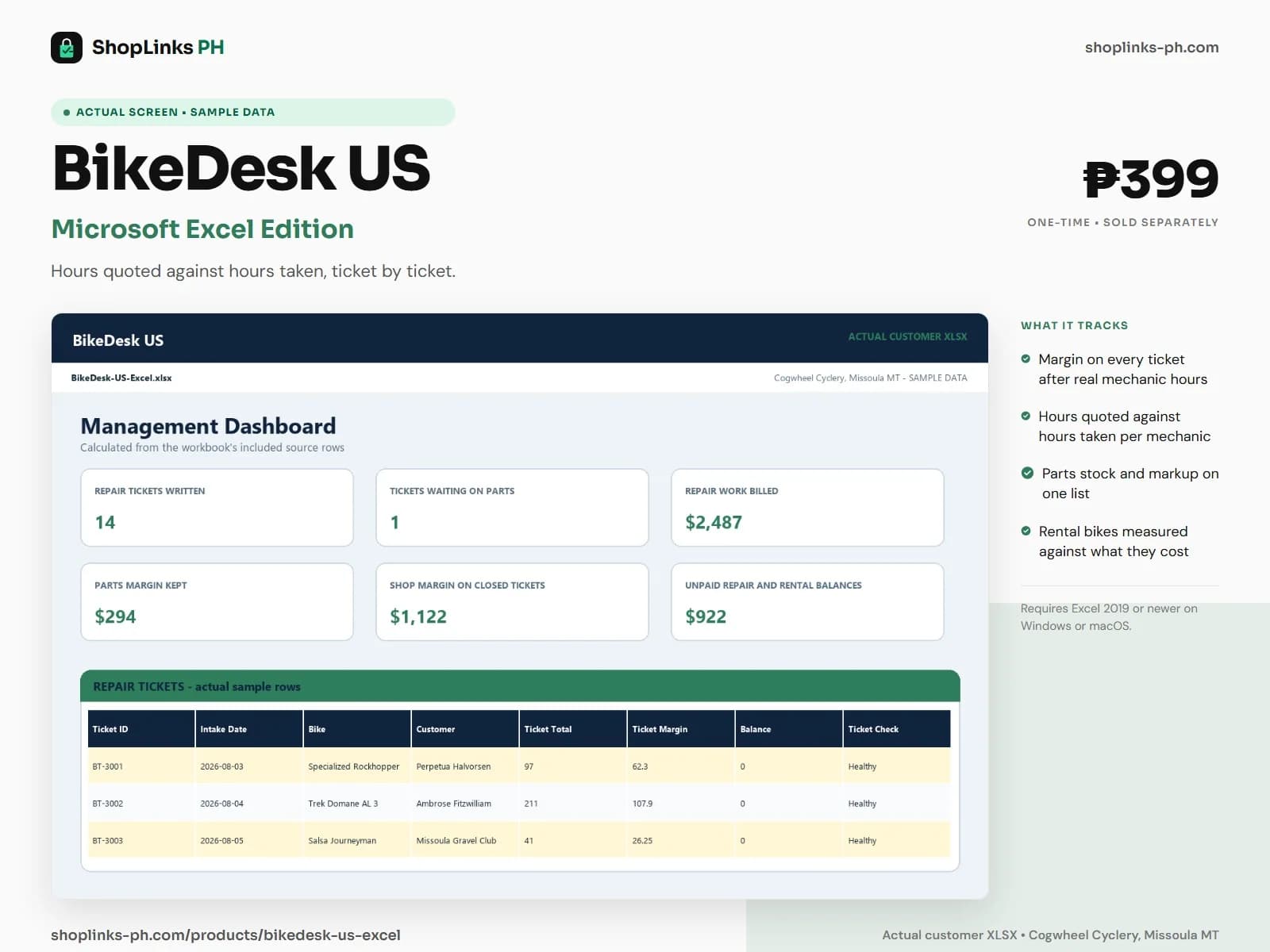
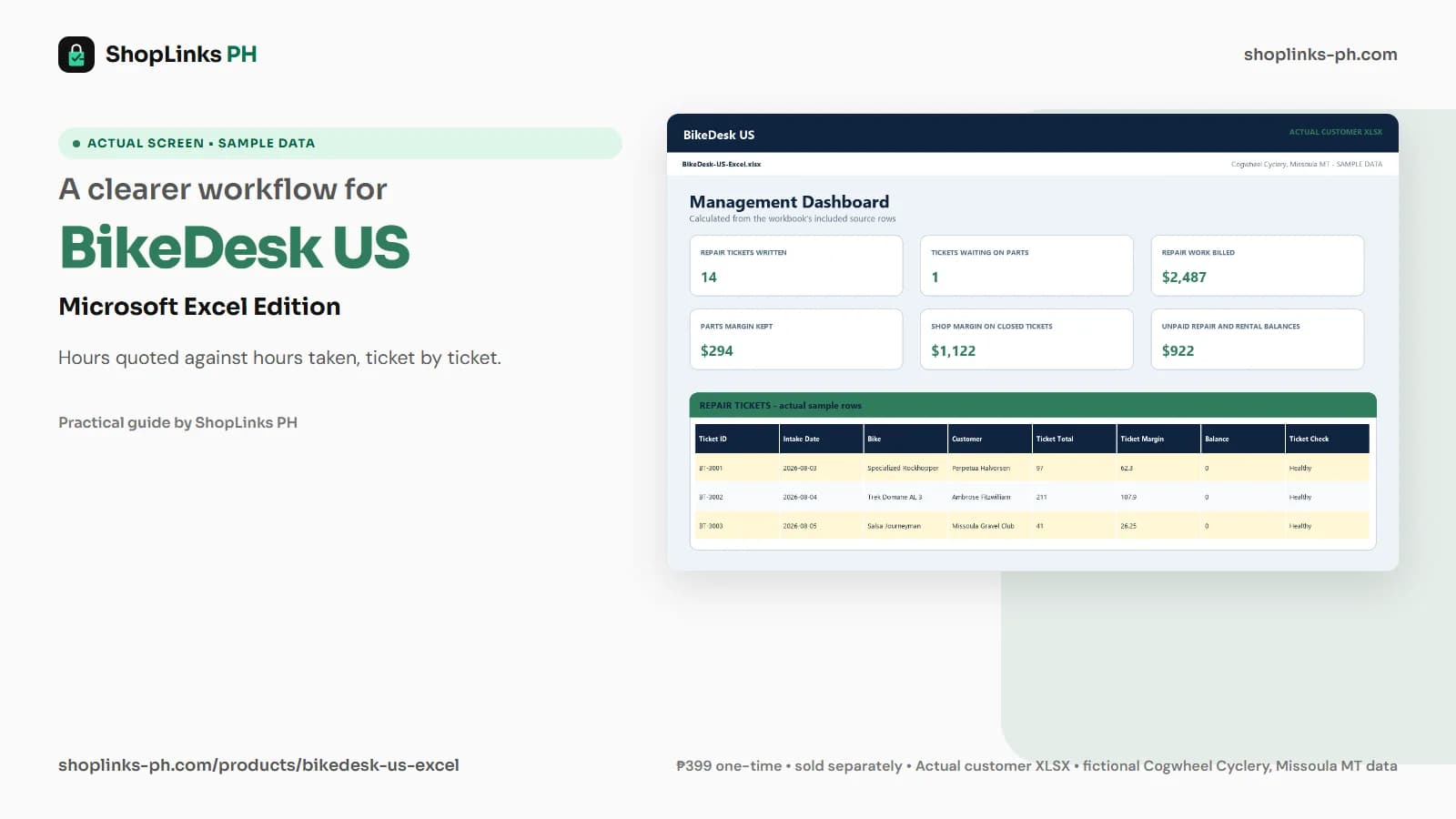
- Tickets are billed on quoted hours and costed on real ones.
- Parts carry a cost, a price and a live stock level.
- Rental bikes are measured against what they cost.
- Open and waiting tickets stay out of margin totals.
Cogwheel Cyclery runs three mechanics through a busy Montana August: tunes, flats, a pair of overhauls and a rental fleet that goes out most weekends. The owner knows the bench was full. What the owner cannot say is which tickets made money once the real hours are counted, whether the apprentice is closing the gap on quoted time, or whether the expensive electric mountain bike on the rental rack has earned anything at all.
Quoted hours and real hours
Labor is billed on the hours quoted at the ticket's rate, which is how a customer is told a price up front. Labor cost uses the hours the mechanic actually spent at that mechanic's hourly cost.
Recording both on every ticket turns a feeling about a slow job into a figure. An overhaul quoted at four and a half hours that took seven is a pricing problem you can see the same week.
Parts at a set price
Each stocked part carries a unit cost and a sell price, and part lines pull both from the list, so nobody invents a price at the counter and every ticket shows its real parts cost.
Part movements record stock arriving, going onto a job, sold over the counter or returned to the wall, so the on-hand figure is live and the pads and cassettes below their reorder level are flagged.
Rentals that pay for themselves
Every fleet bike records what it cost and its daily rate. Rentals record the out and due dates, so days out and rental revenue derive from the booking rather than from memory.
The fleet list totals days out and revenue per bike against the purchase cost, and labels each one Paid for itself, Halfway, Earning, Slow or Never rented. A bike nobody books is easy to miss otherwise.
What is still owed
Payments are recorded against a ticket or a rental, so a card at pickup, a club paying by monthly invoice and a rental deposit all keep their own balance and status.
Tickets still open or waiting on parts read In progress and stay out of the margin totals, so a bike sitting on the rack with a deposit never reads as a highly profitable job.
Review exceptions every week
Resolve duplicate IDs, missing links, overdue balances, negative amounts, and open operational items in CHECKS before using the dashboard for decisions.
BikeDesk US Microsoft Excel Edition is designed for Microsoft Excel 2019 or newer on Windows or macOS.
No point of sale or bike inventory catalog, no supplier ordering or distributor integration, no online booking or rental reservation site, no sales tax or payroll filing, and no waiver, insurance or identification records for rental customers.