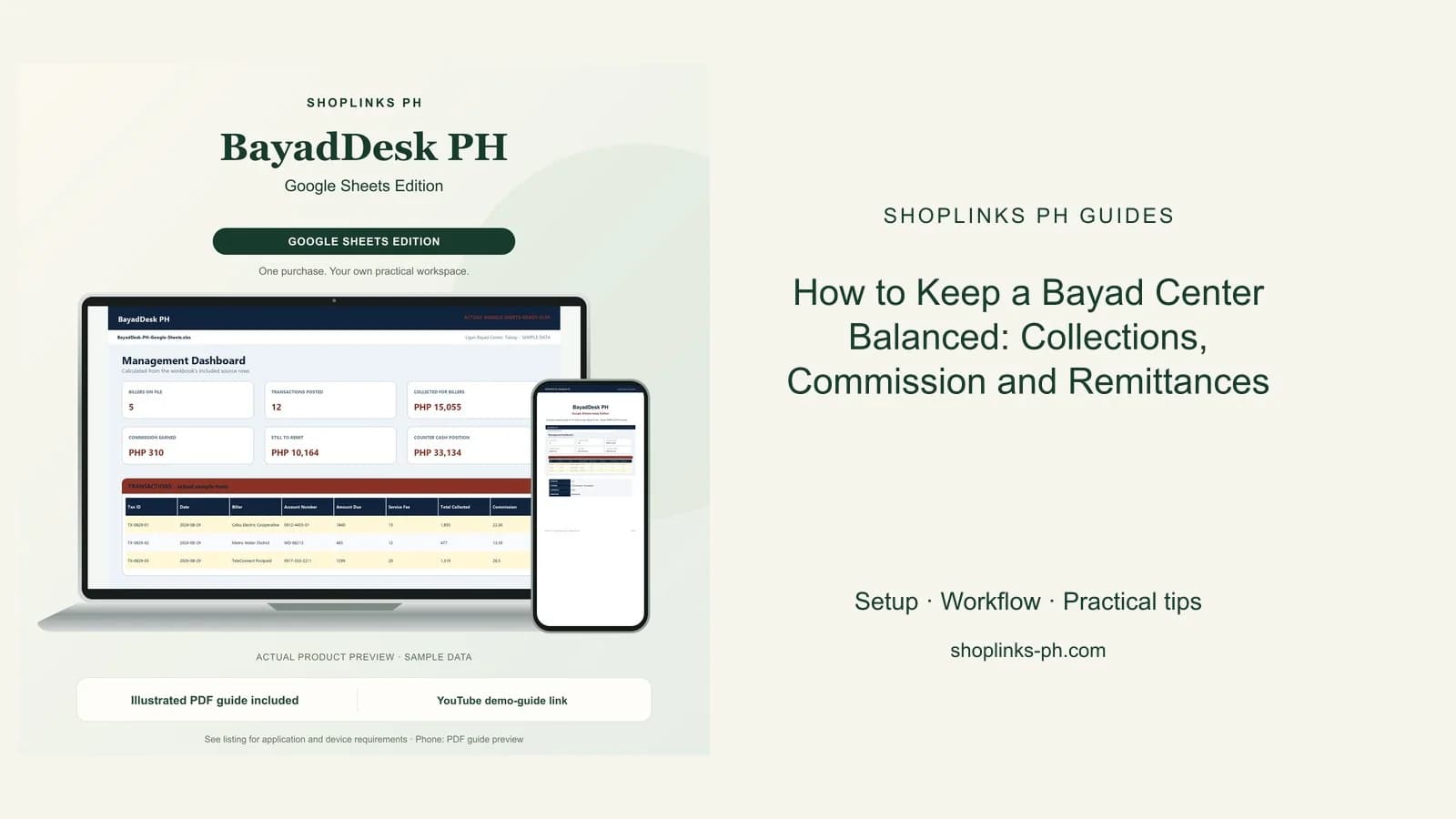
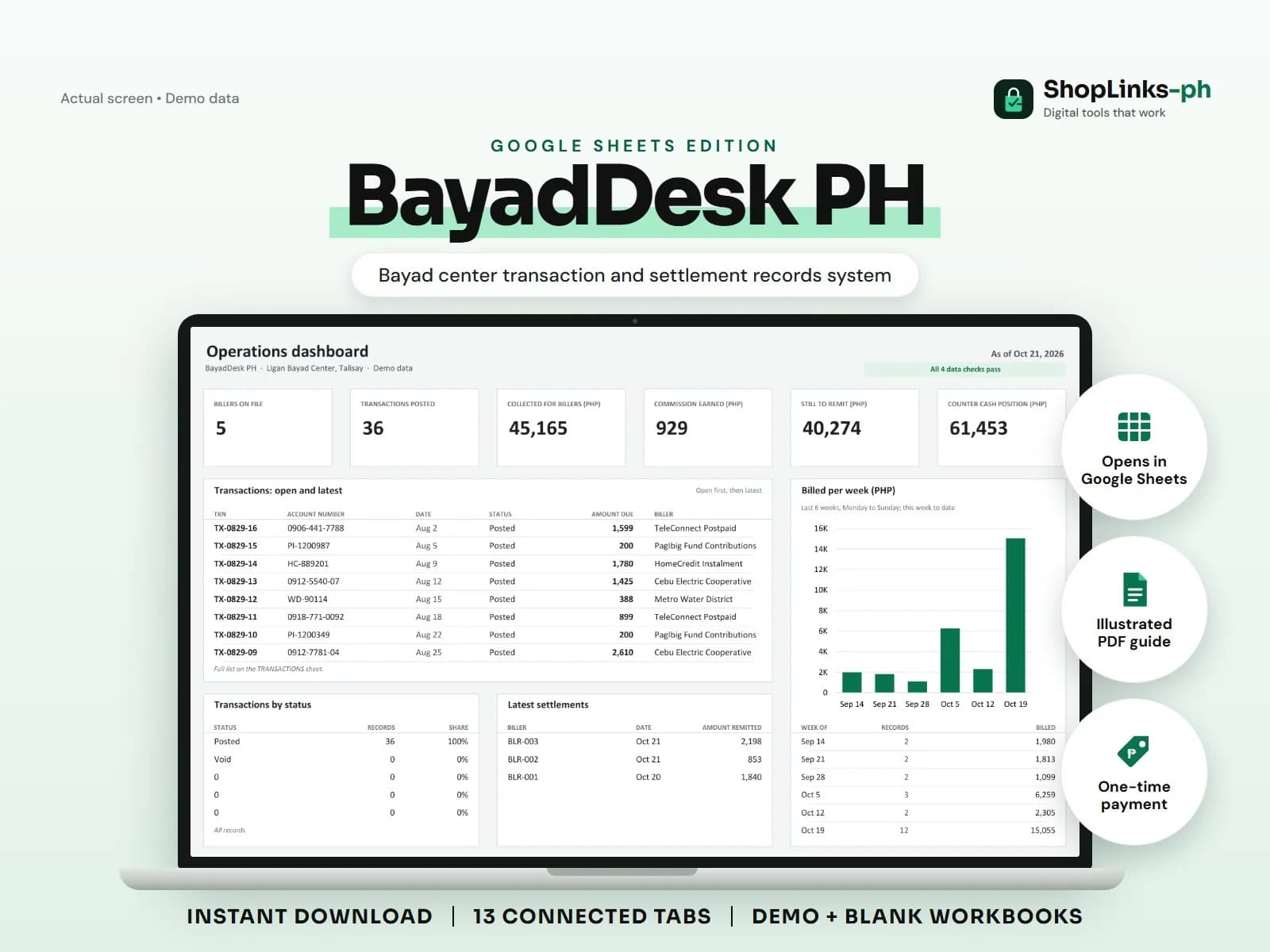
A bayad center handles other people's money all day and keeps only a thin margin of it. The risk is not theft so much as drift: a biller that was never remitted, a fee that was undercharged, a drawer that is short and nobody knows since when. BayadDesk PH keeps the transactions, the float and the settlements in one place so that the amount owed to each biller is a computed figure rather than a recollection.
Charge the same fee every time
Each biller carries its own service fee and commission rate. A transaction records only the account number, the customer and the amount due; the fee, the total collected and the commission are read from the biller.
That removes the two quiet leaks in a payment counter, which are undercharging the fee when the queue is long and losing track of which biller pays what commission.
Separate what you hold from what you earn
Amount due belongs to the biller. The service fee and the rate-based share belong to the counter. Keeping them in separate columns means the day's earnings never get confused with the day's collections.
It also means the owner can see whether the volume is worth the counter space, because commission earned is a column and not a subtraction done at the end of the month.
Settle per biller, per period
A settlement records the biller, the period it covers, and the amount remitted. The biller ledger totals collections and settlements per biller, so to remit is simply the difference.
A biller with a pending figure has money in your drawer that is not yours. A biller reading Over-remitted means you deposited more than you collected, which is worth catching the same week rather than at audit.
Reconcile the drawer, not just the ledger
The counter cash position adds the float in, subtracts the float out, adds everything collected, then subtracts what was remitted and what was spent.
That figure is what the drawer and the bank should hold between them. When it disagrees with the count, the difference has a date range to search rather than a whole month.
Review exceptions every week
Resolve duplicate IDs, missing links, overdue balances, negative amounts, and open operational items in CHECKS before using the dashboard for decisions.
BayadDesk PH Google Sheets Edition is designed for use with a Google account and current desktop Google Sheets.
No connection to any biller, aggregator or payment switch, no real-time posting or validation of account numbers, no official receipt or BIR-registered invoice, no card or e-wallet processing, and no automatic bank deposit or reconciliation feed.