Key takeaways
- The split is derived from the chair type.
- Retail product always returns to the shop.
- Booth rent is billed and chased weekly.
- Rented and commission chairs compare directly.
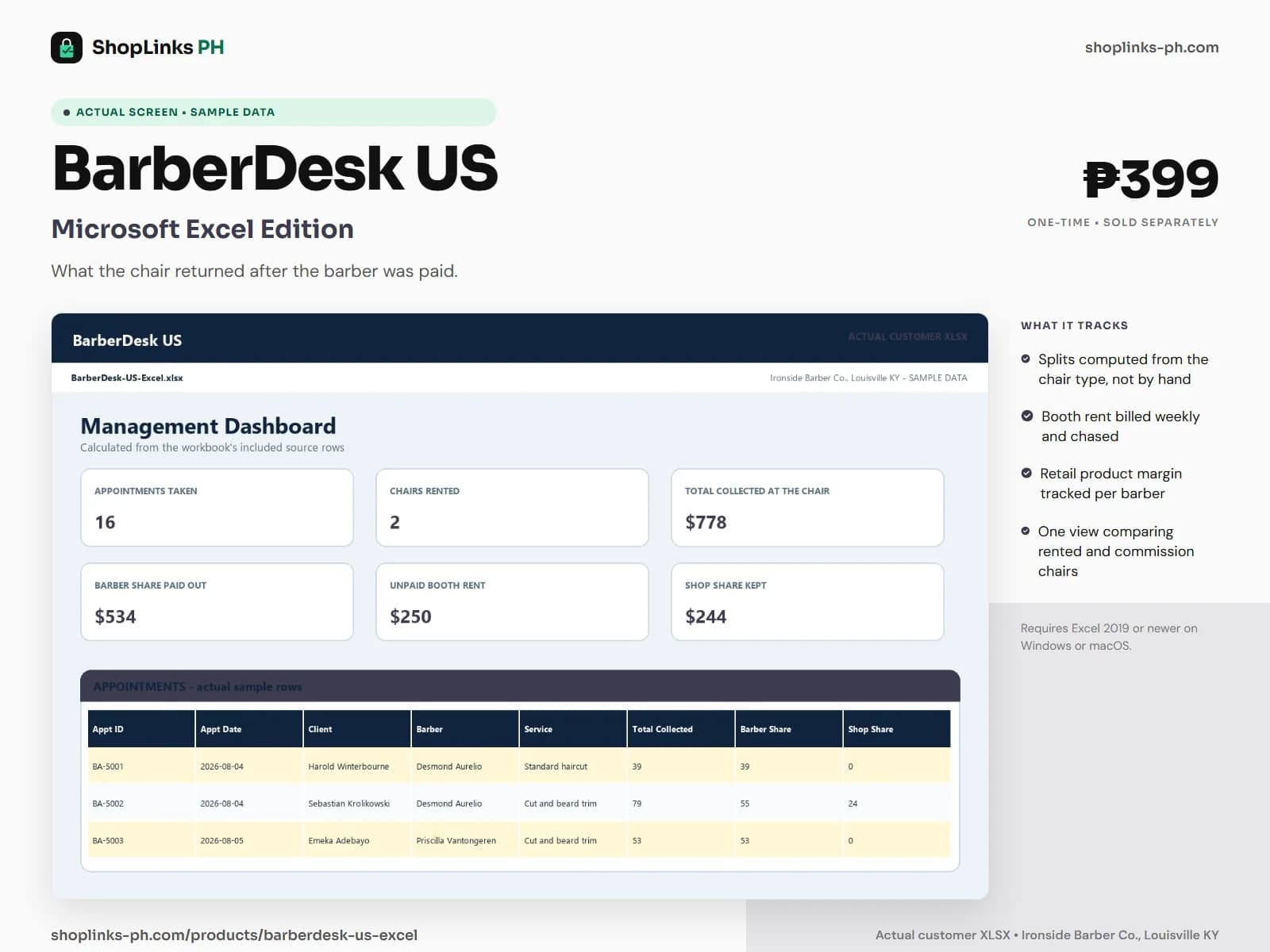
A barbershop with four chairs often runs two businesses at once. Two barbers rent their chairs and keep everything they take. Two work on commission and split it with the shop. Both look identical from the front door and behave nothing alike in the accounts, which is why most shop owners cannot say which arrangement is serving them better. BarberDesk US computes the split at the chair.
The chair decides the split
Every barber carries a chair type. A booth renter keeps the service charge and the tip; a commission barber keeps their percentage of the service plus the tip.
Because the rule lives on the barber rather than in someone's head, the split is applied consistently even on a busy Saturday.
Retail belongs to the shop
Product sold at the chair is recorded against the appointment and always returns to the shop share, whatever the chair type.
Since products carry both a cost and a sell price, the shop can see which barbers actually sell and what that selling is worth.
Rent is a weekly obligation
Booth rent is billed per barber per week, and the balance follows the payments recorded against that specific week.
A short week that was agreed verbally stays visible as a balance instead of quietly becoming a gift.
Comparing the two arrangements
The barber summary adds the shop share to the rent billed, giving one figure for what each chair returned.
Measured against the service revenue that chair produced, it says plainly whether the rented chair or the commission chair is the better deal for the shop.
Review exceptions every week
Resolve duplicate IDs, missing links, overdue balances, negative amounts, and open operational items in CHECKS before using the dashboard for decisions.
BarberDesk US Microsoft Excel Edition is designed for Microsoft Excel 2019 or newer on Windows or macOS.
No appointment booking app or online scheduling, no card terminal or point of sale integration, no barber licensing or state board records, no payroll or contractor tax filing, and no automatic client reminders.