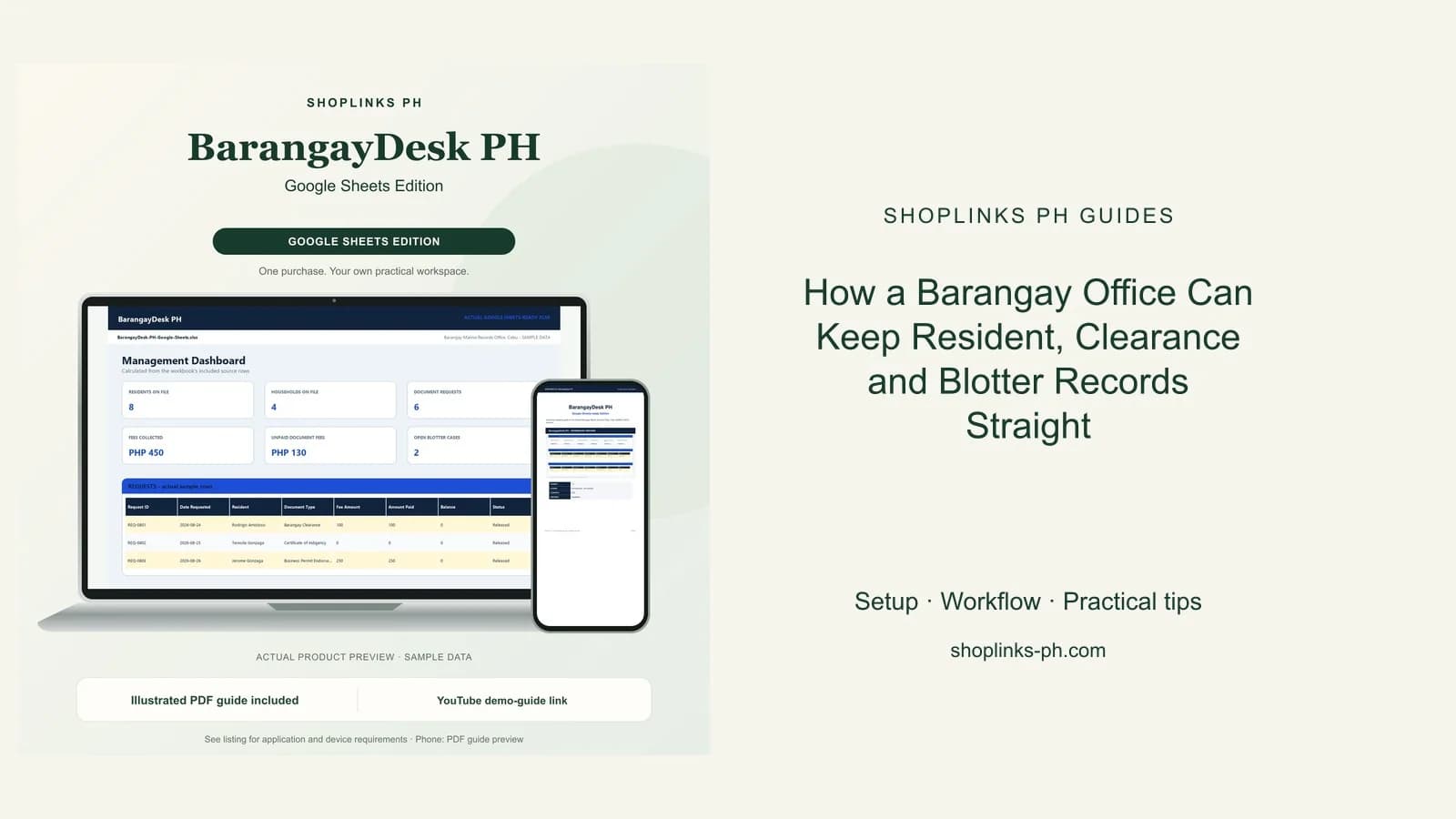
A barangay office keeps more records than most small businesses: residents, households, clearances, collections, and blotter entries, usually in separate notebooks kept by different people. When the secretary is away, nobody can say how much was collected this week or which cases are still waiting for a hearing. BarangayDesk PH is a private workbook that keeps those records in one place, with the fee table doing the arithmetic.
Start with households, then residents
Each household carries the address and the purok. Residents point at their household, and their purok is read from it, so a family that moves is corrected in one row.
Age is computed from the birth date, and the household counts its own members and registered voters. Nobody has to retype a figure that a list can count.
Let one fee table price every request
Document type, fee amount, and validity days live in a single service fee table. A request only records who asked, what they asked for, and why.
The fee, the balance, and the expiry of a released document follow from the table, so a fee change applies to new requests without editing old ones.
Match collections to requests
Every collection points at the request it settles, so the balance on that request is always current and a certificate issued free of charge simply shows a zero fee.
The status moves from Pending to Paid to Released, which makes the front desk queue readable at a glance.
Keep the blotter honest about time
A blotter entry records the complainant, the respondent, the incident type, the hearing date, and the settlement date. Days open is computed, and status reads Filed, For Hearing, or Settled.
The dashboard counts open cases beside fees collected and unpaid document fees, which is what a weekly session actually needs to review.
Review exceptions every week
Resolve duplicate IDs, missing links, overdue balances, negative amounts, and open operational items in CHECKS before using the dashboard for decisions.
BarangayDesk PH Google Sheets Edition is designed for use with a Google account and current desktop Google Sheets.
This is a private record-keeping workbook, not an official government system. No DILG, COA or LGU system connection, no official receipts, no certified true copies, no Katarungang Pambarangay case adjudication or legal advice, no national ID or voter registry lookup, and no automatic notices to residents.