Key takeaways
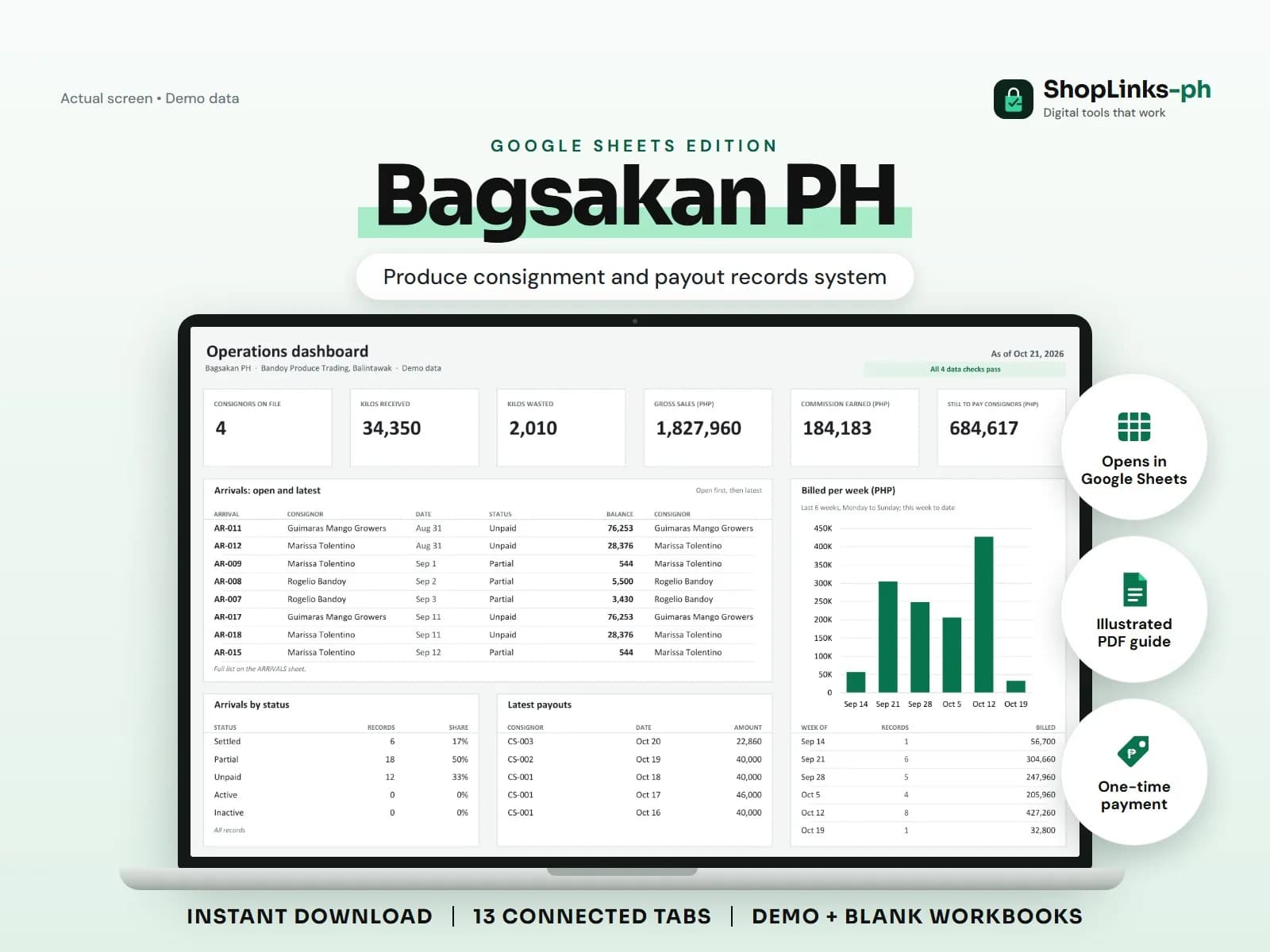
- Received, sold, wasted and unsold always reconcile.
- Every sale keeps its own price.
- Commission rates follow the consignor.
- The remittance figure is computed, not negotiated.
Watch the supporting video
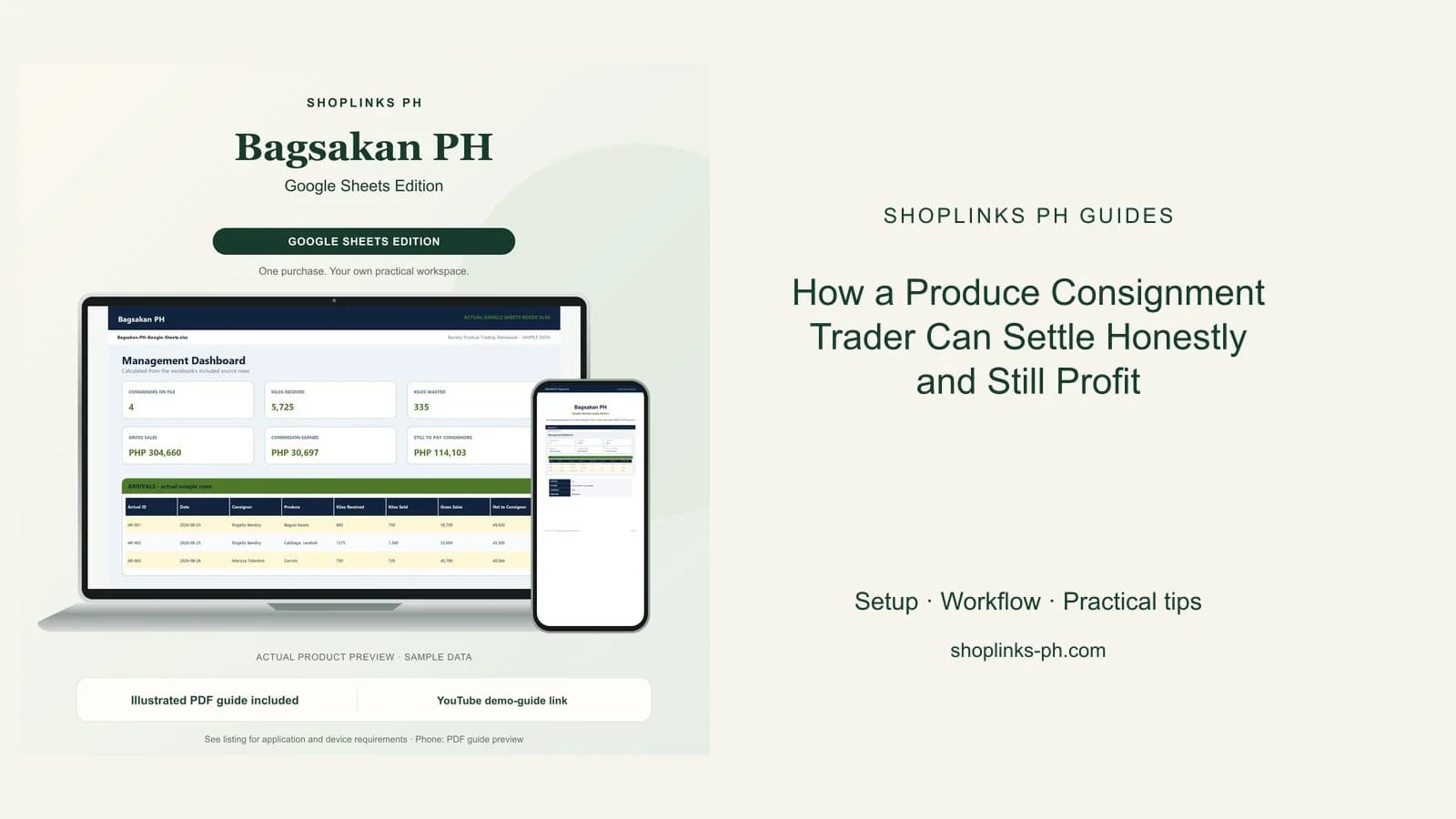
Watch the YouTube guide here while following this article.
Consignment trading runs on trust that is very hard to evidence. A farmer in Benguet ships eight hundred kilos of beans and has no way to know what price they fetched in Balintawak, how much spoiled, or what the hauling really cost. Bagsakan PH keeps arrivals, sales, wastage and payouts as connected rows, so the settlement sent back to the province is a computed figure that can be explained line by line.
Kilos have to balance
Every arrival records kilos received. Sale lines account for kilos sold, wastage rows for kilos lost, and the remainder is kilos unsold.
When those three do not add up to what arrived, the number goes negative and the checks catch it. That is the discipline consignment trading normally lacks.
Prices move through the day
Produce is not sold at one price. The morning buyer pays more than the afternoon one, and the last crates may go to a processor at a fraction of the opening rate.
Each sale is its own line with its own price, so gross sales is the true total rather than an average applied to everything.
Commission belongs to the consignor, not the trade
Each consignor carries their own commission rate. A Guimaras mango grower at twelve percent and a Nueva Vizcaya carrot farmer at eight are both computed correctly on every arrival.
Hauling is deducted separately and visibly, which is what stops it from being buried in the commission and questioned later.
The remittance is a subtraction
Net to consignor is gross sales less commission less hauling. Payouts are recorded against the arrival, so the balance still owed is always current.
The checks count duplicate arrival identifiers, arrivals naming a consignor who is not on file, sale lines naming an arrival that does not exist, and any arrival whose sales and wastage exceed the kilos received.
Review exceptions every week
Resolve duplicate IDs, missing links, overdue balances, negative amounts, and open operational items in CHECKS before using the dashboard for decisions.
Bagsakan PH Google Sheets Edition is designed for use with a Google account and current desktop Google Sheets.
No cold storage or temperature records, no truck dispatch or shipping manifests, no buyer credit terms or receivables, no market price feed or price forecasting, and no BIR-registered sales invoice to buyers.