Key takeaways
- A batch gathers its own stocking, feed, and vet cost.
- Feed is counted by the bag as it is used.
- Heads on hand follows mortality and sales rows.
- Margin per head is what compares two batches.
Watch the supporting video
Watch the YouTube guide here while following this article.
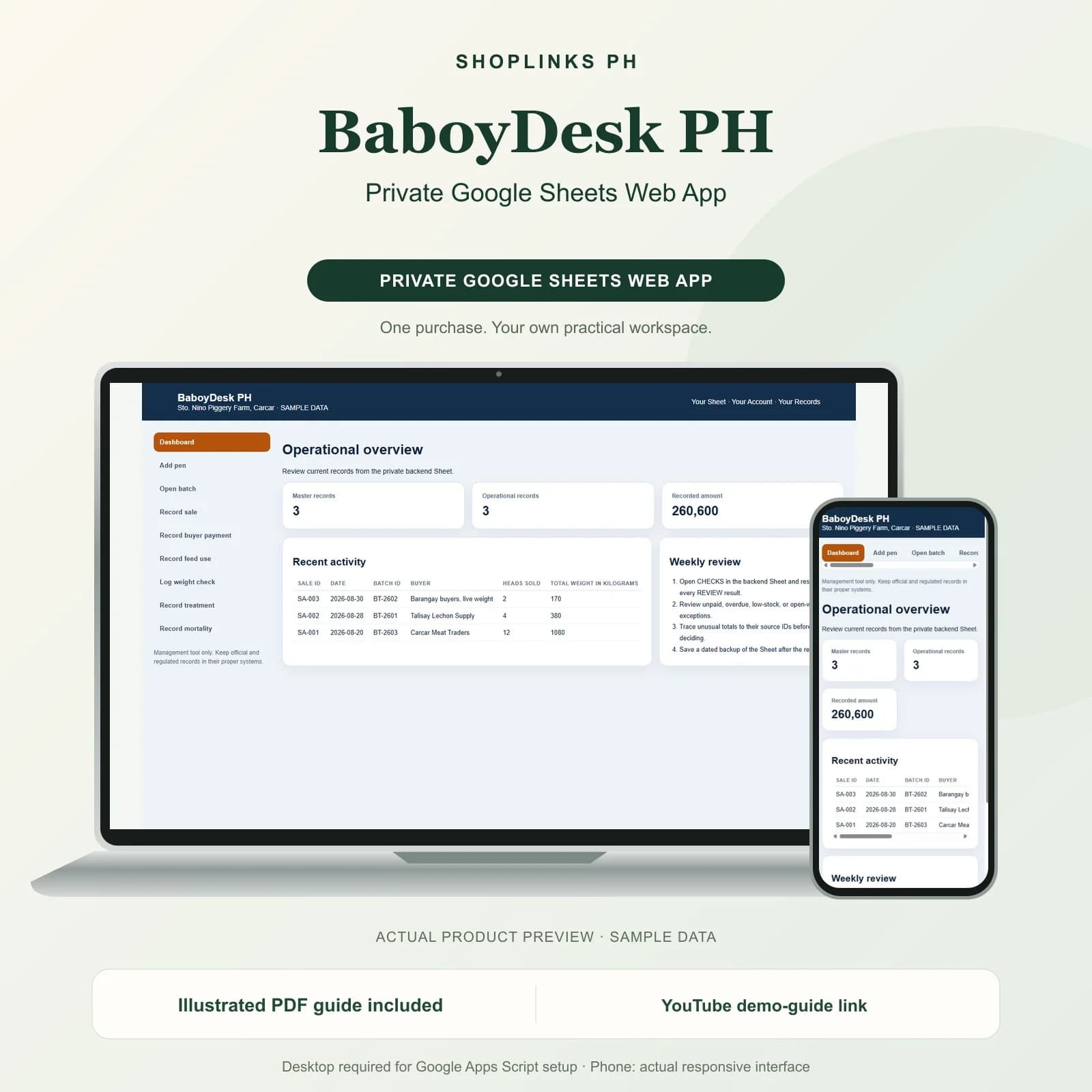
Most backyard piggeries know the selling price and the price of feeds, but very few can say what one batch cost from stocking to sale. Feed is bought weekly, treatments are paid in cash, and a head lost in the third month is remembered but never counted. BaboyDesk PH keeps a batch as one row that gathers all of it, so the margin at the end is a computed figure rather than a feeling.
Make the batch the unit of accounting
A batch is opened in a pen with the heads started and the cost per head, which gives its stocking cost. Everything else points at that batch.
Feed use, treatments, mortality, weight checks, and sales all carry a batch identifier, so a farm running two or three pens never mixes their costs.
Count the feed by the bag
Feed cost is bags used multiplied by cost per bag, totalled per batch. Because it is recorded as it is delivered, the running cost is always current rather than reconstructed at selling time.
Feed is usually the largest cost in the batch, so seeing it per head is what makes a change of supplier or feed type a decision instead of a guess.
Let mortality and sales move the head count
Heads on hand is heads started less heads lost less heads sold. Nobody edits it, so it cannot drift from what the mortality and sales rows say.
The checks flag a negative head count, which is the sign that a sale or a mortality was recorded twice.
Sell by weight and collect the balance
A sale records heads sold, total weight, and price per kilogram, and the sale amount follows. Buyer payments settle against that sale, so a partly paid buyer shows a balance.
Margin is sales value less total cost, and the performance sheet divides cost, feed cost, and margin by the heads started, which is the number worth comparing between batches.
Review exceptions every week
Resolve duplicate IDs, missing links, overdue balances, negative amounts, and open operational items in CHECKS before using the dashboard for decisions.
BaboyDesk PH Private Google Sheets Web App is designed for use with a Google account, Google Sheets, and Apps Script, using owner-only deployment by default.
No veterinary diagnosis, prescription, or dosage advice, no Bureau of Animal Industry registration, permits, shipping documents or disease reporting, no feed formulation, no live market price feed, and no biosecurity certification.