Key takeaways
- Define the same request for every supplier.
- Bring the complete quoted amounts into one view.
- Keep the initial commitment and approval clear.
- Make the next order easier to prepare.
Start with the next decision
Compare like-for-like quotes and document a small supplier trial. For small retailers comparing suppliers before a trial order, the useful starting point is a concrete task with an owner and a finished result. A document helps only when it makes the next action easier to understand. Start with one real case and keep the amount of paperwork proportionate to the work.
Use a small practice case
Fictional shop Isla Goods needs 100 kraft cartons measuring 18 x 12 x 6 cm. All suppliers, quotes and delivery promises in this example are invented. Before using real records, walk through a fictional case like this. It makes missing inputs easier to notice without exposing private customer or business details. The sample quantities, dates and amounts illustrate the process; they are not recommendations for your own operation.
Purchase specification
Define the same request for every supplier. Describe the unit precisely: piece, pack or carton. Mark non-negotiable specifications before requesting quotes.
For example: 100 kraft cartons, 18 x 12 x 6 cm, sold per piece, delivered to the shop by 25 Sep; sample requested first. Photographs alone may not show thickness, fit or finish.
Quote comparison
Bring the complete quoted amounts into one view. Compute each line as quoted unit price multiplied by quantity. Add stated charges manually and flag any unknown charge before comparing.
For example: A: PHP 18 x 100 + PHP 250 shipping = PHP 2,050. B: PHP 19 x 100 + PHP 100 shipping = PHP 2,000. Other charges confirmed zero. Compare the same specification, delivery location and quantity; lowest unit price may not mean lowest total.
Trial order brief
Keep the initial commitment and approval clear. Confirm the final written terms before payment. Use a small trial quantity appropriate to your business risk.
For example: Trial: 20 cartons under quote B-07. Supplier confirms unit price, delivery fee and 25 Sep arrival in one written message. Verify payment destination through a trusted channel when details change.
Reorder and backup note
Make the next order easier to prepare. Review actual stock before placing another order. Reconfirm price, availability and delivery terms each time.
For example: Check stock every Monday. Ask B for a fresh quote; contact A only after the flap concern is resolved. This is a manual reminder sheet, not an inventory calculator.
Test the exception before sharing the record
Try the same task with one missing input: an unanswered question, a changed quantity, an absent owner or an unconfirmed date. Keep the affected decision visibly open, assign a person to confirm the fact and set a next update. A blank response should never silently turn into an approval. Write N/A with a reason when a field does not apply, and preserve the evidence needed to understand your decision later.
Keep one current working copy
After using the record, note the step that caused confusion and revise that part. Add a revision date so the next person can identify the current copy. Archive the completed record according to your business needs, and share only the information the recipient needs. Keep examples clearly labeled and check names, dates, amounts, links and permissions before sending a customer-facing message.
A ready-made starting point
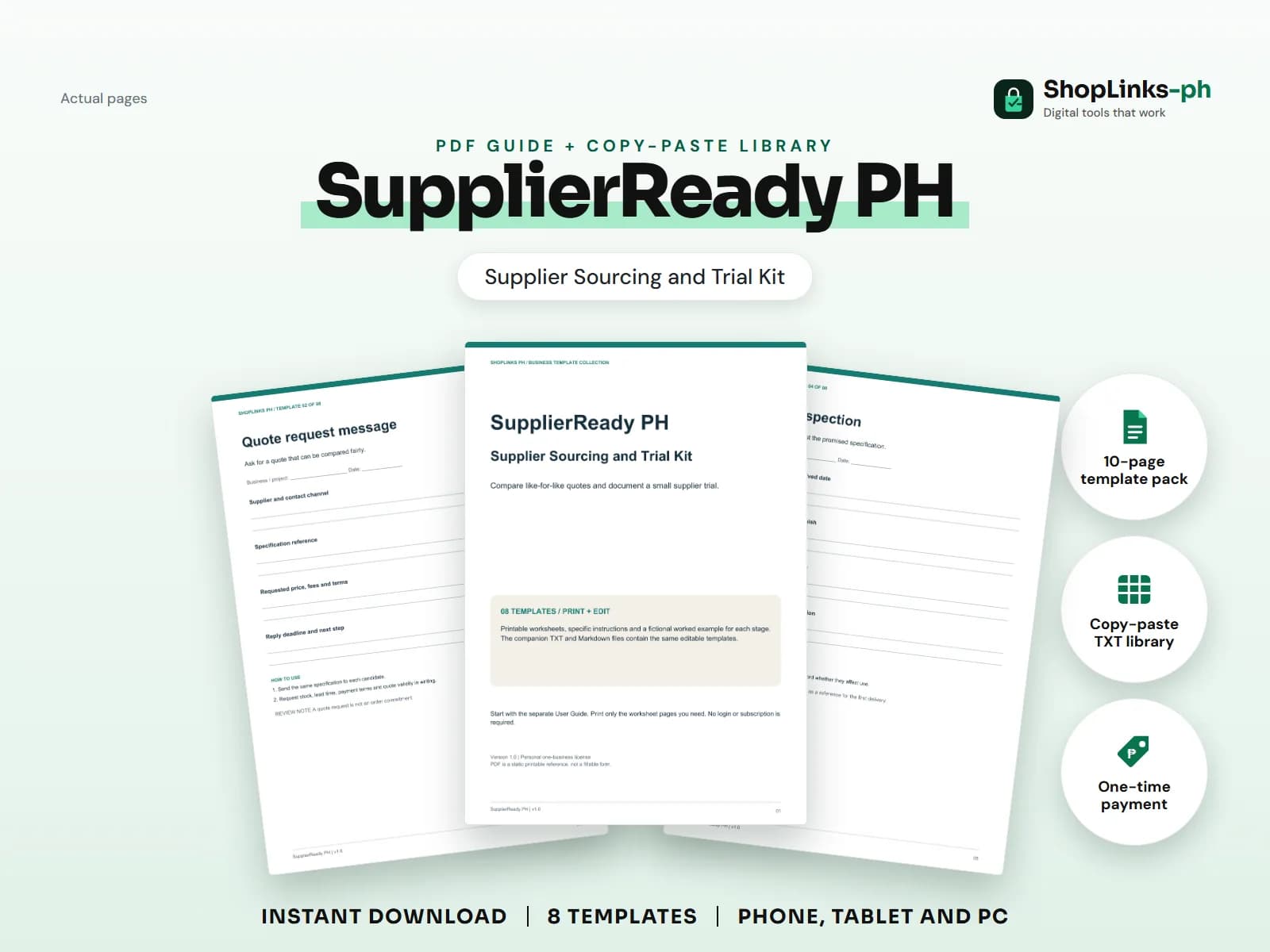
SupplierReady PH includes eight practical templates, a printable PDF, editable TXT and Markdown versions, fictional worked examples and an illustrated user guide. Sourcing worksheets only; no supplier directory, automatic scoring, purchasing integration, contract or supplier guarantee. You can print the relevant page or copy the text into your preferred editor, then adapt it to the actual task.