Key takeaways
- The stall carries the price; the vendor only occupies it.
- One dues row per stall per period.
- Every collection points at a due ID.
- Read standing and days past due before the collection walk.
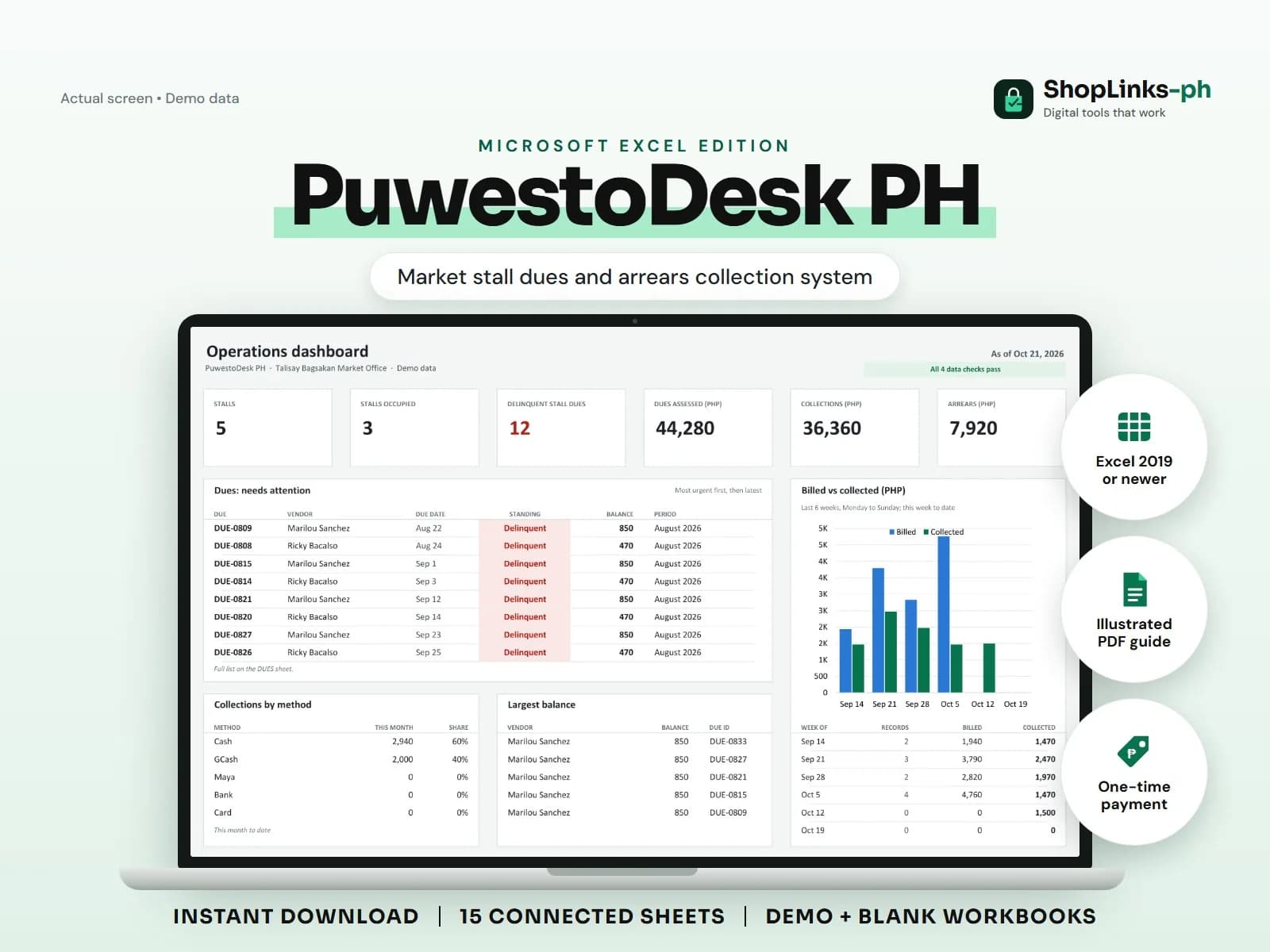
A market office runs on a collector, a notebook, and a memory of who usually pays late. It works until a vendor disputes a month, a collector goes on leave, or the office needs to know how much is actually outstanding across three sections. PuwestoDesk PH makes each period's due a row against a stall, and every collection a row against that due, so arrears and days past due are read rather than reconstructed.
Price the space, not the vendor
Stalls carry a section, a stall number, a size in square metres, and a price per square metre, and the monthly due follows from those. A utility share for electricity or water sits beside it.
When a vendor moves out and another moves in, the stall keeps its price and the office does not renegotiate from memory.
Assess dues one period at a time
A dues row records the period, due date, stall, and vendor, and pulls the stall due and utility share from the stall. Other charges such as a garbage fee are added on the row where they belong.
Total due is what the vendor owes for that period, and nothing else has to be remembered about it.
Collect against the due, not the person
Every collection carries the due ID, the vendor, the collector, and the method, so a partial payment reduces exactly one period's balance instead of floating against a running total.
COLLECTOR REPORT then shows entries logged, amount collected, and how much of it was cash, which is the figure to check against what was turned in.
Read arrears before the walk
Days past due counts from the due date while a balance remains, and standing shows Current or Delinquent per period. VENDOR LEDGER rolls that up per vendor with delinquent periods beside the arrears.
SECTION REPORT shows stalls, occupied, vacant, and occupancy rate per section, which is the number that decides whether to advertise the annex or raise the rate.
Review exceptions every week
Resolve duplicate IDs, missing links, overdue balances, negative amounts, and open operational items in CHECKS before using the dashboard for decisions.
PuwestoDesk PH Microsoft Excel Edition is designed for Microsoft Excel 2019 or newer on Windows or macOS.
No LGU market-code or ordinance compliance, stall award or bidding procedure, lease contract generation, business permit renewal, eviction process, official receipts, or tax filing.