Key takeaways
- Recipe cost gives every drink an honest margin.
- Cups sold deplete ingredients with no second entry.
- Thin-margin drinks are named, not guessed.
- Account orders keep a running balance.
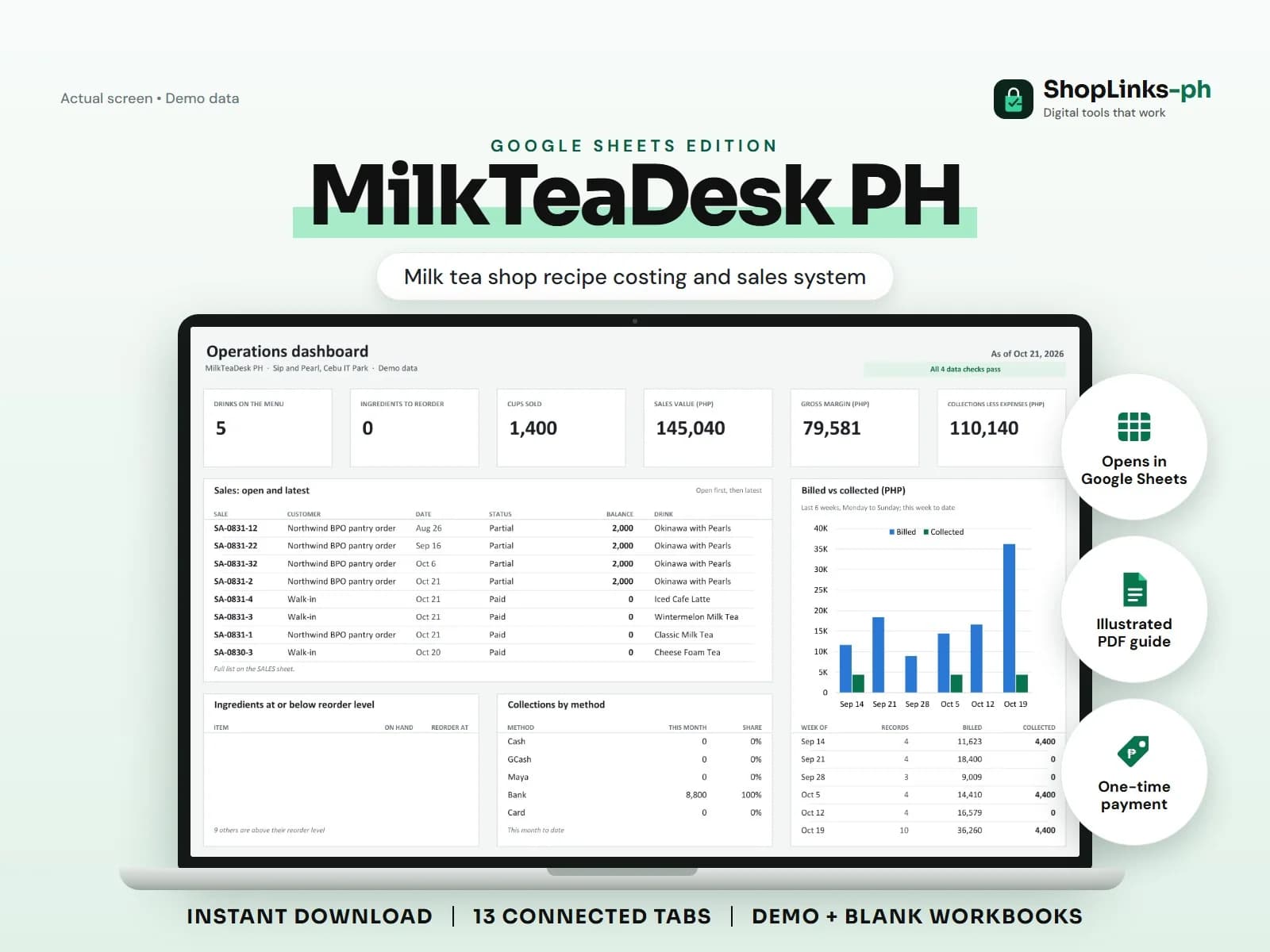
A milk tea shop looks like a simple business and is not. The price of a cup is fixed and public, but its cost is a small pile of grams and millilitres that nobody weighs after opening week. Six months later the shop is busy and the cash is thin, and no one can say which drink is responsible. MilkTeaDesk PH costs every cup from its own recipe and lets the ingredients fall as the cups are sold.
The recipe is the cost
Each drink is built from recipe lines: six grams of tea, twenty-five of creamer, thirty millilitres of syrup, one cup and lid. Each line pulls the ingredient's unit cost.
Recipe cost is the sum of those lines, and margin per cup is simply the selling price less that cost. A drink that cannot carry its own packaging becomes obvious immediately.
Selling a cup moves the stock
Ingredients deplete from the recipes: every gram in a recipe is multiplied by the cups sold of that drink. Nobody deducts stock separately.
Spoilage and deliveries are still recorded as movements, so the on-hand figure reflects the pearls thrown out at closing as well as the ones that were sold.
Busy is not the same as profitable
The drink performance sheet totals cups, sales, cost and margin per item, then reads Strong, Fair or Thin against the margin percentage.
This is the sheet that changes a menu. A best seller sitting in the Thin band is usually a pricing decision made a year ago and never revisited.
Counter sales and pantry orders
A counter sale is paid the moment it is recorded. An account sale, such as a bulk pantry order for an office, is paid only by the payments against it, so the balance stays current.
The checks count duplicate sale identifiers, sales naming a drink that is not on the menu, recipe lines naming an ingredient that is not on file, and payments naming a sale that does not exist.
Review exceptions every week
Resolve duplicate IDs, missing links, overdue balances, negative amounts, and open operational items in CHECKS before using the dashboard for decisions.
MilkTeaDesk PH Google Sheets Edition is designed for use with a Google account and current desktop Google Sheets.
No point-of-sale terminal, cash drawer or receipt printer connection, no barcode or QR ordering, no delivery platform integration, no supplier purchase orders or payables, and no BIR-registered sales invoice.