Key takeaways
- Custom milling and purchases stay distinguishable.
- Recovery is computed on every run, not per season.
- Fees are charged only where they apply.
- By-products appear as income beside the fees.
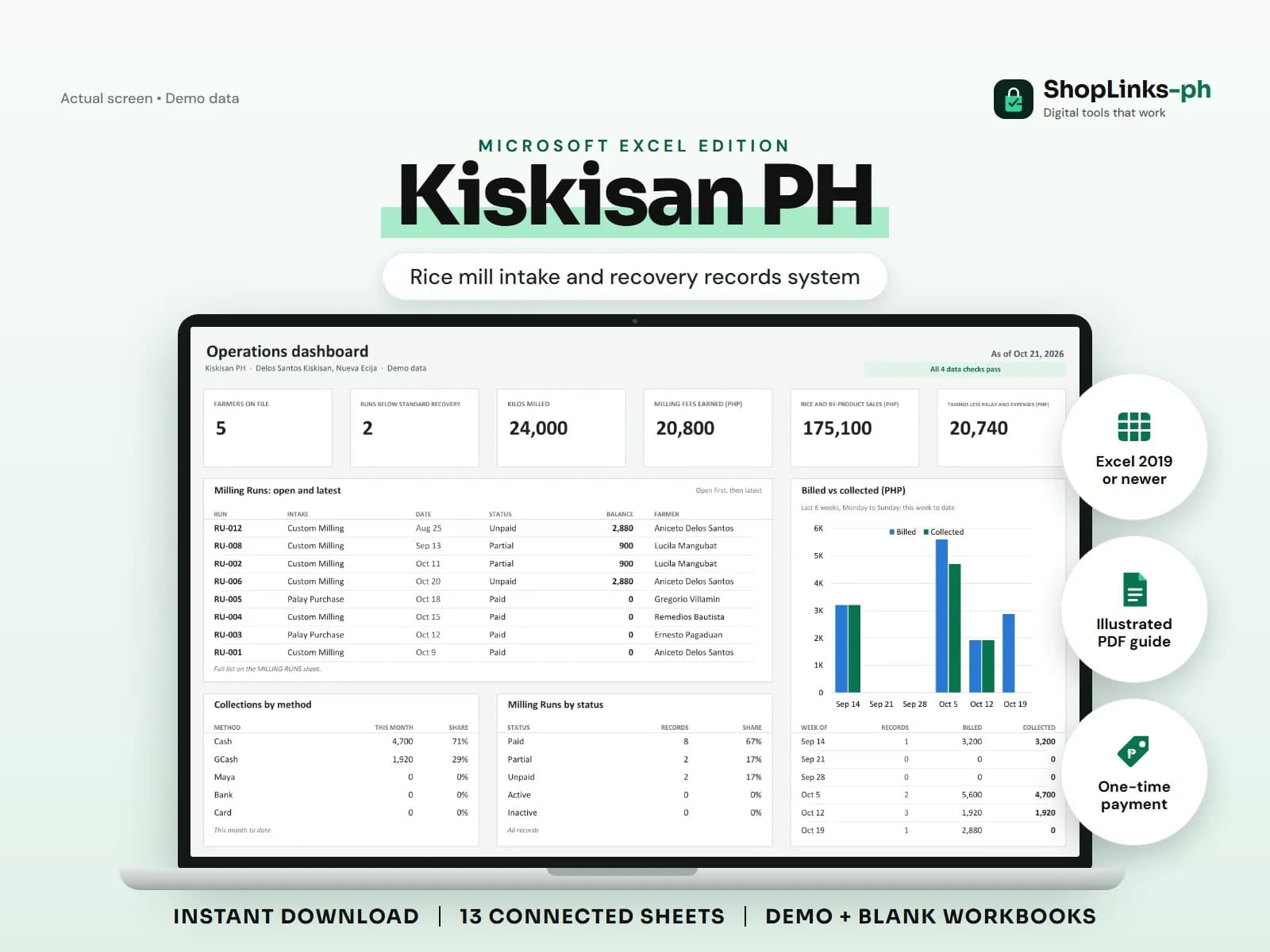
A rice mill earns in three ways at once and usually records only one of them. There is the fee for custom milling, the margin on palay bought outright, and the by-products that leave the mill as bran, broken rice and hull. Kiskisan PH keeps intake, runs, payments and by-product sales in one place, so an operator can tell which of the three is actually carrying the business.
Two kinds of intake, one sheet
A drop-off for custom milling and a purchase of palay are different transactions. The intake records which one it is, and the palay cost is charged only on a purchase.
That single distinction stops a mill from appearing to have bought thousands of kilos it was merely milling for a neighbour.
Recovery is the number that matters
Recovery percent is rice kilos out divided by kilos milled. A run below sixty percent reads Below standard.
Low recovery usually means wet palay or worn rubber rolls, and both are cheap to fix if they are noticed in the same week rather than at the end of the season.
Fees where they belong
The milling fee is charged only on custom milling intakes, at the fee per kilo in the rate table, multiplied by the kilos milled.
Payments are recorded against the run, so balance and status follow. A farmer who pays after the next harvest still shows a clear balance in the meantime.
By-products are income, not waste
Darak, binlik and ipa are sold by the kilo and recorded with their buyer. Their total sits on the dashboard beside the milling fees.
The checks count duplicate run identifiers, runs naming an intake that does not exist, intake naming a farmer who is not on file, and payments naming a run that does not exist.
Review exceptions every week
Resolve duplicate IDs, missing links, overdue balances, negative amounts, and open operational items in CHECKS before using the dashboard for decisions.
Kiskisan PH Microsoft Excel Edition is designed for Microsoft Excel 2019 or newer on Windows or macOS.
No NFA or Department of Agriculture reporting, no palay drying or warehouse temperature records, no truck scale or weighbridge connection, no rice retail or sack-level inventory after milling, and no credit scoring for farmers on terms.