Key takeaways
- Weekly amortisation is computed from the term.
- Arrears measures against a schedule, not a balance.
- Collector commission follows actual collections.
- Repossession records the write-off explicitly.
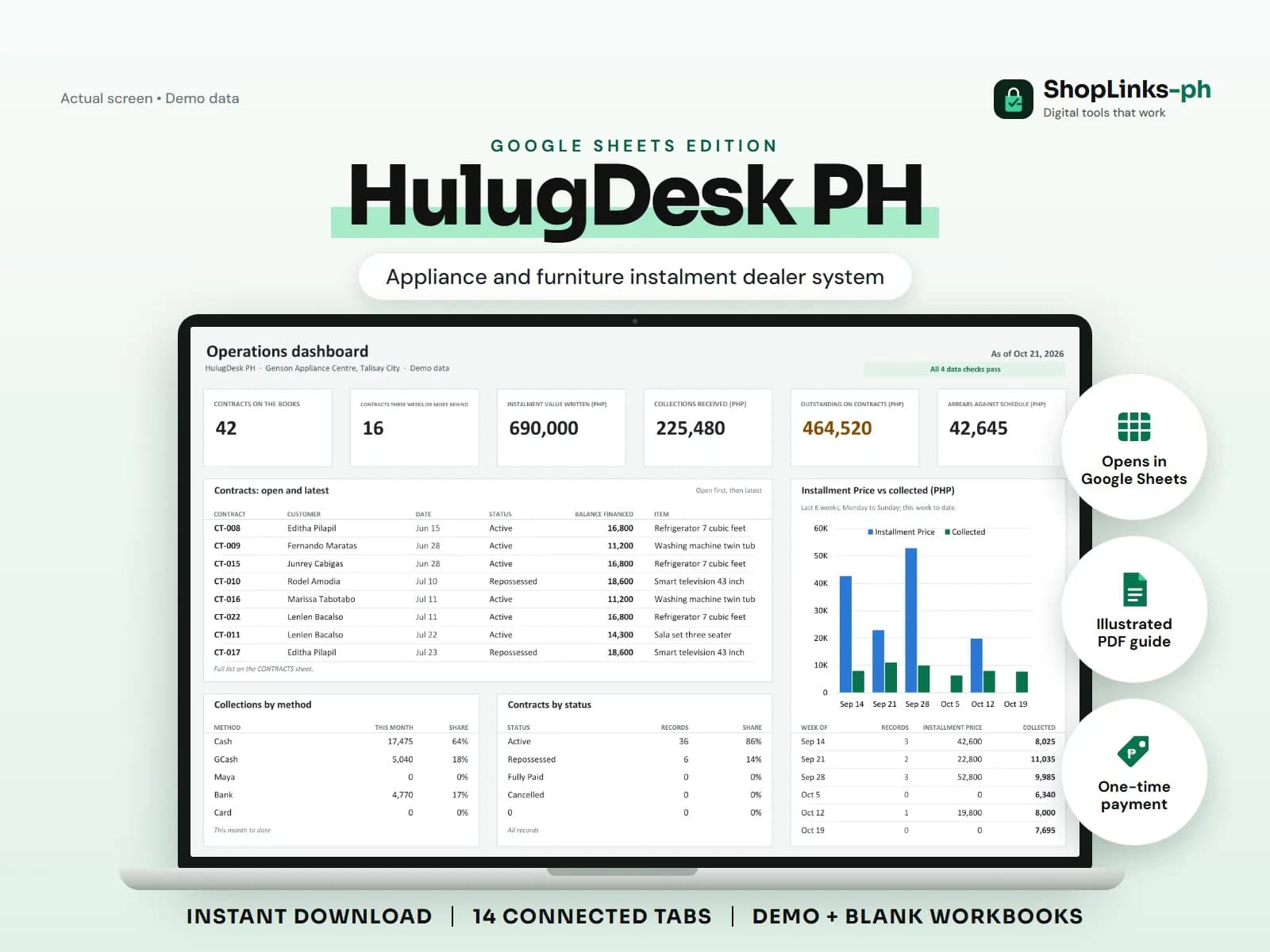
Selling appliances on weekly instalment is a lending business wearing a retailer's clothes. The margin is in the difference between the cash price and the instalment price, and the risk is entirely in collection. A dealer who knows only which accounts have paid this week, and not which are behind schedule, is running the lending half of the business blind. HulugDesk PH measures both.
The contract sets the arithmetic
The instalment price comes from the item, the balance financed is that less the down payment, and the weekly amortisation divides it by the term in weeks.
Keeping a separate cash price and instalment price on the item makes the cost of buying on terms explicit for both sides, which is the honest way to sell this.
Behind schedule, not just unpaid
Weeks elapsed counts from the contract date, and expected paid is the down payment plus those weeks at the weekly amount. Arrears is the shortfall against that.
This is the difference between a customer who paid four weeks in one lump and one who has quietly stopped, which a simple running balance cannot distinguish.
Collectors are paid on what arrives
Every collection records the collector who received it, and each collector's commission is their percentage of what they actually collected.
Contracts handled sits beside it, so a collector carrying twenty accounts with poor collection is visible next to one carrying eight with none behind.
Repossession is an accounting event
A repossession records the reason, the unit's condition, the value recovered and the outstanding at the time, and the write-off is the difference.
Bringing the unit back into stock as a movement keeps the count honest, because a repossessed television is real inventory again.
Review exceptions every week
Resolve duplicate IDs, missing links, overdue balances, negative amounts, and open operational items in CHECKS before using the dashboard for decisions.
HulugDesk PH Google Sheets Edition is designed for use with a Google account and current desktop Google Sheets.
No credit scoring or background checking, no interest or penalty computation beyond the instalment price you set, no legal demand letters or replevin filing, no SEC or lending company registration, and no credit bureau reporting.